CIA torture report: Next UK
Why not them take to UNHRC?
The most remarkable thing about the US Senate Intelligence Committee Report is that it was published at all – a reproach incidentally, to the secrecy in which British politicians swathe MI6. Two of the Report’s findings will make a permanent contribution to anti-terror discourse: the fact that torture never produces crucial intelligence and the fact that intelligence agencies lie bare-facedly to their media acolytes, to the public and even on oath.
There is, of course, disappointment that most of the Report has been redacted – including details of British connivance and participation in the CIA torture programme. There is regret that President Obama has declined to prosecute those lawyers and operatives who broke the law during the Bush years. But his determination to at least to have US brutality exposed and renounced will be a defining legacy of his presidency.
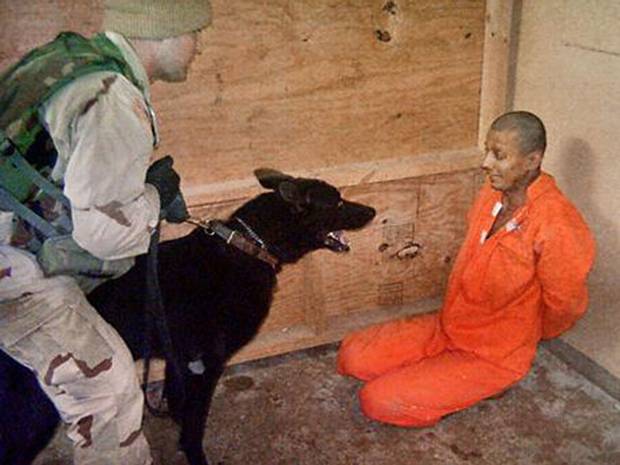
Many of the torture techniques we know from revelations during his first term – the water-boarding, the euphemisms: “exploiting individual phobias” means setting Alsatians to sniff the genitals of suspects; “adjusting temperature” means subjecting them to sub-zero freezing; “dietary manipulation” means temporary starvation and so on. Now the Report informs us that these techniques were often “far more brutal” than hitherto admitted. For example, “stress positions” could mean hanging a suspect in shackles for 180 hours. They were designed to cause physical and mental harm and the White House’s lickspittle lawyers twisted the law so that their clients could be told what they wanted to hear, i.e. that this was not torture, merely “degrading treatment”. Regrettably, these lawyers will not be prosecuted, as they should be, for aiding and abetting torture. Morally, the buck stops with Bush and Rumsfeld, although the only verdict they will face is that of history. The Senate Report makes a “guilty” verdict even more likely.

The great importance of the Report is to refute the claim, made or believed by every torturer, that brutality “gets results”. The Report states authoritatively that at no time did “coercive interrogation techniques” help to expose imminent threats or achieve successes and that the CIA has incorrigibly lied about this (and is still lying, to judge from its reaction to the Report).
These findings hit the torture lobby where it hurts. No longer can it trot out the unreal “ticking time bomb” hypothetical – fanatics who know where the bomb is hidden stay silent because they welcome death as martyrdom, whilst those who are pain-wracked supply false information which distracts the police while time ticks away. Interrogators always do better by offering money, or freedom – one of the most important leads to Bin Laden was elicited by offering a cup of tea.
The exposure of how spooks regularly lie also repays study: where the CIA leads, MI6 usually follows, although political cowardice in Britain generally allows intelligence services to stay silent. Certainly, among the 5,500 unpublished pages in this Report, will be found details of MI6 collaboration in CIA torture. They are unpublished because the British government has invoked a protocol that allies must not spill each other’s secrets. Mr Cameron, if he shares the gumption and integrity displayed by President Obama, should call for these redacted passages and publish them. Britain, too, should publicly reject conduct up with which we should not put.
The United States was last night confronted with a landmark report into the CIA interrogation of detainees in the wake of the September 11 attacks at “black site” prisons around the world so replete with details of barbarism and inhumane treatment as to call into question the values at the core of the nation’s identity.
The 528-page document, released by the Senate Intelligence Committee and itself a summary of a 6,000-page report that remains classified, accused the agency of going far beyond even those “enhanced techniques” authorised by the Justice Department and lying at every turn about what was happening.
“The CIA’s actions are a stain on our values and on our history,” the committee’s chair, Senator Dianne Feinstein, proclaimed on the floor of the Senate. But she posited also: “The release of this 500-page summary cannot remove that stain, but it can and does say to our people and the world that America is big enough to admit when it’s wrong and confident enough to learn from its mistakes.”
While most of the American public – and the world – has long been aware of the broad outlines of the programme, to many the report will shame the country.
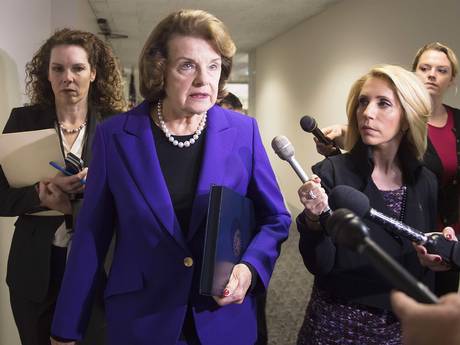
Dianne Feinstein, Senate Intelligence Chairwoman
It includes confirmation of the death of one inmate from hypothermia after being shackled to a wall and forced to rest on bare concrete in a sweatshirt in a site in Afghanistan.
Detainees – even the numbers involved were understated by the CIA, the report asserts – were not only subjected to simulated drownings, or waterboarding, as had been previously disclosed, but on some occasions were kept alive by “rectal feedings”, with ground-up food inserted through the anus. The report found there was no medical reason for performing such painful and humiliating procedures.
The black sites were closed by the then President George W Bush in 2006 – detainees at the sites were transferred to Guantanamo Bay – and the programme itself was terminated by President Barack Obama when he took office.
Regular beatings, slamming detainees against walls, soaking them in cold water, ice baths, extended periods of sleep deprivation – lasting for one month in one case – confining them to small spaces and even threatening them repeatedly with death while in custody, were among the methods used to try to make detainees talk. At least three detainees were told their families would be killed if they didn’t co-operate.
Among the most chilling passages are those detailing the treatment of the first prisoner, Abu Zubaydah, a Pakistani who was severely injured in his capture and transferred to a black site in Thailand. (Other countries that hosted the secret prisons are known to have included Poland, Lithuania and Romania).
CIA suspect Abu Zubaydah after being left in isolation for 47 days, Abu Zubaydah faced an unrelenting assault from the US inquisitors. He was squeezed into tiny boxes for 300 hours and water boarded no fewer than 80 times. Emails seen by investigators showed some of those involved asked to be transferred, so disturbed were they by what they witnessed. The waterboarding left Abu Zubaydah “completely unresponsive, with bubbles rising through his open, full mouth”. He was reduced to a state of “involuntary spasms”.
Khalid Sheikh Mohammed, the 11 September mastermind, received the waterboarding treatment 183 times. When officers noted he wasn’t becoming more compliant they waterboarded him for 10 more days.
Threaded through the report is the conclusion that none of what the CIA perpetrated actually procured information that stopped any plots against the US or its allies, directly contradicting what the agency and its supporters still today insist is the case. It painstakingly deconstructs 20 cases where the CIA claimed useful information was elicited from detainees, each time concluding that it was simply untrue.
Describing how officials, including former directors of the CIA such as George Tenet, inflated the usefulness of the programme and downplayed its cruelty, the report also reveals how details of the work were withheld from members of Mr Bush’s cabinet, notably from the Secretary of State Colin Powell. An internal CIA memo says Mr Powell would “blow his stack if he were to be briefed on what’s going on”.
In a statement last night, President Obama said that the CIA’s actions at the time were “contrary to our values”. He went on: “I will continue to use my authority as President to make sure we never resort to those methods again.”
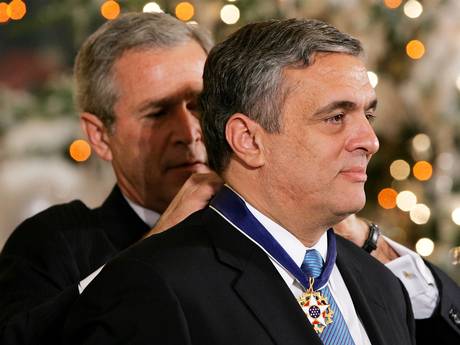
President George W Bush awards former Director of the CIA, George Tenet, with the Presidential Medal of Freedom in 2004
The CIA, now led by John Brennan, struck back, admitting that some errors had been made but insisting that techniques “did produce intelligence that helped thwart attack plans, capture terrorists and save lives”. In a statement, Mr Brennan said the report “tells part of the story” but “there are too many flaws for it to stand as the official record of the programme”.
Republicans on the Senate panel, which remains under Democrat control until the year’s end, issued their own report defending the programme. “The rendition, detention, and interrogation programme [the CIA] created, of which enhanced interrogation was only a small part, enabled a stream of collection and intelligence validation that was unprecedented,” the minority report concluded.
But Senator John McCain, who was himself tortured in Vietnam, was notable in taking the floor last night and welcoming the report. “We gave up much in the expectation that torture would make us safer,” he said. “Too much.”
The report took five years to compile and was the subject of repeated wrangling between the CIA and the Intelligence Committee. Even as she was preparing to unveil it this week, Senator Feinstein faced warnings that to do so would again inflame public opinion against the US around the world and possibly trigger violence. US overseas posts were on high alert for trouble last night.
Mr Bush as well as many of those responsible for overseeing the programme have spoken out in recent days to defend the CIA and reject the notion that the agency misled the White House or Congress about what it was doing.
836 Viewers