THE PROBLEMS WITH THE PROPOSED 19TH AMENDMENT TO THE CONSTITUTION – Part 1
 There are huge problems with the proposed 19th Amendment to the Constitution. In this article I’ll focus on just the first and foremost of those, which has to do with the proposed changes to the Executive. (I am using the version of the proposed amendment published in Colombo Telegraph: www.colombotelegraph.com)
Article 2 of the proposed Amendment (to replace Article 4(b) of the Constitution) says:
“(b): The executive power of the people, including the defence of Sri Lanka, shall be exercised, in the manner hereinafter provided, by the President of the Republic elected by the People.”
Article 7(2) of the proposed Amendment (to be inserted as Article 33A of the Constitution) says, inter alia:
“33A(2): The President shall always, except in the case of the appointment of the Prime Minister or as otherwise required by the Constitution, act on the advice of the Prime Minister or such Minister as has been authorized by the Prime Minister to advise the President with regard to any function assigned to that Minister.
33A(3): The President may require the Prime Minister or Minister giving advice to him or her under subsection (2) to reconsider such advice, but the President shall act on the advice given to him or her, after such reconsideration.”
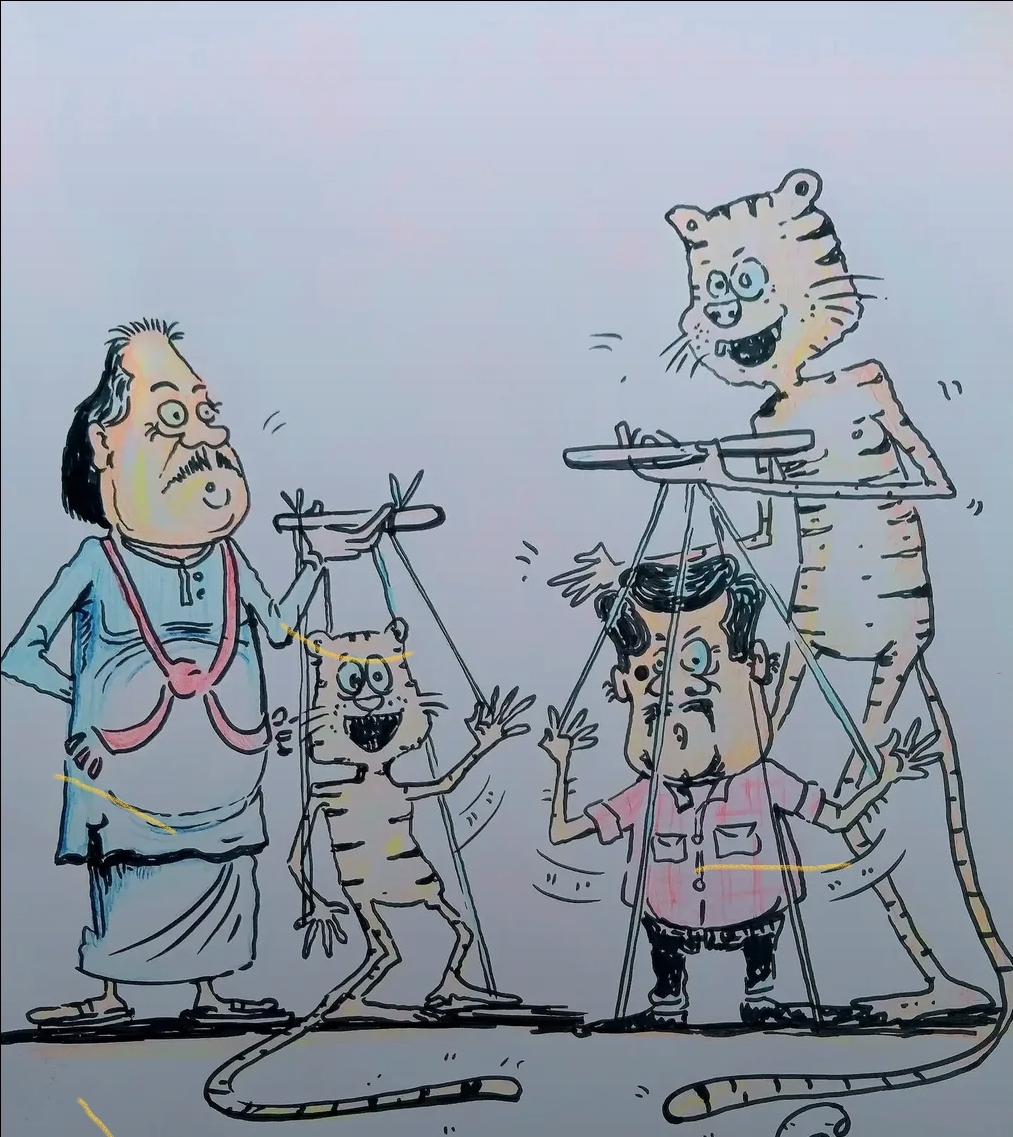
Since Article 2(b) above says that the executive power of the People is to be exercised by the President, and the President is to be elected by the People, it means the person elected as the President is the person delegated by the People to exercise the said executive powers. Articles 33A(2) and (3), however, indicate that it is the Prime Minister who will actually exercise the executive power of the People.
To expand on the above a bit further: If, out of a number of candidates, the People elect X to perform function Q, it is presumably because the People consider that X, and not anyone else, is qualified and capable of performing Q. Why would the People elect X to perform Q if they wanted, say, Y to do the job? If they wanted Y for the job, they could elect Y directly, or, reciprocally, if Y felt he was qualified and capable for the job, he could go before the people himself and get the necessary mandate.
To return, there is a fundamental legal maxim that says, “Delegatus non potest delegare” (A delegated power cannot be delegated). What Article 7(2) of the proposed 19th Amendment does is precisely to delegate a delegated power, in this case to the Prime Minister.
Certainly, a Constitution can require a President to listen to the advice of the Legislature, or any other designated body. If we take the United States Constitution, for instance, it says that, when it comes to the appointment inter alia of Supreme Court judges, the President shall make such appointments subject to the “advice and consent” of the Senate (Article 2, Section 1).
(In fact, there has been an ongoing debate in the United States whether the Senate, as per the aforesaid “advice and consent” clause, can irrevocably prevent the President from appointing a particular person of the President’s choice to the Supreme Court if the President is adamant about appointing that person and no one else. But this matter is not directly pertinent to the present discussion.
The point is that the word “advice” entails that the person being asked to take advice has the option of either accepting or rejecting the advice in question. If he does not have such a choice, then he is not being asked to take advice, but being asked to take “orders” or “directions.”
What the writers of the proposed 19th Amendment have done is to impose a mandatory requirement on the President (the word “shall” is used in the relevant clause) to always follow the “advice” of the Prime Minister, in all his (the President’s) actions. Clearly, as per the provisions of Articles 33A(2) and (3), the President has no choice as to whether to accept the advice given to him.
Article 33A(2) says the President can ask that the advice be “reconsidered,” but after it is reconsidered, the President still has to follow it. So, the fact that the President has no choice but to accept the advice of the Prime Minister or his designated deputy is in no way changed.
Therefore, Article 33A(2) should actually read: “The President shall always, except in the case of the appointment of the Prime Minister or as otherwise required by the Constitution, act on the orders and directions of the Prime Minister.” It would be a more accurate description of the relationship that the proposed 19th Amendment is trying to set up between the President and the Prime Minister.
In short, as per the provisions of Articles 33A(2) and (3), the proposed 19th Amendment makes the President a sort of servant of the Prime Minister or the latter’s designated deputy. As I have pointed out earlier, however, it is the President who is elected directly by the People to exercise the People’s executive power. If the Constitution makes the President a servant of the Prime Minster, what does that do to the People’s ability to exercise their executive power?
Clearly, the 19th Amendment as it stands violates the legal maxim: ‘delegatus non potest delegare,” which means it is legally unsound. If the impugned provisions are not changed or adjusted to resolve this problem, the 19th Amendment would have to be rejected in limne, just on those grounds.
Dharshan Weerasekera is an Attorney-at-Law. He is the author of, The UN’s Relentless Pursuit of Sri Lanka, and the need for effective counter-measures (Stamford Lake, 2013)
Dharshan Weerasekera
2017 Viewers