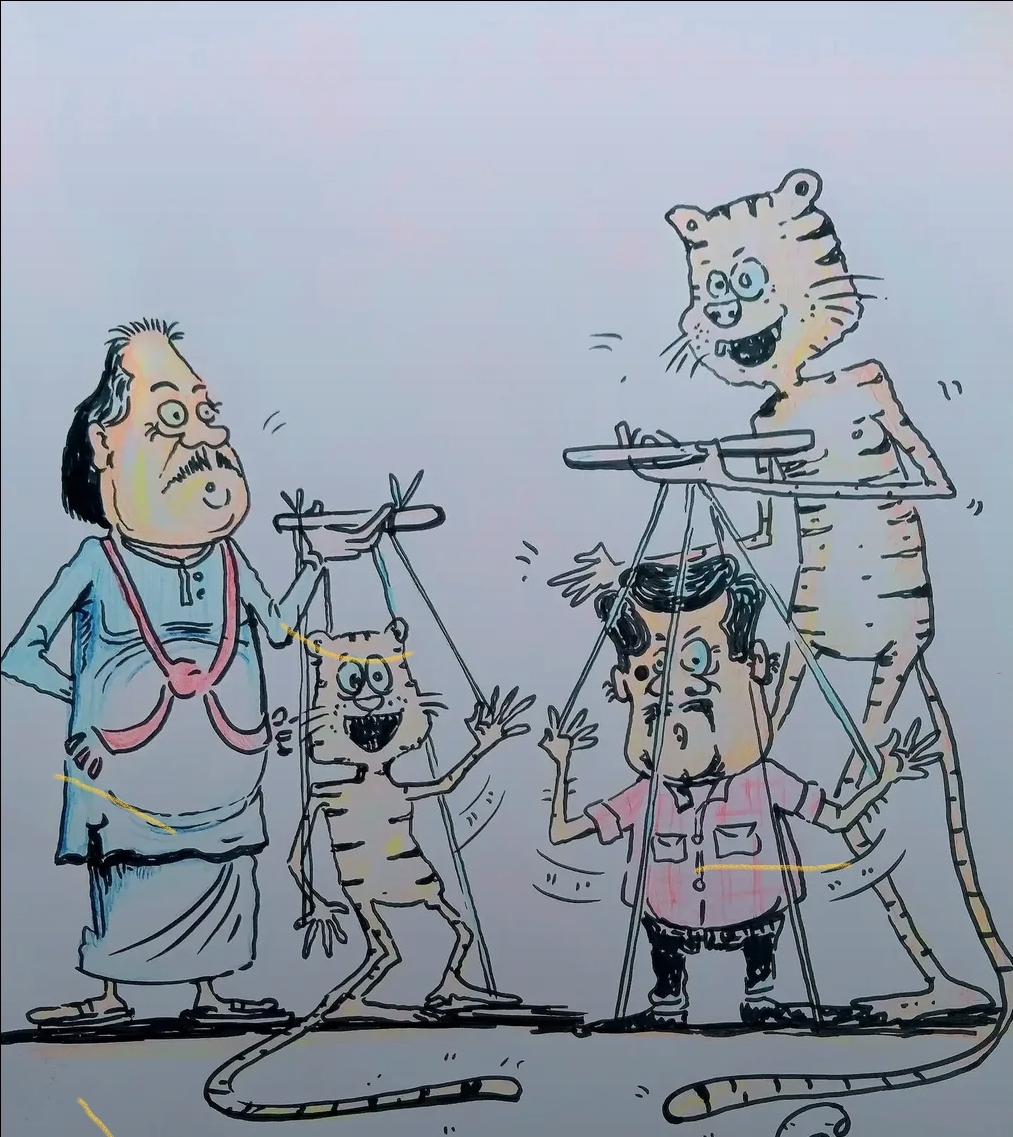
Ranil’s Gestapo Police exposed in Supreme Court
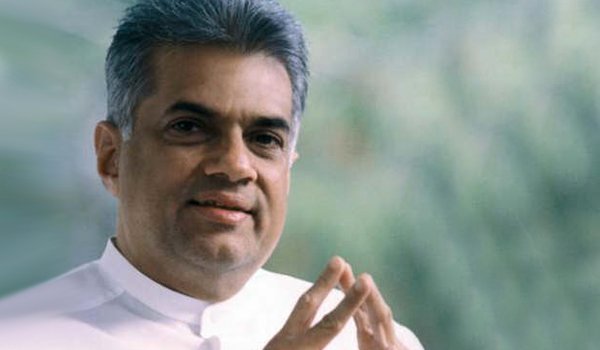 President’s Counsel, Romesh de Silva’s brilliant analysis of the politically manipulated Police unit investigating financial crimes confirms that the “My-3 regime” has created an illegal arm of the Police to pervert justice. His submission to the Supreme Court, has unerringly alerted the public to the Gestapo role of the Financial Crimes Investigation Department (FCID) – the newly established Police arm of the National Executive Council (NEC) which blindly follows the orders issued by the Prime Minister without any checks to restrain his arbitrary and politically motivated decisions taken against his opponents. Counsel Romesh de Silva’s meticulous description of the FCID debunks the inflated claims on which Yahapalanaya was marketed to the people on January 8th , 2015. His revelations blasts the political myths of the Yahapalanaya (good governance).
For instance, the FCID is empowered to summon individuals and remand them on politically motivated charges. This Police unit uses flimsy, untested evidence to remand mainly those in the opposition. Detailing the anti-democratic characteristics of the FCID that threaten liberty and fundamental rights, Romesh de Silva told the Courts that (a) already ten people who were summoned by the FCID have been arrested; (b) the FCID was created by a Cabinet decision on January 15, 2015 (c) the Cabinet had no legal powers to decide on setting up a new police division (d) the Gazette notification, which contained only four paragraphs, was illegal and was politically motivated from the inception (e) the IGP could not transfer his powers to the Cabinet of Ministers to establish another arm of the Police to investigate and arrest people (f) an instrumentality like the FCID, which is ultra vires, could not arrest people. (g) the investigations were carried outside the available police powers and (h) this unit is headed by the Prime Minister, Ranil Wickremesinghe, who is also a Vice President of the International Democratic Union committed to uphold the highest liberal democratic traditions and fundamental freedoms.
Counsel Romesh de Silva revealed this in defending Gotabaya Rajapakse who had been summoned by the FCID with the hidden agenda of arresting him.. He told the Supreme Court : “The Cabinet Spokesman had recently said that the National Executive Committee had directed the Financial Crimes Investigation Division to arrest the petitioner on an alleged false accusation. The Cabinet Spokesman’s statement had been published in ‘Dinamina’. It had not been denied. The gazette which created the FCID was ultra vires. Everything that flew from that Gazette was ultra vires. The gazette was politically motivated. The gazette enabled a police division to investigate crimes subject to cabinet decision. Hence, a new police division was set up subject to cabinet supervision. Only the IGP was empowered to investigate crimes. He could not be subjected to Cabinet decisions. (The Island – 13/5/2015).
The inescapable conclusion arising from putting Counsel Romesh de Silva’s statements together, points to the fact that Wickremesinghe has set up an illegal police arm to victimize his political opponents. People who are summoned by the FCID seldom go home. Of the many complaints received, it is Wickremesinghe’s NEC that picks and chooses the allegations that are sent to FCID for investigation. Some of the allegations picked up by the NEC for the FCID to investigate are based on anonymous letters. Example: the allegation that Marriot Hotel in Dubai, is owned by President Mahinda Rajapakse, which has been flatly denied by the ex-President, was based on an anonymous letter. Looking for evidence to substantiate this allegation, like the allegation that the Rajapakse regime has stashed away 18 billion in offshore havens, is not like looking for a needle in a haystack. It is so huge that it would not be difficult to find the evidence, if true. In the absence of hard evidence Wickremesinghe’s FCID pursues allegations, picked from here, there and everywhere, to blacken the image of his political opponents.
FCID is a part of the Wickremesinghe’s propaganda machinery to create headlines, partly to denigrate the image of the Rajapakse, partly to boost the image of Wickremesinghe’s failed politics and partly to create a climate of fear. He failed in delivering the promised nirvana in 100-days. So he generates headlines against his opponents by sending them to remand through an illegal arm of the Police which has no powers to arrest people.
So far the anti-Rajapakse headlines manufactured by Wickremesinghe’s propaganda machine, have been humongous. But the facts are scarce. Can justice be delivered on monstrous propaganda? The entire rationale on which Yahapalanaya was marketed to the people was that it would make a “difference”. The “difference” promised was rule of law. But how can there be rule of law when its Gestapo police is engaged 24/7 to pursue its political opponents on hearsay? Has rule of law become the rule of Wickremesinghe, with Wickremesinghe turning into a wild witch-hunter? Why is NEC picking only those allegations that are considered favourable for the retention and extension of Wickremesinghe’s power?
To arm an overarching political body like the NEC with a handpicked police team, operating outside the law, is a serious threat to the fundamental freedoms of all citizens. The fact that it is headed by the Prime Minister makes it more sinister. It also means that a Cabinet sub-committee headed by Wickremesinghe has grabbed Police powers which can be exercised only by the IGP. But through FCID Wickremesinghe is acting both as the Prime Minister and the IGP simultaneously. Under what principle of Yahapalanaya can the Prime Minister run an arm of the Police, established outside the legal framework of the Police force, to hunt and remand political opponents?
The FCID goes into action expeditiously, summoning members of the opposition and remanding them, shortly after the allegations are handed over by Wickremesinghe’s Cabinet Sub-Committee. This instrumentality is reminiscent of the Star Chamber – a medieval instrument of political oppression and suppression used by ruling royalty to silence dissenters. In the medieval period, when Europe plunged into the Dark Age, the Star Chamber developed into a law enforcement authority with powers to deal with the socially and politically powerful who could not be convicted by the lower courts. Counsel Romesh de Silva’s detailed description of the NEC brings to mind the time when the notorious Star Chamber abused power to retain power. The NEC has engaged in similar exercises of handing over selected political opponents to the FCID who are then summoned for questioning and sent arbitrarily to the remand prison on flimsy evidence without due process.
To counter this, it is likely that the pro-Wickremesinghe kalliya will argue that the Rajapakse government too committed similar violations of the law. But that is to argue that two wrongs can make a right. Besides, the January 8th mandate for good governance was to uphold the rule of law and not to establish an illegal arm of the law to enforce Wickremesinghe’s law. The primary criterion on which Wickremesinghe’s FCID should be judged is the solemn promise given by President Maithripala Sirisena that rule of law will prevail in dispensing justice. The valid answer to this issue is not to point a finger at the Rajapakses to divert attention from Wickremesinghe’s perverse politics but to explain how and why the mandate of the people to establish a “Yahapalanaya” (good governance) is being violated so aggressively and contemptuously by Wickremesinghe. The silent endorsement of President Sirisena who religiously promised not to do what the Rajapakses did makes him also a partner in the crime of establishing an illegal arm of the police to pursue political opponents. Is this the best that Sadhu Sirisena’s political nirvana can offer the people who voted for him?
Fortunately, the Supreme Court intervened and stopped Wickremesinghe’s attempt to arrest Gotabhaya Rajapakse. This frustrated Wickremesinghe’s plan to project the pretentious image that he is Mr. Clean running a squeaky clean administration. But nothing that he does can wipe out the mega-million scandal of his protégé, Arjuna Mahendra. Putting the Rajapakses behind bars is not going to make him look clean. He will be judge by his own performance which has been so far to protect the “James Bond of Singapore” who is responsible for the biggest financial scandal in the history of the Central Bank. Wickremesinghe’s current political tactic is to cover-up his sins by rounding up the Rajapakses and their allies and handing them over to the FCID. The “My-3” regime won on Janaury 8th by demonizing the Rajapakses. He is now forced to survive by demonizing them further. But to do that he has to clean his stables before he goes to the next election coming round the corner. This is not going to be easy given the short deadline for election. Besides, he has exhausted his slogans and goodies he could offer to the electorate to create the feel-good effect for him to win. So he uses an illegal instrument, which doesn’t have police powers, to send his political opponents to jail and immobilize them, hoping to capitalize on the negative publicity diffused by jailing his opponents. .
He also needs these anti-Rajapakse headlines to cover-up monumental blunders of importing Arjuna Mahendra, a foreigner from Singapore, to head the Central Bank, and R. Paskaralingam, another foreigner from UK, to run the Treasury. Paskaralingam is another relic of Wickremesinghe’s failed past who had left a bad taste in the mouths of local financial circles before he fled to UK when Wickremesinghe was thrown out by Chandrika Kumaratunga. Though Wickremesinghe is putting up a brave front he has no leg to stand on. He is batting defensively on his back foot, withdrawn into a damage control mode. The bond scandal of the Central Bank is something that he cannot live down. His first biggest blunder was his infamous CFA signed with Prabhakaran in 2002. His second is the recruitment of Arjuna Mahendra who has claimed close relationship, from childhood, with Raja Rajaratnam, now behind bars in New York for insider trading. Not all the waters of the Indian Ocean can wash his guilt away.
There is no one else to blame except Wickremesinghe for putting himself and the nation in this financial mess. Having painted himself into a corner, Wickremesinghe is now stuck, not knowing how to get out of the mess created by his own folly. On top of this he now faced with a severe blow from the Supreme Court which had intervened to prevent his Gestapo Police from arresting Gotabaya Rajapakse. It is a big blow to his ego and to the assumed power of his “democratic junta”. This description of his rule, where a minority rules the majority in the Parliament, was, no doubt, a Freudian slip. But like all Freudian slips it reflects the hidden intentions buried deep in the psyche. If push comes to shove Wickremesinghe will not be unwilling to run a “junta” like the way he ran his Party.
He has survived in his party by fixing the UNP constitution to keep him in power with the Executive Committee stacked up to the rafters of Siri Kotha with his “catchers”. Since he doesn’t have the numbers in Parliament he is moving heaven and earth to use the NEC and the FCID as tools to survive in the prime ministerial seat. His past experiences of being thrown out of the prime ministerial seat has made him a nervous fascist bent on hanging on to power at any cost. He is an insecure man who is not sure of his tomorrows. Despite his bravado he is not sure of winning the requisite numbers in the next election to be confirmed as the next prime minister. The only alternative available to him is step out of the constitution to establish instrumentalities that will strengthen his grip on power. He is obsessed with running his “democratic junta” with him as its benevolent and popular Fuehrer. He has labeled it as the “ National Government” which is another politically convenient label to keep him going as the Prime Minister without a majority to sustain him in Parliament.
This is why the Supreme Court decision has unnerved him. The Supreme Court decision to cut down his arrogant powers was an unexpected blow. This is hurting him most and he is reacting like a wounded bull.
His knee-jerk reaction is to go over the heads of the Supreme Court and appeal to judges of the Commonwealth. This reflects his power-crazy mentality. Unfortunately for him, he has been shot down not only by the Supreme Court but also by the Commissioner of the Sri Lanka Human Rights Commission Dr. Prathiba Mahanamahewa. Confirming the authoritarian character of Wickremesinghe, Dr. Mahanamahewa states: “Looking at these developments, we cannot imagine what would have happened had the 19th Amendment vested all the powers of the Presidency on the Prime Minister.”
Dr. Mahanamhewa has hit the nail on the head. The overall plan and argument for the constitutional reform was to hand over presidential powers to the prime minister in parliament to prevent corruption, abuse of power, and authoritarianism. By his own example Wickremesinghe has proved that power vested in the hands of the prime minister in parliament can be worse than the power vested in the president who stands outside the parliament. His appointments of Arjuna Mahnedra and R. Paskaralingam are two glaring examples of Prime Minister abusing his powers to appoint his henchmen in key places without any benefits to the nation.
Besides, the illegal agreement he signed with Prabhakaran, without informing the Cabinet, the President, parliament or the people in 2002 and the appointment of Arjuna Mahendra, who has proved to be the destructive Prabhakaran of the financial market, confirms that Wickremesinghe cannot be trusted with power. In both instances he has betrayed the vital interest of the nation. This also reveals his contempt for anything Sri Lankan. He prefers Mahendran from Singapore and Paskaralingam from UK to local talent who can do a better job in protecting the interest of the nation. Neither of these importees have shown a loyalty to the national interests. They are in it to either feather their own nests or that of using the GOSL bases to promote pro-separatist agenda. Neither of these officials have backed Sri Lanka in foreign or local fora. But they are allied to agents in pro-separatist / LTTE outfits. For instance, Arjuna Mahendra, has openly admitted that Raja Rajaratnam, the insider trader jailed in New York, were childhood mates.
The conduct of Wickremesinghe in running the FCID and the serious threats to fundamental freedoms that flow from his arbitrary and politically motivated action demand that the Gestapo police acting under Wickremesinghe should be dismantled forthwith. There is no place for such an instrumentality in any democratic administration, let alone Yahapalanaya. Parliament should take immediate action to curtail the powers of Wickremesinghe who, in the first place, have no right to arrogate anti-people, anti-democratic powers. The basic principles enunciated in the agenda of the Yahapalanaya backs the Parliament and not Wickremesinghe. If Parliament fails to teach Wickremesinghe the basic principles enshrined in Yahapalanaya it will be as guilty as Wickremesinghe in betraying the fundamental rights of the people.
Prime Ministers and Presidents generally tend to consolidate their own anti-people powers. It is up to the Parliament to stand up for the rights of the people. Parliament must act now before Wickremesinghe can play havoc with his powers like the way he handed over powers to the other fascist dictator, Velupillai Prabhakaran, in 2002.
H. L. D. Mahindapala
1215 Viewers