Dissolution of parliament or impeachment to bring Sirisena to heel?
(Courtesy of The Island)
 Prime Minister Ranil Wickremesinghe was attending the World Economic Forum in the Swiss ski resort of Davos while back in Colombo the stock market was setting records in the wrong direction and the promised addition of Rs. 2,500 to the basic salaries of government servants in January failed to materialize. What conceivable advantage would Sri Lanka have by attending an event such as the World Economic Forum? One very prominent pro-UNP website described the meeting in Davos that Wickremesinghe addressed on the sidelines of the World Economic Forum as an ‘investor’s conference’ and said that there was so much investor interest in Sri Lanka that there weren’t enough seats at the conference venue. Despite such starry-eyed effusions, the prospect of any investor from Davos or anywhere else coming to Sri Lanka is pretty slim. No significant Japanese investment came to Sri Lanka even after Wickremesinghe addressed the Japanese parliamentarians and Japan is a country that has always had a prominent presence in Sri Lanka unlike Europe. Europe is known in Sri Lanka not as an aid giver or investor but as the main international backers of separatism in this country.
In any event, what the world’s economic glitterati heard in Davos about the future prospects of the world economy in 2016 and beyond, would not put them in any mood to invest anywhere let alone a country like Sri Lanka. Even George Soros who was in Sri Lanka earlier this month to advise this country on its future course of action went to Davos and sounded a dire warning about the state of the World economy and predicted that the global financial system was on the cusp of a major meltdown like in 2008-2009 which will if anything be worse than the previous instance. As Soros explained, what set off the 2008-2009 world recession was the non-performing mortgage crisis in the USA. This time it is the gradual conversion of the Chinese economy from being export driven to being driven by its own internal market.
Soros had told Bloomberg TV that it has been 80 years since the world last faced a deflationary environment, and the world doesn’t know how to handle it. In other words, Soros was predicting that the melt down that was coming was going to be much worse than the 2008-2009 episode. Back in 2008, the economic crisis was described as the worst since the great depression of the 1930s. During the 2008 financial meltdown, the Sri Lankan public hardly even knew that the world was going through its worst economic downturn since the 1930s. Those were the years in which the war reached its peak and the people of Sri Lanka were glued to their TV screens and the war drowned out all other news.
An even more important factor was that back then, we had competent managers running the economy and they were able to take whatever steps that could be taken to cushion the impact of the global downturn. This time if a world economic crisis hits us, we are going to feel the consequences perhaps with even greater acuteness than most other countries in Asia. We now have to brace ourselves for a crisis of unprecedented proportions when we are least equipped to handle it. We have a dysfunctional government which has no conception whatsoever of economic management.
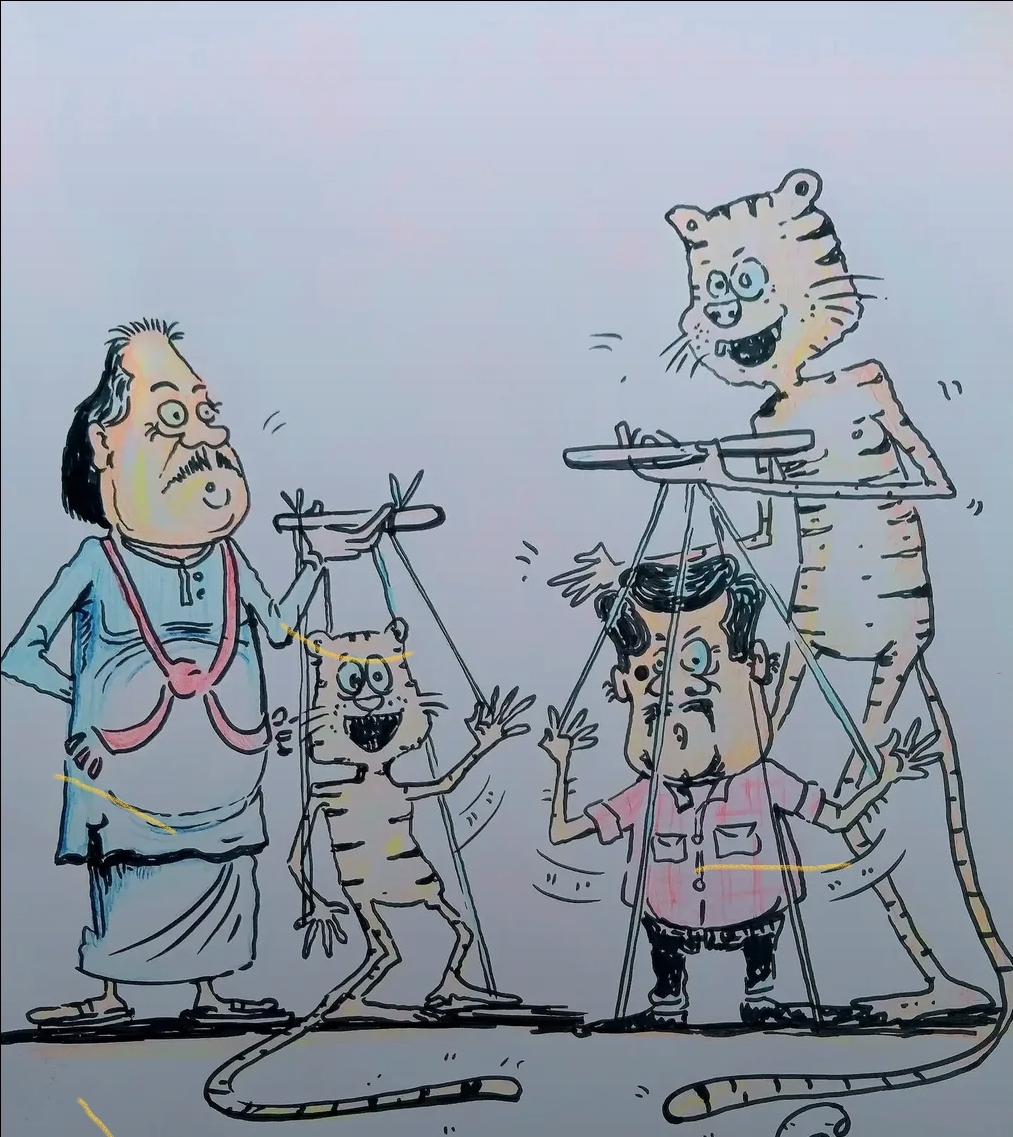
Why is Soros circling overhead?
To be fair by George Soros, he sounded the same warning that he made in Davos when he was in Sri Lanka earlier this month to address an economic forum organized by the government. The gist of what he told the Sri Lankan business community was that even if Sri Lanka is keen to attract investment, the situation of the global economy was not good and that Sri Lanka may have to lower their expectations. In Sri Lanka too, Soros had mentioned the global crisis of 2008 and said that the world was heading in that direction.
Talking about George Soros, he seems a strange kind of business celebrity for a country like Sri Lanka to invite to give advice to the government. Soros is not a figure like Bill Gates or the late Steve Jobs. Soros has not produced anything in his life; he has been a financial speculator who has made money by simply manipulating the currency markets. Sri Lanka is a country that needs foreign direct investment in industries, agriculture and services and it may have been more appropriate to get a top industrialist, hotelier, banker, agro-business magnate or someone of that ilk rather than a financial speculator. The kind of activity that Soros engages in is just about the last thing that Sri Lanka needs. Soros is a man who rose to prominence in the early 1990s by making a huge amount to money by speculating in the pound sterling.
In 1992, in the certainty that the sterling was going to be devalued, Soros borrowed huge amounts of pounds on forward contracts and then bought Deutschmarks and other European currencies with that borrowed money. After the pound was devalued as anticipated, he got more pounds for his Deutschmarks and in selling off the latter, he had made a handsome profit of more than a billion USD. This kind of get rich quick scheme is just about the last thing that Sri Lanka needs at present. The present government in its desperation for money has been dabbling in unwise alchemy. One instance is Finance Minister Ravi Karunanayake’s announcement that an unnamed investor from Belgium would be investing one billion USD in Sri Lanka at 2% interest to shore up our sagging foreign currency reserves.
If this is a bona fide investment, why should the supposed investor’s name be withheld from the public? Certainly borrowing money from private investors is much easier than getting loans from the IMF. But if that money is not clean, we’ll be blacklisted internationally for facilitating money laundering. The other danger is of course the possibility that this investor may withdraw his money causing a sudden and disastrous reduction in foreign currency reserves. These are dangerous ideas that have been going through the minds of those in control of the economy. Even the presence of Soros should be a cause for worry. If you see Soros circling overhead, that is a sure sign that he smells devaluation. He made killings in Britain in 1992 and in Malaysia in 1997 by speculating in currencies that were out of line with economic fundamentals, and which were facing imminent devaluation.
Today, Sri Lanka is in that classic position where we have an overvalued currency which is being artificially propped up by the Central Bank. When it is obvious that further devaluation is almost certain, speculators like Soros would find it feasible to borrow large amounts in rupees and purchase other currencies with the borrowed money so that once the devaluation takes place, the other currencies bought can be sold for a higher rupee amount thus making a profit. Soros is now pushing 90, and one wonders whether he has shown an interest in Sri Lanka to pull off the last great escapade in his controversial career? With both President Maithripala Sirisena and Prime Minister Ranil Wickremesinghe literally falling at his feet, Soros will have a much easier time making money out of Sri Lanka’s misery than he had in Britain in 1992 or in Malaysia in 1997.
Constitutional change on hold
When the party leaders met last Tuesday, it was decided not to hold the debate which was scheduled for January 26 (Tuesday this week) on the prime minister’s resolution to set up a Constitutional Assembly until the prime minister returns from his trip to Davos. It is to be hoped that this postponement is to amend the resolution as recommended by the Joint Opposition and to proceed with the constitution making process under the standing orders of parliament, the same way the previous 19 Amendments to the constitution were made. Former President Mahinda Rajapaksa has gone on record suggesting that the constitution making process be split up into manageable parts by bringing in the abolition of the executive presidency and the reform of the electoral system first, before going onto other matters. The example he had taken is the way the executive presidency was first created as an amendment to the 1972 constitution which was later incorporated into the 1978 constitution.
This suggestion has much merit to it because the last parliament also debated the 19th amendment to abolish the executive presidential system and the 20th Amendment for electoral reform separately. The reason why the 19th and 20th Amendments failed last time was because the SLFP Maithripala group sabotaged the 19th Amendment and the UNP cold shouldered the 20th Amendment in retaliation. Indeed, if there was going to be no abolition of the executive presidency, there was no reason why the UNP should agree to an amendment of the electoral process. In fact another reason why these two issues should be dealt with separately is because they are the two main issues around which the constitution making processes revolves. If these two issues can be overcome before we go on to the constitution making process, that will leave only the devolution of power as a possible cause for contention.
Admittedly, there isn’t as much agreement within the country over the devolution of power as there is over the abolition of the executive presidency and electoral reform. Hence the devolution of power, if brought together with the other two issues, has the potential to derail the entire process. So if anybody is serious about constitutional change, they will as was suggested by MR last week, split up the issues and deal with them one by one.
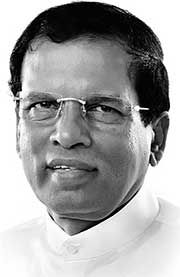
Last week, President Maithripala Sirisena was interviewed by Frontline magazine and when he was asked how much time he thinks will be required to for the new constitution to be adopted, his reply was “There will be a comprehensive national debate over a year on whether the existing Constitution should be amended or a new Constitution is required. We have to seek the views of the people, intellectuals, professionals, constitutional experts and civil society organizations. We will seek the mandate of the people at every stage…” When asked whether he was firm in abolishing the executive presidency, Sirisena had answered in the affirmative with a cryptic ‘Yes’. Of course, no one should take president Sirisena at his word. He has over the past one year made a fine art of going back on his word. Even after he took a solemn oath over the corpse of Ven Maduluwawe Sobitha Thero that he will abolish the executive presidential system totally, he told members of the Joint Opposition that he had only agreed to constitutional changes that do not require a referendum.
In a situation where the supreme court had determined that the abolition of the executive presidency comes into conflict with entrenched Article 4 of the constitution and that a referendum is necessary, for Sirisena to say that his mandate at the presidential election extends only to constitutional changes that do not require a referendum, translates into an attempt to dodge abolishing the position he holds. If Sirisena tries to block the abolishing of the executive presidency once again, the only option left to force him to fulfil the most important pledge that he gave to the people may be to present a resolution in parliament asking for dissolution of parliament. With former president Mahinda Rajapaksa declaring that he will support the move to abolish the executive presidency, certain possibilities open up for those who wanted to see an end to the executive presidential system.
The only thing that President Sirisena obviously fears just as much as losing the executive presidency is another election. If presented with the option of either cooperating with the process of abolishing the executive presidency or a resolution asking for dissolution of parliament, he may relent and accept the less disruptive option. In any event there will be an element of carrying the incumbent kicking and screaming out of the executive presidency. It’s going to a messy process and the sooner those who want to see the executive presidency abolished realize this, the better. Even if parliament passes a resolution calling on the president to dissolve parliament, according to the 19th Amendment, the president has the discretion not to do so. This itself shows what an absolute farce the 19th Amendment was. A two thirds majority in parliament can make any change in the supreme law of the country other than in the eleven entrenched Articles, but it can’t make the president dissolve parliament!
If even a two thirds majority in parliament will not persuade the president to dissolve parliament, the next step may an impeachment and a head on confrontation between the president and parliament. The only question is how far the UNP is willing to go to get the executive presidency abolished. They should not start the process at all unless they are willing to go the whole hog. With former president Mahinda Rajapaksa saying that the SLFP will not be able to oppose an amendment brought by the UNP to abolish the executive presidency because it was the UNP that created that position and the SLFP had been opposed to it from the very beginning, a window of opportunity has opened up which did not exist earlier.
A veritable smorgasbord
of issues
There was probably no peacetime era in this country when we were beset simultaneously by so many problems. On the one hand is the looming economic crisis, then there is this constitutional impasse, on the sidelines of all this is the Kathikawath Bill which has stirred a Hornet’s nest among the monks, then there is international pressure to make good on the pledges made by the government with regard to war crimes trials. Even though March is fast approaching, nothing has been done in this regard. A tussle has also broken out over the national list seat in the UNP that fell vacant with the death of M.K.A.D.S.Gunawardene. In the middle of this, the political correspondent of the EconomyNext website reports that Champika Ranawaka, Arjuna Ranatunga and Dr Rajitha Senaratne had gone to see Maithripala Sirisena and insisted that members of the Rajapaksa regime suspected of corruption should be put behind bars and they had given the president time till Independence Day to meet their demands.
Panic stricken members of the government may on the one hand be thinking that one way out of their present problems would be to imprison their opponents en masse. On the other hand, creating a big fuss about nothing also helps drown out unfavourable news. In normal circumstances, even a battle over a national list vacancy in one of the two main political parties would be enough to keep the front pages of newspapers going. Today however the vacancy created by MKADS’s death is only one amongst a dozen other issues, each one of which is much more important than a vacant parliamentary seat and the claims of the various aspirants. Even the economic issue can be further divided into various issues, each one of which would in normal circumstances have been at the very forefront of the news broadcasts.
There is of course the mother of all issues the lack of government revenue to meet govt. expenditure; then there is the issue of the promised salary increase of Rs. 2,500 not being added to the basic salary as pledged by the government. There are reports of a fertilizer shortage in the country. Increasing the basic salary by Rs. 2,500 is not as easy as it sounds. Only a small minority of the 1.3 million public servants are on the lowest salary scale. When the basic salary of those at the bottom of the pile goes up by Rs. 2,500, those in the three grades above them should have their basic salaries increased by Rs. 5,000, 7,500 and 10,625 respectively. This is while paying all these workers the remaining Rs. 7,500 from the ‘yahapalana’ allowance of Rs. 10,000 that was given across the board to all public servants. While the same allowance may be given across the board to the highest as well as the lowest, increases to the basic salary cannot be made in that manner and the increase given to the lowest employee has to be increased proportionately as you go higher lest salary anomalies emerge leading to a wave of strikes demanding that salary anomalies be rectified.
Even if we assume that there are only two grades of public servants and those getting the minimum salary number 300,000 and the remaining one million public servants above them get Rs. 5,000 added to their salaries, the extra amount (over and above the allowance of Rs. 10,000) that has to be added on to the pay of the second category alone comes to Rs 30 billion a year. So it’s not surprising that the government has skipped adding the Rs. 2,500 to the basic salaries of government servants in January. The very trade unions that voted for the yahapalana government have now threatened to go on strike if the increase in the basic salary is not paid in February. Even if the prime minister comes back from Davos with pledges to set up a dozen large hotels and a hundred factories plus financing for more harbours, airports, and highways, that still will not solve the problem of the government not having enough revenue to meet their election commitments. New factories and projects don’t add anything significant to the government’s revenue.
776 Viewers