Do The Jaffna Tamils Have A Culture?
By H. L. D. Mahindapala
The Tamils have a great culture. One of the best. But that is not found in Jaffna – the so-called heartland of the indigenous Tamils. Though they crow about their culture loudly and interminably, there is no significant evidence of great cultural achievements in Jaffna because they have been, at all times, merely mediocre imitators of S. Indian culture. To find the great Tamil culture one has to go across the Palk Straits to Tamil Nadu – the one and only homeland of all Tamils. The original and rich treasures of Tamil history and culture were forged in the creative anvil of Tamil Nadu. The Jaffna Tamils lacked the innovative genius to make their history shine with the splendour of any remarkable cultural icons to get anywhere near the magnificent achievements of Tamil Nadu in the north, or the Sinhala-Buddhist culture in the south. Unable to produce anything great, they were quite content to bask in the reflected glory of S. Indian culture. Focusing on the failure of the Sri Lankan Tamils to establish a cultural identity of their own, Prof. Sinnappah Arasaratnam, the Tamil historian, wrote: “No original artistic tradition grew in Tamil Ceylon. Culturally, the Tamils looked upon their arts as part of the Dravidian tradition of south India. When any major work was to be undertaken, craftsmen would be brought from Tamil Nadu. Geographic proximity and political relations made this possible.” (p.115 – CEYLON, S. Arasaratnam, Prenctice Hall Inc., New Jersey, USA).
As the nearest outpost of Tamil Nadu – the motherland of all Tamils wherever they may be — the Sri Lankan Tamils continued to use Tamil Nadu as their spiritual, geographical and historical homeland. That is one advantages that the other Tamils spread out in far-flung domains do not have. To be next door to the motherland instilled in the Sri Lankans an affinity which was missing in, for instance, the Tamils of Malaysia, S. Africa or the Caribbean. Their nearness made accessibility so easy that they did not even feel the need to establish a permanent settlement in Sri Lanka. After all, in the pre-TV era, it was the common practice among the Velvettiturai Tamils, to dash across to the other shore, see a post-prandial Tamil film and come back to have a good night’s rest. There was no necessity for them to establish another homeland in Sri Lanka when they had the genuine and only homeland just next door. How many homelands do the Tamils need to prove that they are Tamils? Or that they are somebodies and not nobodies?
The northern coastal belt of Sri Lanka was only a temporary base for their fishing or trading expeditions, mainly. Though they claim to have been inhabiting the island before anyone else they evinced no interest in making Sri Lanka their permanent home. It was nothing more than a transit point in the Indian Ocean. It took a long time for them to settle down in Sri Lanka as their new home. It is true that they came as brides, priests, traders, mercenaries, craftsmen, fishermen, invaders and marauders but not as permanent settlers initially. It took a long while for them to settle down as permanent stake holders in Sri Lanka. “What we can say with certainty is that by 1325 the Tamil kingdom had come onto the historical scene,” says Prof. Sinnappah Arasaratnam, (p.104 – Ibid).
Unlike the Sinhalese they neither acquired nor developed a sense of belonging to the land. The Sinhalese severed their connections with India and went their own way to develop a new identity of their own. The Jaffna Tamils, on the contrary, never cut off their umbilical cord. They remained tied to S. India with the primordial urge to go back into the womb. Their comfort zone was S. India and not an alien patch which was divorced from their motherland. With Tamil Nadu near at hand, there was no necessity either for them to uproot themselves from their homeland and transplant themselves in some alien land. Without sending their roots deep into Sri Lankan soil, they opted to live on the surface, as it were, as they derived their cultural/spiritual sustenance from the rich sources in S. India. This is natural. They were justifiably proud of their Tamil culture and it was there for them to claim without having to work for it.
There is no evidence of the Tamil culture rising to great heights outside Tamil Nadu either. Besides, being overwhelmed by the greatness of the S. Indian Tamil culture anything that the Jaffna Tamil could produce would have a been nothing more than a second-rate imitation. So Jaffna, which was held aloft as the heartland of the Tamils, remained as a pale imitation of the S. Indian culture without any notable achievements. But with the typical Jaffna Tamil predisposition to pose as being superior to everyone else, they had the brass to claim that their culture was of a higher grade, and therefore, superior to that of even Tamil Nadu simply because “(S)ome archaic forms that are lost on the mainland have been retained in Jaffna.” (p. 115 – Ibid). Example : “Om” (yes) is used in Jaffna for “Aaam” (yes) in Tamil Nadu. And they take great pride in this speech pattern to claim superiority over the Tamil Nadu Tamil. Their pride reached the peak when the purists of Jaffna pleaded with Mrs. Sirimavo Bandaranaike, when she was Prime Minister, to ban the import of Tamil pop culture from Tamil Nadu, particularly its cheap magazines, to save the superior quality / purity of the Tamil language in Jaffna.
Undoubtedly, one way of judging a culture is by the calibre of its icons. For instance, Shakespeare stands out as the unchallenged icon of the English culture/ language. He had the genius to borrow heavily from other sources and enrich his own culture. All cultures achieve their greatness by interacting with other. It is the openness of the Sinhala culture that let other cultures come in and mingle that made it great. The Jaffna Tamil culture was more like a billabong – a stagnant pond where no new waters flowed in. It was a closed society that was not open to fertilising forces from outside. Like the Aborigines of Australia, for instance, a closed society stagnates while an open society flourishes with the new and invigorating input of outsiders.
Consider, for instance, the great cultural icons of Jaffna. There are only two noteworthy figures recognised by the Tamils : Arumuka Navalar and C. W. Thamotherampillai. They are elevated to the highest rank because they are considered to be “revivalists” of the Tamil language. Note the word “revivalist”. It does not mean creative innovators. Both are known not for producing any original or classical works of art of their own but only for digging up the buried Tamil literature in S. India and reviving them. Thamotherampillai is known for going round houses in Madras, as it was known then, and virtually begging to get hold of the old texts buried in boxes. Arumuka Navalar brought the first printing press and introduced the text unknown to the wider Tamil public. This then is the extent of the great Tamil revivalist movement of Jaffna. None produced any original or outstanding works that could add to the glory of Tamil culture. The narrow field in which they worked too reveal the failure of the Jaffna to produce a worthy culture of their own.
The history of the Sinhalese and the Tamil began to diverge from the time the original settlers began to discover Sri Lanka. The critical point in the Sinhala settlers came when they severed the links to their land of origin. The tyranny of distance made sure that there was no going back to their homeland. Historical and geographical circumstances did not give the Sinhalese any option. They had either to make it in their new homeland or perish. Severing of the umbilical cord made all the difference. They had no fall back position like the Tamil settlers. Their was no neighbouring motherland to run to. This made all the difference to the two settlers. The Sinhalese were forced to toil on every grain of sand and channel every drop of water not only to survive but to turn it into a glorious civilisation. Above all, they fertilised the soil with their blood. This is why the bonds of the Sinhala people to the land are far more stronger than the latter-day claims to a homeland of the Tamils.
With or without the Mahavamsa the Sinhala-Buddhists had a rightful and historical claim to the land because it was they who made both the history and the land. History and the land belongs to those who make it and not to those who come to destroy it. The Mahavamsa is the literary embodiment of the spirit and the soul of the people who created the monumental history recorded in it. It has been a bonding agent, no doubt. It affirms that the destiny of the land and history is inextricably intertwined with that of the Sinhala-Buddhists who are its traditional and anointed caretakers. Eminent scholars read/study it with respect it deserves. Frustrated female canines who have no other way of letting off their pent up Freudian steam – and their male counterpart — bark at it like the way they bark at the moon that sheds benign light on all living beings. It records how the Sinhalese, driven by their creative energy, gave the world a new culture and a new civilization.
On the contrary, the Tamils who migrated to the north were floating in an out of the island without a fixed permanent abode. The irony is that the Tamils whose claim to the land is based on the questionable assertion that they came here first never bothered to make it their home. If they came here first and if they were committed to make this their homeland why did they allow the Sinhalese to take over the island? They could have done it then quite easily without Chelvanayakam leading the Tamils to their death in Nandikadal! The tragedy is that each time they tried to take over it was not only late but beaten by the superior forces of the Sinhalese. This is not a triumphalist proclamation but only a simple clarification of known history.
Besides, what were their Mahalingams, Panchalingams, Pothalingams and all the others endowed with lingams doing to overcome the demographic dominance of the Sinhalese? Since they claim to have come first they had all the opportunities to flood the island with Tamils. But when the time came to go to bed they ran to S. India. It was quite late by the time they woke up to the fact that there was a land called Sri Lanka. “By the sixteenth century, the Tamils were established as a people of the island,” says Prof. Arasaratnam. “They had ceased looking to the original homeland except for cultural inspiration,” he added. (p.115 – Ibid). Clearly, they found it superfluous to create anything new of their own because everything that had to be made was already there in S. India. They were quite content to be second-rate imitators wearing the borrowed clothes handmade in S. India.
At one point Prof. Arasaratnam argues that the Tamils could not create a grand civilisation on the scale of the Sinhala-Buddhists because they lacked the natural resources gifted to the Sinhalese. But this is puerile argument for an historian. Had he not heard of the great Pharaohnic civilisation built on the burning sands of arid Sahara desert?
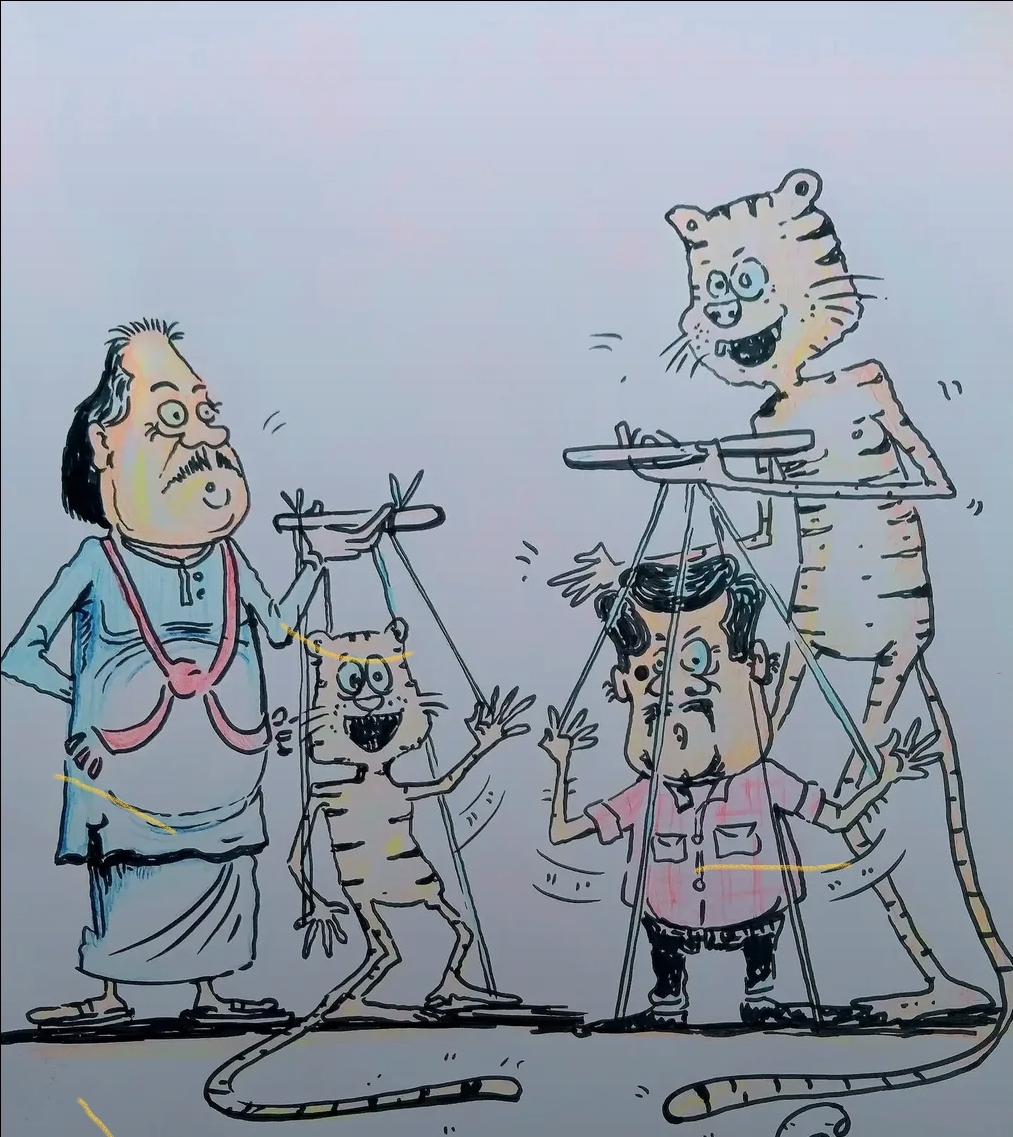
Influenced by third-rate imitators Jaffna bred a shallow Tamil psyche that took pride in illusions of grandeur and superiority. The Tamil Tiger flag is a typical product of the imitative and debased culture of Jaffna. Running parallel to the illusions of grandeur that haunt the Jaffna psyche (example: Radhika Coomaraswamy talks of Sir Muthu Coomaraswamy, one of her ancestors, parading as a prince of Ceylon in St. James Court in colonial London) is a more grim aspect to the Jaffna culture. It is a beastly culture that made Jaffna the darkest and bloodiest chapter in Sri Lankan history. Details can be read in the next article.
1124 Viewers