Vessagiriya -Reminiscent Gravity=Defying Boulder With Inscriptions
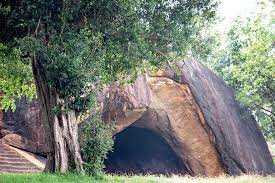
Vessagiriya Temple, Ancient Buddhist Forest Monastery In Sri Lanka, Anuradhapura, Isurumuniya, King Devanampiyatissa, The Forest Monastery, Vessagiriya Arundathie Abeysinghe Located in close proximity to *Isurumuniya, Vessagiriya also known as Vessagiri or Issarasamanarama is an ancient Buddhist Forest Monastery, a section of the ruins of *Anuradhapura. Unlike most historical sites in Anuradhapura, Vessagiriya is a less visited site by tourists. Construction of the Monastery commenced during the reign of King Devanampiyatissa (247 BC – 207 BC) in mid-3rd century BC and the site was expanded during the reign of King Kashyapa (473-495 AD). The Forest Monastery was home to approximately 500 Buddhist Monks and they had lived in rock shelters. Vessagiriya temple complex is located among three rock boulder formations across a large area overlooking the Tissa Wewa in Anuradhapura.
Located amongst several mighty boulders, caves, pillars, ponds as well as shady trees, Vessagiriya is a retreat for peace-seeking pilgrims as well as nature lovers as there is a cluster of approximately 50 monastic caves protected by drip ledges hewn out of rock to prevent rainwater from seeping into the caves, considered as an engineering marvel of ancestors. The plaster that had been laid approximately 2,000 years ago exists in patches, to date. On a large cave, there are traces of paintings including the painting of a female figure. According to scholars, “Vessagiriya” literally means “The rock shelters of the commoners.” Hence, the word “Vessa-giriya” derives from Sanskirit *Vaishya (commoner) and Giri (mountain). Vessagiriya has been a monastic establishment closely associated with Isurumuniya and is considered as one of the most significant monastic establishments dedicated to ascetic Bhikkhus.
History of Vessagiriya dates to 3rd century BC. There are *Brahmi inscriptions on the rock walls inscribed by Bhikkhus, patrons and their lay devotees. According to chronicles 500 Bhikkhus have been ordained as priests at Isurumuniya, *Arhat Mahinda had also ordained 500 Vaishyas at Vessagiriya. Apart from the drip-ledged caves, there are several significant buildings at Vessagiriya constructed according to traditions of panchavasa (monastic residential complex), ruins of a *Bodhighara, a stupa, a *Chapter House and two cave temples depicting ancient paintings.
There is an inscription in the Temple Complex that leads to ‘Isuru-Meni-Ro-Ipuluwan-
Visitors can reach the larger boulders through a rock-hewn staircase that offers panoramic vistas of Anuradhapura. On the summit of the rocks, there are foundations of a small dagoba (stupa) as well as remnants of brick wall structures. Although, the vistas from the rocky cliffs are mesmerizing, it is prudent not to venture closer to the edge of the rocky overlooks that are not fenced. An inscription belonging to the 6th century AD and the *Jetawanarama slab inscription of King Mahinda IV, a close relationship between Sigiriya and Vessagiriya had existed in the past.
A visit to Vessagiriya yields a spiritual experience regarding ancient Buddhist asceticism as well as an exposure to solitude in a cave retreat. The sedentary lifestyle of ascetic Bhikkhus who embraced the path towards *Enlightenment can be understood after visiting this serene location.,,ELANKA
By Arundathie Abeysinghe
167 Viewers