Funds Allocated For Development Work Channeled To Renovate Mahaviru Cemetery?
Member of Parliament Sivagnanam Sridharan was elected as the new leader of the Tamil National Alliance. A controversial leader, is Sridharan revitalising the cry for separatism?
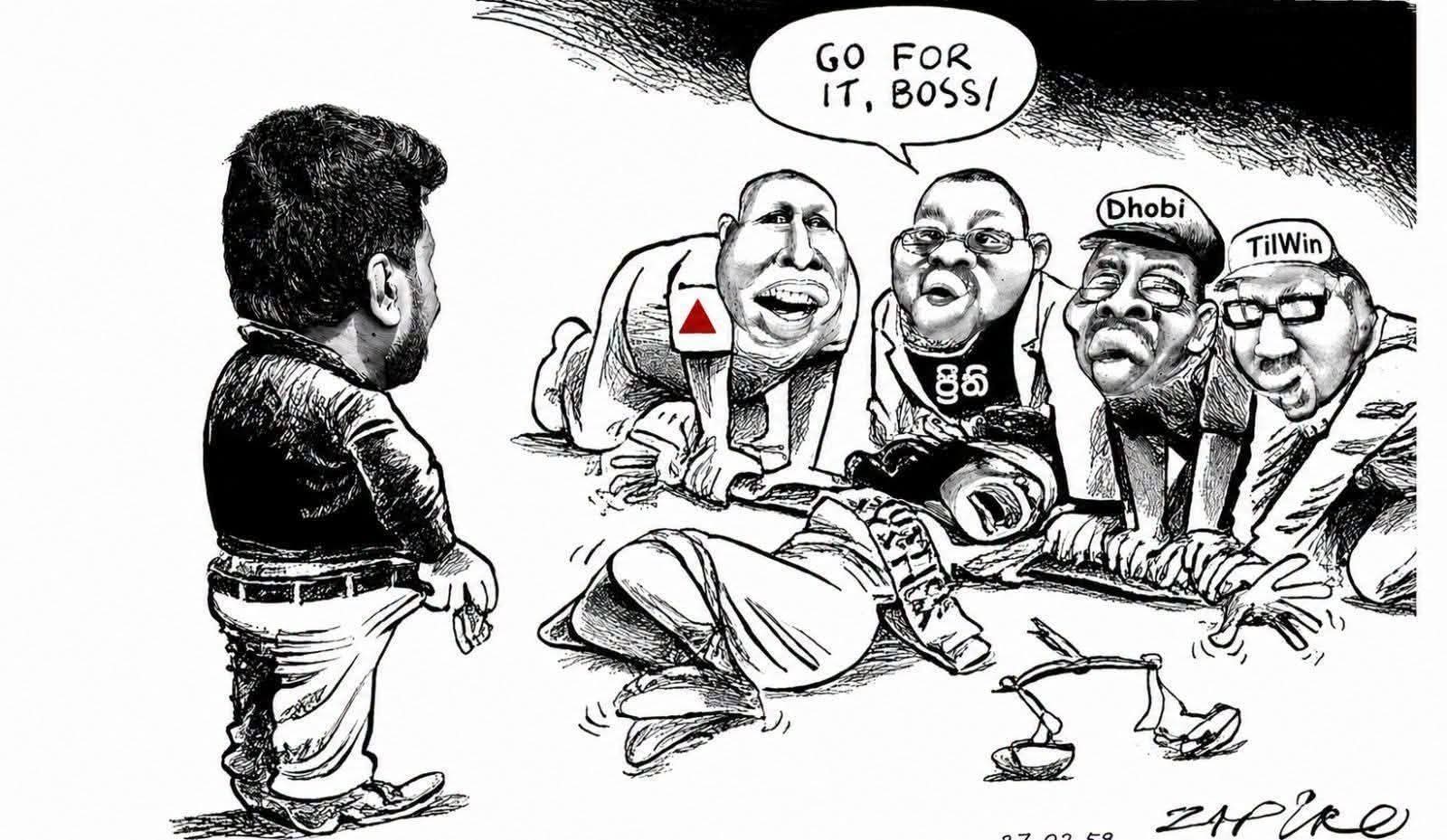
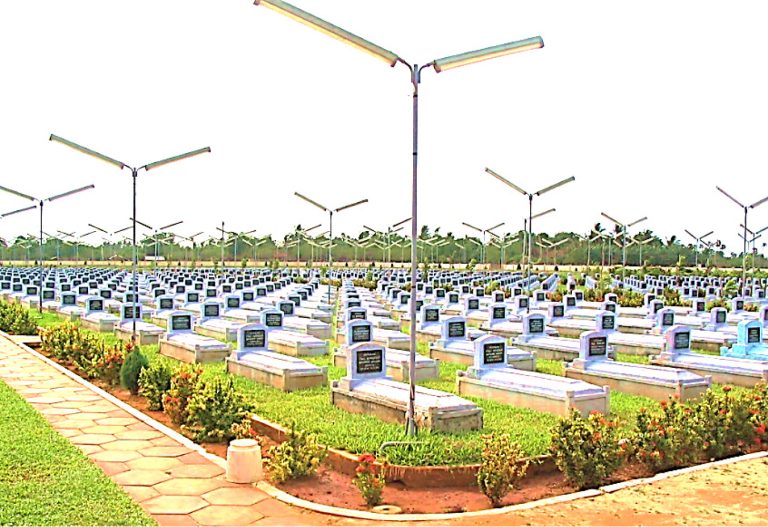
Sridharan was flagged after he allocated Rs 4 million out of his decentralised budget to renovate the Mahaviru Mausoleum where the bodies of dead LTTE members are buried in Kanakapuram in Kilinochchi. This aspect was initially reported in 2017 and it has reappeared in 2024. As a result, there has been an outcry from the public to investigate Sridharan for his links to terrorism.

This is the taxpayers’ money, the sum of Rs 4 million, to be taken out of the decentralised allocations made to the MP for development work of the Kilinochchi District. Approval for this had been granted by both the Karachchi Divisional Secretariat and the Kilinochchi Divisional Secretariat, it has been reported widely.
MP Sridharan, during an inspection visit to the site, had informed the media that he intends to use this money to renovate the graves of the LTTE members that had been there since 2009 and also to construct a protective wall around the cemetery.
A decision was taken at the last meeting of the Kilinochchi District Development Committee to allow a group headed by MP Sridharan to begin renovation work on this cemetery.
This is absolutely preposterous for such an act to be taking place with the taxpayers’ money being allocated for such an enterprise which will be reprehensible. To allocate such a budget for dead renegades, when the living need these funds for much more deserving matters; at the hand of providing relief, direct development, shelter and jobs in the local vicinity that is of great need.
This act of treachery will never be accepted in any other country in the world. Most countries have legislation in place to prevent terrorist monuments from being erected, preventing such glorification of unlawful violence and intimidation, against civilians, in the pursuit of perfidious aims. The act of recognising such acts and actors would unquestionably lead to a resurgence of Tamils being made to believe in the justification of the terrorist acts committed and that would encourage disunity in the nation.
For instance, in Germany, there is legislation to criminalise Nazi memorabilia and commemoration of Hitler.
After a 26-year military campaign, the Sri Lankan military defeated the Tamil Tigers in May 2009, bringing the civil war to an end. With the defeat of the LTTE completely and utterly it is unfathomable that anybody in their right mind would like to live under a totalitarian dictatorship where a despotic ruler often rises to power out of conflict. Then the dictatorship controls all branches of war-torn territories and the media. Intimidation, murder, imprisonment, violence and other human rights abuses are used to control by subjugating the population. A cult of personality makes the autocratic ruler appear divine.
The LTTE is proscribed in over 30 countries. If the LTTE had not been defeated on the battlefield hypothetically, then there would have undoubtedly been the establishment of a rogue State of Eelam, comprising the North and the East of Sri Lanka. Then LTTE would have used Sri Lanka as a springboard to start their second insurgency phase, a guerrilla warfare campaign in Southern India. Estimated to be 67 million Tamils living in Southern India that would have eventually led to the breakup, for the third time in 77 years of its independence from Britain. India would have jeopardised its ability to become an emerging superpower.
Initially, this element was not comprehended by the Indian security apparatus or the administration at that time run by Prime Minister, Indira Gandhi and then her son Rajiv Gandhi who was abruptly assassinated by a radicalised suicide bomber, a member of the Sri Lankan Tamil banned separatist rebel organisation, Liberation Tigers of Tamil Eelam (LTTE). Instead, they fuelled the flames of radicalising the Tamil insurgency groups it has been revealed and documented to destabilise Sri Lanka.
Radicalisation is a scourge to modern progressive communal cohesion.
Factors contributing to radicalisation. There is no evidence that shows a single path or one single event that draws a person to the scourge of extremism: every case is different.
It is clear that there is no single socio-demographic profile or pathway that leads an individual to become involved in terrorism. Susceptibility to radicalisation depends on complex interactions between different risk factors. These can include involvement in criminality, family influence, failure to integrate, or a sense of grievance or injustice. However, the presence of these risk factors does not make radicalisation inevitable or predictable. The vast majority of people at risk do not go on to engage in terrorist activity. This might be due to the presence of protective factors, such as having a strong family life that provides a sense of belonging, self-esteem and purpose, friendships that would be jeopardised by involvement in terrorism, or being open to challenge from other perspectives.
Social media analysis also plays a key role in informing our understanding. It enables us to develop a comprehensive insight into the methodologies and online spaces being used by terrorists and extremists in order to recruit and radicalise individuals.
Identifying people at risk of being radicalised and then attracted to extremist behaviour is particularly challenging. It also makes the task of countering extreme views complex and difficult. If the Government adopts a broad-brush approach, which fails to take account of the complexities, and the gaps in existing knowledge and understanding of the factors contributing to radicalisation, that would be counterproductive and fuel the attraction of the extremist narrative rather than dampening it.
Any Government must take a much more sophisticated approach both to identifying the factors which instigate radicalisation and the measures it takes to tackle this.
It would be judicious for the Government to work with a cross-section of academic institutions and experts in this field globally that work on radicalisation, to marshal existing intelligence and research and develop a more effective understanding of the factors leading to extremism. This should include speaking to the families of known extremists to draw on their experiences. Without such a solid foundation, the strategies, and new legislation are likely to approach the issues and entire communities in an unfocussed manner, and ultimately to be ineffective and redundant.
Violent extremism is a threat to peace and tolerance. It is not enough to counter it; we must prevent it. Because no one is born a violent extremist, but they are made, fuelled and brainwashed, so that the human mind can be altered or controlled by certain psychological techniques by parasite extremists. Disarming the process of radicalisation must begin with dialogue and respect for human rights and the rule of law. Education is a powerful tool to build learners’ resilience to violent extremism and mitigate the drivers of this phenomenon. It helps strengthen their commitment to non-violence and peace, in particular by addressing hateful and violent narratives. This crucial work starts as early as possible, on the benches of schools.
Collective actions through education, science, culture, communication and information allow prevention efforts to strengthen resilience. Factors at the individual, community and societal levels. Through its work, it equips learners of all ages and backgrounds with the knowledge, values, attitudes and behaviours they need to take action against violent extremism.
Conclusion:
In another country, a politician like Sridharan Sivagnanam would be persona non grata and ostracise by the public for trying to bring the pandemonium and mayhem that the LTTE inflicted on the country’s Tamil, Sinhalese, Muslims and Christians. As a Buddhist country where the public is tolerant, Sridharan has been forgiven. To forgive terrorists and their supporters are to the detriment of any nation. During LTTE’s campaign of terrorism, Sridharan supported the relentless killing, maiming and injuring of soldiers and civilians. If this type of conduct happens in the Western hemisphere he would be imprisoned at Guantanamo Bay for his beliefs, behaviour and conduct with his supporters and associates.
In an Election year, the political parties want to form alliances with the TNA to win the next Election. The big question is whether the Ruling Party or political Opposition will compromise national security and team up with the TNA.
The behaviour and motivation of Sridharan validated the findings that the TNA remains the political wing of the LTTE. In fact, after the death of the LTTE leadership, like the phoenix rising from the ashes, the TNA has now evolved into the present-day LTTE. The irresponsible conduct of Sridharan shows what will happen if Sri Lanka devolves power to the North and East. The conduct of Sridharan is the very reason the Sri Lankan security forces should remain in the North and East for an indefinite period.
Most importantly the Tamil diaspora who have been ardent supporters of the LTTE have lost faith in their leadership. Most emphatically are not prepared to raise funding for their notorious deeds and actions. The second and third generations living overseas do not see the need to be doing what their forefathers did trying to create a separate State when they are living in prosperous countries in the Western hegemony and beyond. They have no intention of settling and residing in the totalitarian State of Eelam as they are enjoying their lives in progressive, democratic nations.
About the Author:
Ranjiv Goonawardena, Cognoscenti and Influencer
(The views and opinions expressed in this article are the writer’s own and do not necessarily reflect the official policy or position of Ceylon Today)
145 Viewers