Capitulating to India on fishing issue
(Courtesy of The Sunday Times)
Last week, our INSIGHT team went to the International Maritime Boundary Line (IMBL) that separates Sri Lanka from India to follow up on an earlier investigation into the continuing rape of the country’s sea resources — the fish and the environment — by illegal Indian fishing expeditions.
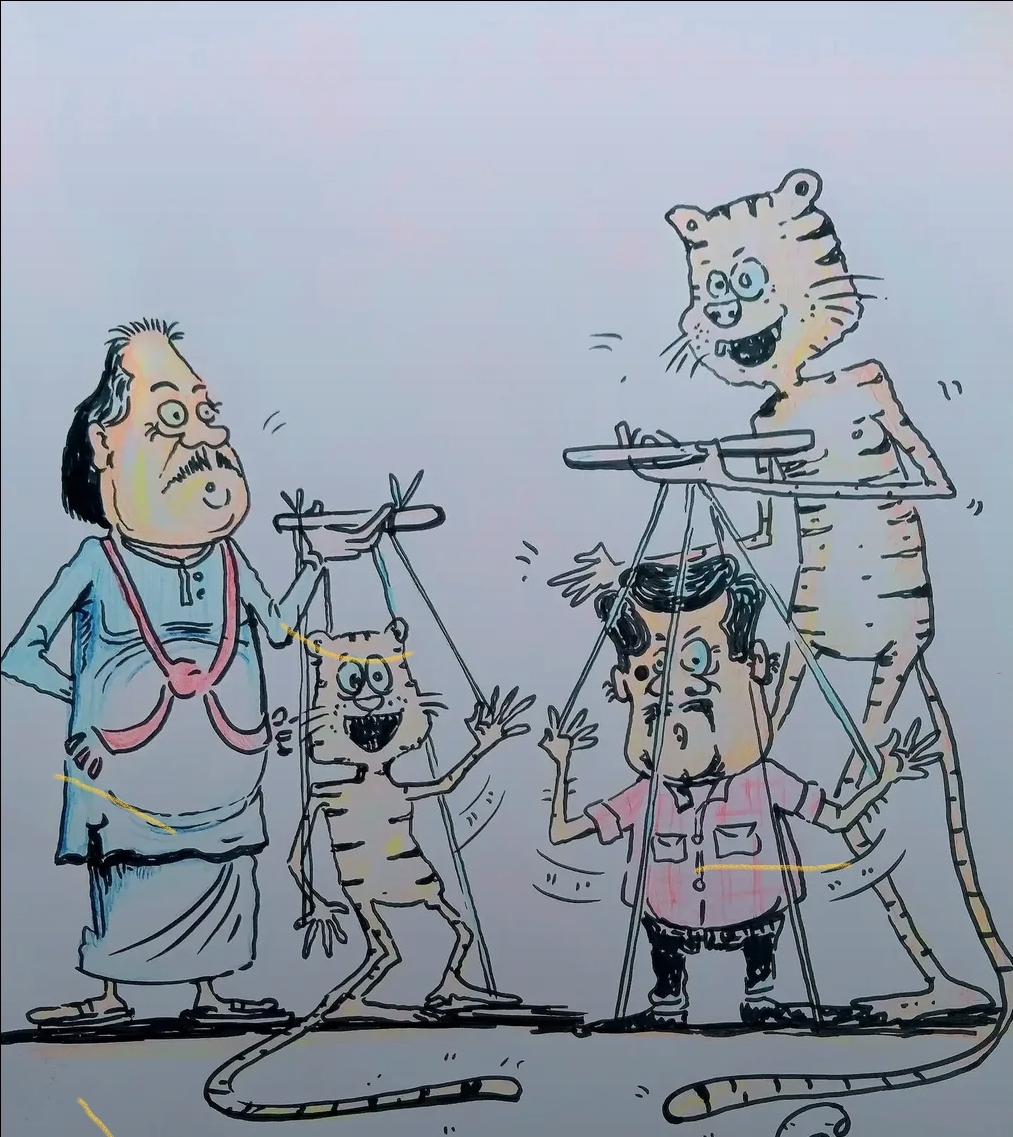
This was hardly three weeks after the Indian External Affairs Minister came to Sri Lanka for what was the Joint Commission meeting and where, as reported, the Indian delegation cajoled their counterparts in Colombo to not even minute Sri Lanka’s opposition to what the Indian fishermen were doing in Sri Lanka’s territorial waters other than to say “the Joint Commission noted the intricacies of the fishermen issue on both sides and the need to put forward innovative solutions”. Intricacies. Innovative solutions. How about that. This was a capitulation by the Sri Lankans as never before.
Even in the case of the 1987 Indo-Lanka Accord there was some resistance offered in the face of unprecedented Indian pressure which included the flexing of its military muscle. Sri Lanka managed to put in some provisions like calling for a referendum following the merger of the North and East provinces, but in this instance, the Sri Lanka Foreign Minister going to shower praise on his counterpart at every turn just buckled down to please her on this issue which even she concedes is an “irritant’ in bi-lateral relations.
What quid pro quo, if any, was there to this surrender, one does not know. Those familiar with the work of the Joint Commission say there was no fair exchange and it was a total let-down by the Sri Lankan side.
In fact, it is reported last week that the intensity of the rape of our seas has increased, not waned. The marauding Indian fishermen have now begun ‘pair trawling’ i.e. dragging a huge wider net, sweeping the sea from top to bottom. The team says that when the Sri Lanka Navy boat, on which they were, approached the intruders, the intruders swung their steel hull boats aggressively towards the naval craft with the intention of damaging it. Such is the audacity with which they operate – because they know that the Sri Lanka Navy has been ordered to cover their guns with canvas sheets and that if and when arrested, the Indian missions in Colombo and Jaffna aid and abet in the whole exercise by telephoning the Sri Lankan political leadership to facilitate their release after just a brief stint in remand prison. The treatment meted out to the Sri Lankan fishermen who stray into Indian waters is quite the opposite.
The Sri Lanka Navy and the Northern fishermen of Sri Lanka are crying out for deterrent action. The Navy says that it should at least be allowed to fire warning salvos to ward off the Indian boats. Cutting their ropes is another option but that is fraught with some danger as the rope can get entangled in the naval craft. The political will in Colombo is sub-zero to this “irritant” even though the Prime Minister once told a Chennai-based TV channel that poachers can be shot.
When the President, the Prime Minister and the Foreign Minister go to the North, they must take a boat ride to the IMBL on a Monday, Wednesday or Friday to see for themselves the carnage that is taking place inside the waters they are expected to protect. They have taken an oath to protect the sovereignty and the territorial integrity of Sri Lanka and to protect the environment. The Finance Minister who says he is running after every dollar will know from the statistics the Fisheries Ministry has presented to Parliament more than US Dollars 50 million is lost annually to his otherwise barren coffers as a result of this. To the people of Sri Lanka they have to pay in higher prices for fish because these seas provide some 45% of the local fish produce in this country.
At least, as an initial step, bottom trawling by steel hull trawlers (which is banned in India as well) must be stopped with immediate effect. The European Union must stop importing Indian fish products garnered from such illegal fishing practices. Asking Sri Lanka to take India to a World Court is going to embarrass the Sri Lankan leaders more than the Indians given their servility towards India’s impunity on this score.
It is in this backdrop that one has genuine concerns over Sri Lanka’s eagerness to enter into an Economic and Technical Cooperation Agreement (ETCA) with India. If this Government does not have what it takes to challenge India on a blatant infringement of this country’s sovereignty, how on earth does one expect it to challenge India if an economic pact turns out to be one-sided in its implementation?
657 Viewers