Office of Missing Persons: Controversial bill now needs simple majority
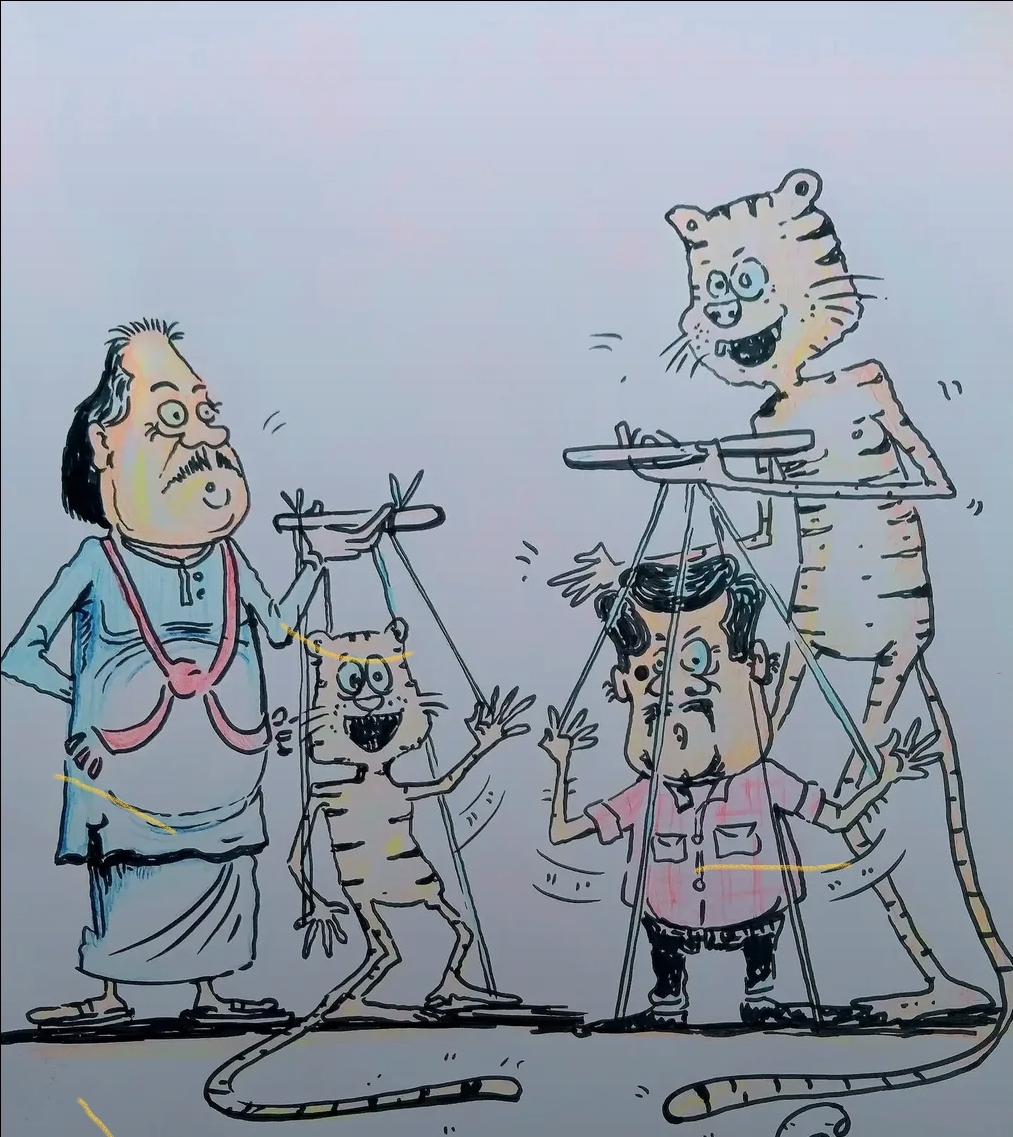
The Office of Missing Persons Bill has many provisions designed to persecute our armed forces and following are some of them;
1. The Office of Missing Persons will not be a part of Sri Lanka’s State law enforcement and justice system, but an independent body incorporated by parliament which gives its members the power to function outside the normal rules and regulations that guide state institutions.
2. Even though it is described as an ‘office’ the proposed OMP will be a tribunal for all practical purposes which can examine witnesses, issue summons and hold hearings. Its officers can enter without warrant, at any time of day or night, any police station, prison or military installation and seize any document or object they require for investigations. Anyone who fails or refuses to cooperate with the OMP may be punished for contempt of court.
3. The seven ‘members’ of the OMP are to have experience in fact finding and expertise in human rights law and international humanitarian law which means that the appointees will for the most part be representatives of Western funded NGOs or those who have worked with Western sponsored international war crimes tribunals.
4. According to Section 21 of the draft legislation, the OMP will have the power to receive funding directly from any foreign source.
5. The OMP, acting on its own, can enter into agreements with foreign persons or organisations concerning its work.
6. The ‘members’ of the OMP can establish units and divisions and delegate their powers and functions to those entities. They can also appoint and dismiss staff and consultants. It is not specified in the draft law that the members of the OMP have to be Sri Lankans.
7. Complaints can be received not only from relations and friends of missing persons but from any interested party both local and foreign.
8. Government bodies at all levels including the armed forces and intelligence services are mandatorily required to render fullest assistance to the OMP and the provisions of the Official Secrets Act will not apply to the proposed institution.
9. According to Section 12 (c) (iii) the OMP can admit as evidence any statement or material disregarding the criteria laid down in the Evidence Ordinance.
10. The provisions of the Right to Information Act will not apply to the work of the OMP. No court, not even the Supreme Court can order any officer of the OMP to submit to courts any material communicated to him in confidence.
The foregoing makes it clear that this Office of Missing Persons is meant to be an integral part of the judicial mechanism to deal with allegations of war crimes that the government has undertaken to establish.
Former President said that “If this draft legislation becomes law, every Member of Parliament who votes for it will be held responsible by the people for betraying the country and the armed forces’.
However, due to a serious lapse on the part of the Joint Opposition (JO), the Rani -Sirisena government in now in a position to pass the controversial Office of Missing Persons (OMP) Bill with a simple majority, according to legal sources.
The JO comprises nearly 50 members out of 95 UPFA parliamentary group, including a dozen National List nominees.
Sources said that the UNP and four-party Tamil National Alliance (TNA) had the required numbers to adopt the Bill.
The UNP and the TNA secured 122 seats, including 25 National List slots at the last parliamentary polls in August 2015. In addition to UNP and TNA parliamentary groups, two members elected on the SLMC and EPDP ticket, too, would vote for the Bill, sources said.
Legal and Opposition political sources said that the JO had failed to challenge the OMP Bill in Supreme Court within seven days of its being placed in order paper. In accordance with Standing Orders, the government placed the Bill in Order Paper in early July after having gazetted it two weeks back.
Prime Minister Ranil Wickremesinghe, in his capacity as the Minister of National Policies and Economic Affairs proposed the establishment of OMP through an Act of Parliament. The Premier’s proposal has received the unanimous cabinet approval.
Lawyers working with the JO told that had members brought to their notice the government move in Parliament, the Supreme Court could have been challenged. Responding to a query by The Island, a constitutional expert said that they could have argued that the proposed Bill couldn’t be passed without a two-thirds majority as certain clauses therein were contrary to the Constitution.
The expert asserted that the proposed Bill contained several clauses which violated the Constitution. The lawyer cited the conflicting nature of the OMP Bill and the recently adopted Right to Information Act (RIA) to prove his point.
Sources said that those members who had been campaigning against ongoing government efforts to implement contentious Geneva Resolution had failed to take it up before the stipulated time, thereby unwittingly missing an opportunity to thwart the project.
Sources said that the Bill could be passed without the support of those SLFPers loyal to President Maihripala Sirisena.
Former President and Kurunegala District MP Mahinda Rajapaksa last week appealed to all members, particularly those SLFPers who had switched allegiance to President Sirisena not to back the Bill.
The National Joint Committee (NJC) told The Island that certain provisions in the proposed OMP Bill were not only against the Constitution but contrary to the very purpose it was established. The NJC emphasised that nothing could be as surprising as the provision to let a missing person decide whether his/her whereabouts could be revealed when the OMP located he/she.
The Foreign Ministry has informed the Cabinet that various presidential commissions had placed the number of persons missing since President Chandrika Bandaranaike Kumaratunga’s tenure at 65,000, though the Paranagama Commission estimated 20,000 cases.
the National Peace Council (NPC), one of the major supporters of the proposed OMP Bil and pro-separatists NGO funded by LTTE Tamil terrorist diaspora, stated that “The OMP is meant to locate missing persons to give closure to their relatives and loved ones who do not know what had happened to them and therefore cannot get on with their lives. If people have chosen to hide themselves due to feeling under threat, they will not wish their whereabouts to be revealed. That also needs to be respected, which the OMP law does.”
784 Viewers