Timeline of UNP follies & crimes
They say ‘people in glass houses should not throw stones’ if JVP has no business to talk about human rights the UNP does not either. Both their track records will reveal and remind citizens of the horrors they experienced under both parties and in particular under the rule of J R Jayawardena, R Premadasa and Ranil Wickremsinghe.
The United National Party was founded on 6 September 1946. Apart from the election of R Premadasa leadership of the UNP has been passed to family members only.
At a time when Sri Lanka was facing food shortage R. G. Senanayake, the then Minister of Commerce negotiated the Ceylon-China Trade Agreement or the Rubber-Rice Pact in Beijing in 1952 (after appeals to US failed) J. R. Jayewardene, the Minister of Finance opposed the agreement with China as did the American government, and some local newspapers. The American government invoked the Battle Act which prevented it from giving aid to countries selling strategic materials to Communist countries and cut off aid to Sri Lanka. America also stopped selling sulphur needed by Sri Lanka’s rubber plantations. However, Prime Minister, Dudley Senanayake backed the China-Lanka agreement realizing that the benefits to Sri Lanka from the agreement far outweighed losses consequent to the cutting-off of American aid
JR Jayawardena opposed the Bandaranaike-Chelvanayagam Pact.
In 1960 UNP voted against the SLFP’s school-take over legislation in Parliament.
In 1963 when Sirimavo Bandaranaike conferred China as the Most-Favored-Nation treatment under the Maritime Agreement with China, UNP opposed claiming Sri Lanka would be drawn into China’s sphere of geopolitical influence.
UNP refused to accept the 1972 Constitution after then PM Bandaranaike formed a Constituent Assembly in July 1970 which led to the new Republican Constitution of 22 May 1972.
It was JRJ who introduced a semi-dictatorial constitution vesting himself with unlimited executive powers in 1978 – all the political parties, civil organizations and even the Tamil parties were against the new constitution.
After becoming President enacting a complex electoral system combining proportional representation with preferential voting designed to favour UNP, he collected undated letters of resignation from all UNP Ministers to ensure they did not dissent. JRJ boasted that the constitution was so powerful that the only thing it could not do was to turn a man into a woman and vice versa.
The UNP policy was to follow the capitalist system in the West as a result of which state assets became privatized, prime land went into foreign hands, tax holidays were given, foreign investors enjoyed all the tax breaks and scooted off with the profits leaving workers in the lurch. About 100,000 manufacturing jobs were lost. The rising inflation led to many strikes culminating in the general strike in 1980 – all that the workers asked for was Rs.10 per day and an allowance of Rs.5 cost of living. The UNP response was to fire 40,356 public and private sector employees.
Preaching that it upheld democracy – it was under UNP that evaded going to elections and bringing about amendment to constitution to have a referendum to extend term of office for 4 years. The Presidential election that ensued resulted in mass election rigging another first for Sri Lanka – even the main opposition candidate, Hector Kobbekaduwa was impersonated while Communist leader Pieter Keuneman also found that his vote had been cast when he went to vote. After the election the UNP began arresting leading members of the Opposition accusing them of being ‘Naxalites’
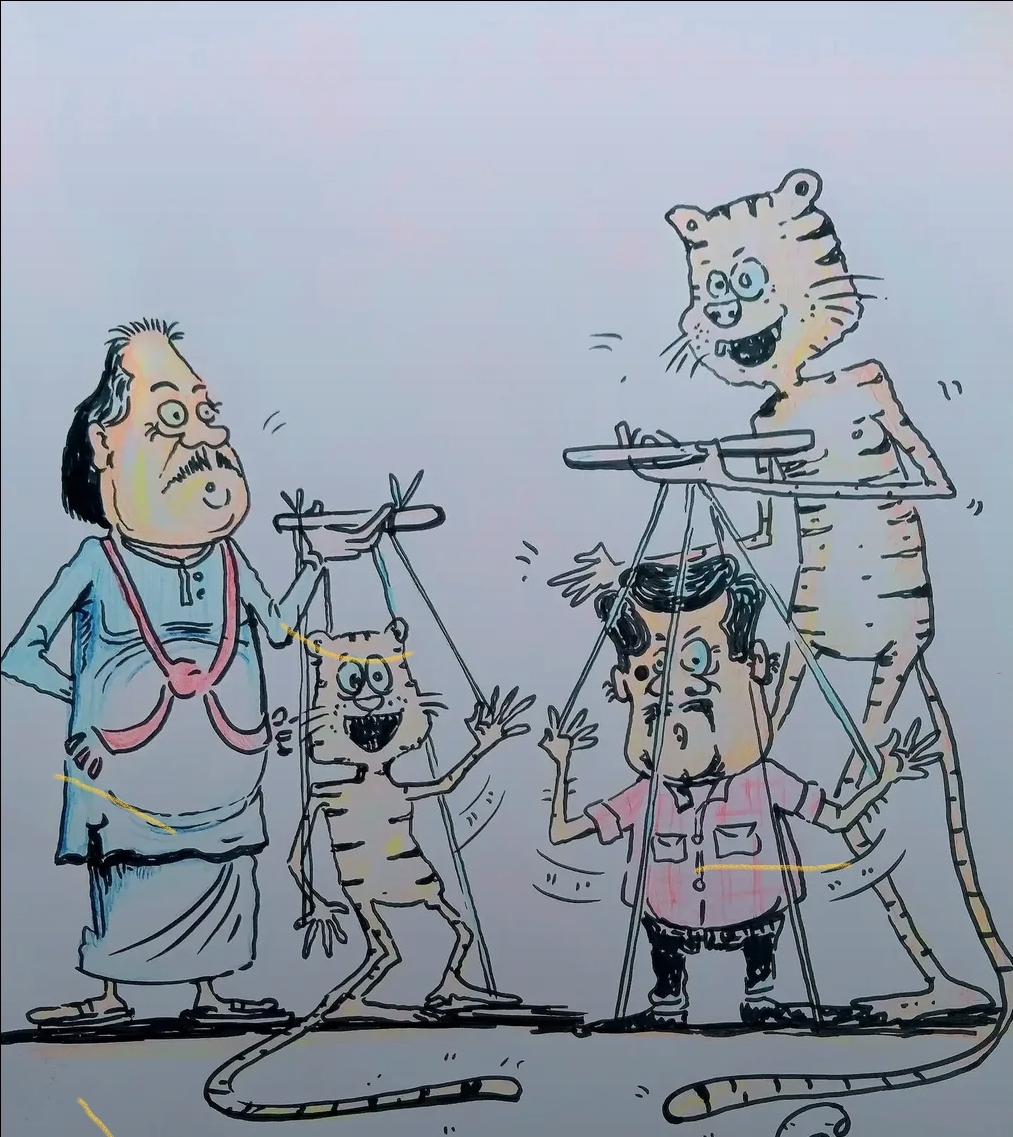
It was under the UNP Government that terrorism was birthed not taking action to nip it in the bud when it could. Failure to support the military and give orders to wipe out terrorism is a factor UNP leadership stands guilty of
It was the UNP that began suppressing Trade Unions, Media rights, Working Class Rights, poor Farmers Rights and even students rights from 1978 to 1994, 2002 and now through 2015 to present.
Repealing the Criminal Justice Commissions Law which led to the gross abuse of human rights and harassment of political opponents of the Government.
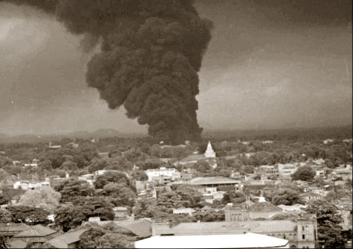
The UNP Leader Ranil Wickremasinghe accepted guilt of his party burning the Jaffna Library in 1983
It was UNP goons that led the 1983 riots against Tamils. However, baffling is UNP can boast that the majority of the minorities do in fact vote for the UNP
Jayewardene gave birth to the politicized underworld its power reached the zenith during President Premadasa’s rule
During the 1980s – Prof.Ediriweera Sarathchandra was hooted down and physically abused – during this same period that lawyer Kanchana Abhayapala, Rohana Wijeweera, Vijaya Kumaranatunga, Ranjan Wijeratne were all murdered in the most brutal manner and the then UNP government never did anything to investigate and punish those who committed the crimes even though culprits were well known.
Vivienne Gunawardena women activist was beaten and when Supreme Court ruled in her favour the UNP Govt paid the compensation and gave a promotion to the officer who assaulted her! (Neil DeVotta)
One of the thugs the JRJ government used against its opponents was Kalu Lucky, who even stoned the houses of Supreme Court judges especially the 3 judges who ruled in favor of Vivienne Gunawardena.
It was during UNP rule that media personalities like Richard de Soyza, Sagarika Gomez faced untimely deaths.
In the Katunayake Free Trade Zone there was not a single individual who gained employment during this time unless he/she happened to be a UNP supporter because every person who sought employment in the FTZ had to be recommended by the Jathake Sevake Sangamaya(JSS) which is the UNP Labour Union,
President Premadasa appointed leading underworld figure Arambawela Don Ranjit alias Soththi Upali alias Pidali Upali a UNP Working Committee Member. His powers were such that some say he sat in the OIC Borella’s chair!Even senior police officers used to salute that criminal in public In 1997, a presidential commission appointed by President Chandrika Bandaranaike Kumaratunga concluded that Upali was directly involved in assassination of Lalith Athulathmudali. According to the Batalanda Commission Gonawala Sunil had the blessings of the UNP Government. He was involved in the massacre of 53 prisoners at Welikada Prison in 1983 and raping a 14-year-old girl in 1982. He was convicted of the murder, and was serving in prison when he was famously released on a presidential pardon given by President J.R. Jayewardene just before the 1982 presidential election.Gonawala Sunil was one time bodyguard of both R Premadasa and Ranil Wickremasinghe www.lankaweb.com
Government servants working during the UNP regime of 1978-1994 dared not talk contrary to the government stand even in the compounds of departments or ministries for fear that they were not sure of who was listening. Those who dared to do so, suddenly disappeared and were found dead or floating down rivers, yet some others were found burning on tyres under organised thuggery of the JSS and underworld mafia which was created by the UNP politicians of the time.
Who was in charge of Batalanda Torture House is immaterial – what is true is that brutal acts of torture took place inside this compound and we do not know how many disappeared thereafter. No one has counted these dead.
At the time of the Indo-Lanka Accord in 1987, JRJ imposed a censorship on the independent media. A powerful Competent Authority (CA) appointed by the government for that purpose debarred the independent media from reporting what was going on in the Northern and Eastern Provinces. (there was no private owned television or internet at the time) www.island.lk
The 2002 Ceasefire Agreement signed by PM Ranil was done so without approval of the then Executive President of Sri Lanka and even his cabinet were not aware.
Allegations made by Charitha Ratwatte (UNP Chairman) and Daya Pelpola (UNP Vice Chairman) in November 2001 resulting in orders to raid the safehouse kept by Directorate of Military Intelligence and the names of the intelligence officers were released to the public which eventually resulted in 44 of these officers been killed by the LTTE as revenge killings. None of the UNF heads tendered an apology for helping to bump off 44 officers endangering national security falling prey to rumors. The same has been committed in 2015.
Signing a detrimental ceasefire agreement with the LTTE placing a national army on par with a terrorist organization and allowing LTTE territory to call its own – keeping soldiers in barracks while LTTE were given freedom to travel to any part of the country armed while the soldiers had to be without arms. The national army was humiliated to appalling levels
When the decision was taken to militarily defeat the LTTE the UNP chose to ridicule the war effort, laughed at the war victories, ridiculed the soldiers, laughed at the army commander and kept on telling its vote base that it was an unwinnable war and the only solution was to talk to the tigers.
PM Ranil calls Gotabaya Rajapakse a traitor for leaving the country but he has employed the likes of Paskarlingam as advisor both in 2002 and since 2015 who fled the country due to accusations of misappropriation and terror during the 1978-1994 UNP regime
UNPs economic policy – Indiscriminate privatisation of profit-making state ventures and a lop-sided public transport policy – completely ignoring that health, education, insurance, infrastructure development and public transport should be in the government’s firm grip
The good governance government voted in 2015 has a plethora of questionable actions including the appointment of the current PM in January 2015 without the removal of the sitting PM, appointment of the CJ without giving show cause to CJ Mohan Pieris or following due process to impeach him, bringing the Central Bank and Securities & Exchange Commission under the PM – which had never been done previously
Appointment of a foreigner as Central Bank Governor with questionable connections to LTTE linked Raj Rajaratnam.
Creation of the FCID under the control of the PM resulting in politically motivated arrests.
Sudden sacking of General Secretaries of SLFP and UPFA and the sacking of 25 SLFP Committee Members on election day.
Rs. 21 million as monthly rent on an unused building, mega coal racket
2016 – fraudulent release of hundreds of super luxury vehicles taken into custody by the Customs for undervaluation
Questioning good governance promised to the people for their vote – The CID, the FCID and the Commission to Investigate Allegations of Bribery or Corruption have chosen to steer clear of some powerful ruling politicians, who have risen above the law
instances where courts were kept open till midnight to remand Opposition politicians and their lackeys, courts have functioned during weekends to bail out government politicians who had to be arrested owing to media pressure (civil society organizations and the international community that helped bring the good governance govt to power are stoic silent)
Attempt to create a super ministry above Presidential powers claiming it to accelerate development
The impulsive Port City closure and the loss of jobs as well as compensation for which Hambantota deal has resulted in accepting a weak 80:20 compromise which is not beneficial to Sri Lanka.
These records are just a handful of examples and nothing to be proud of. It questions the subservience of its votebase in applauding these actions. What needs to now be said is that these parties are now all worn out – they are irrelevant particular so because the parties are made up of kangaroos jumping from one party to the other while most parties relying on foreign donations for campaigning end up compromising the party’s aims and objectives.
It is now time that all of Sri Lanka’s political parties were laid to rest and new political parties with young, talented and educated individuals surfaced to usher in a better future for the youth and the citizens of Sri Lanka.
All the older parties have simply lost their appeal and have been miserable failures.
Shenali D Waduge
1041 Viewers