A Heart-Felt Apology Would Still Be In Order
by N. Sathiya Moorthy
(Courtesy of The Sunday Leader)

Displaced Tamils in Sri Lanka
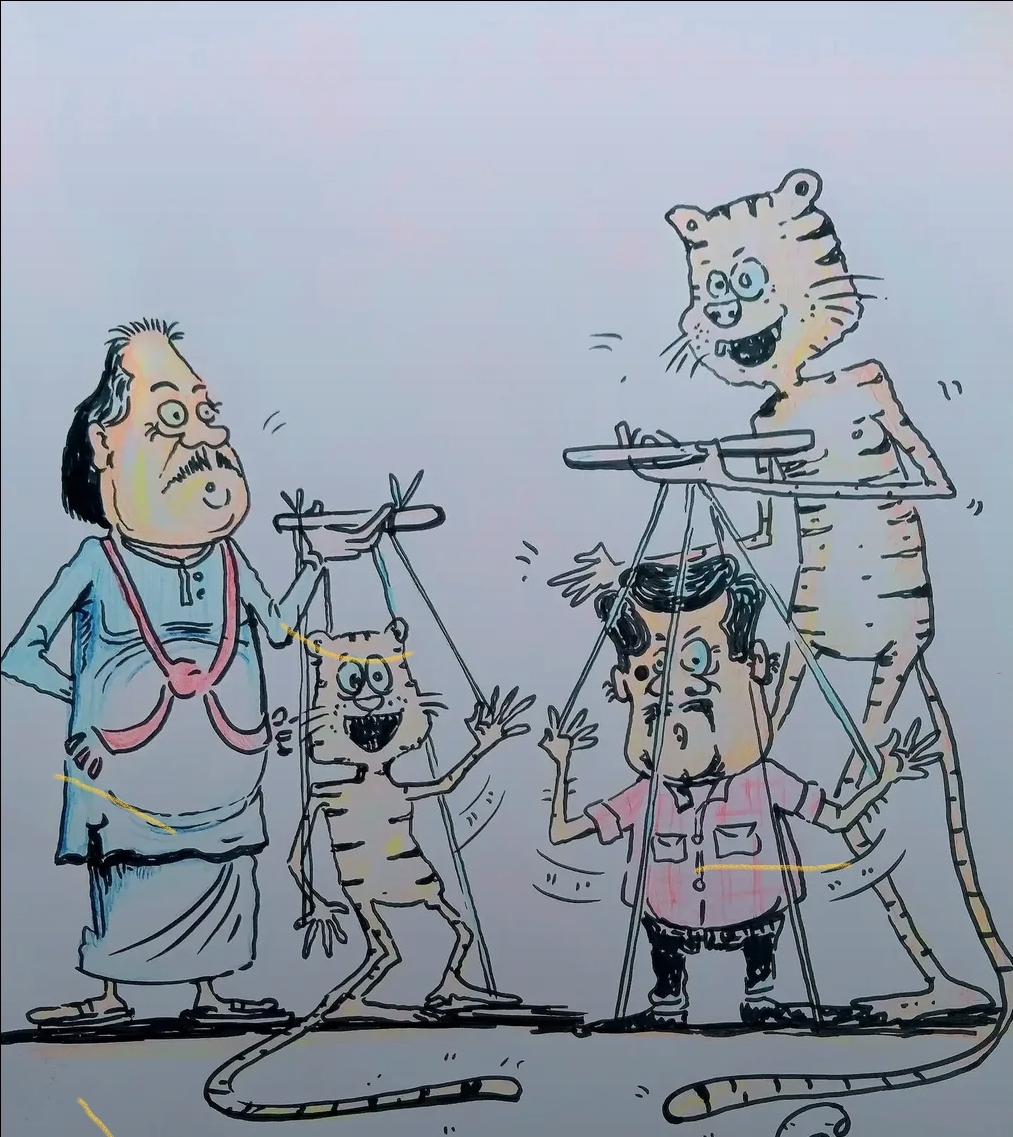
It’s anybody’s guess, why Eric Solheim, the controversial Norwegian peace envoy, should talk about the last days/weeks of the ‘ethnic war’, as he had not done before and with the not-so-unusual twist. At the launch of Marrk Salter’s book, ‘To End a Civil War – Norway’s Peace Engagement with Sri Lanka’, at a London function, Solheim is reported to have said: “Rajapaksa wanted to do a backroom deal to make Prabhakaran the leader there. He portrayed himself as the great saviour of the Sinhalese, but was ready for any dirty deal for his own survival and if it helped his political fortunes”.
Uncharitable as the ‘ethnic twist’ to the Solheim tale as it was, it was not an unknown secret in Colombo, at least in the days immediately after the conclusion of the war, that the Government had offered a peace-package to the LTTE and Prabhakaran, if only to avoid an unavoidable showdown. It would have been a war to the end, and the chances were that the armed forces would have won – both as things stood at the time, and as it turned out in the end.
The problem with the Solheim theme on the ‘dirty deal’ for Rajapaksa’s ‘own survival’ is two-fold. Foremost, no deal of any kind could have been kept away from the public for too long. It would not have been like the post-Premadasa months when the LTTE had the ‘Tamil areas’ in the North and the East to itself, and even ran a semblance of civilian administration with a judiciary, police force, postal, and bank services. It had continued until the peace processes involving the subsequent presidency of Chandrika Kumaratunga had failed – and war once again became inevitable.
As the Norway-facilitated ‘ceasefire’ period and the LTTE-aborted two rounds of Geneva talks under the Rajapaksa leadership indicated, the armed forces and the rest of the Sri Lankan State apparatus were ready to give the new leadership (or anyone in its place) a fair chance at a negotiated settlement – but might not have been able to stomach yet another tactical withdrawal if and when the LTTE came under military pressure.
The unsaid setting was this: If it was peace, the armed forces too would love it, as they would not have to ‘lose more of our boys’. If it was war, then it would have to be a fight to the finish. It is here that the Rajapaksa leadership might have differed from its predecessors – two steps forward, and one backward. Or, was it the other way round? In the end, the strategy paid off, and there was no going back on the Government side until it became clear that the war would have to end, but there could well be civilian casualty, too. Reports of Solheim’s post-war pronouncements do not seem to have included observations, if any, on the armed forces’ ensuring the safe return of 300,000 Tamil civilians, held hostage and human-shields, crudely and cruelly so by the LTTE, supposed to be their sole saviour and representative. It too could not have happened without the support and blessings of the Government leadership of the time – whether Rajapaksa or not.
Use-and throw
The fact is that Solheim and the likes do not seem to have a good word for anyone – be it the Government leadership of the day, or even the LTTE, if they had thought for themselves, and acted for themselves, too. While it is acceptable up to a point, it also raises more basic questions on what exactly they were aiming at – and how they had intended to go through it all.
Were the Norwegians and the rest looking at a tame-end to a war that had been fought for too long and so fiercely after the armed forces too had joined the battle in full swing – even before Rajapaksa came to power? Did the peaceniks and peace-makers really think that they were all indulging in a game of use-and-throw, where the Norwegians too might not have done themselves proud? Either they were too idealistic, or too mischievous, or both. It could be no body’s case that Rajapaksa and his war-time predecessors, were not apprehensive about the reaction from the ‘Sinhala South’, to any ‘deal’ that the Government of the day could strike with the LTTE. But it’s not the ‘dirty deal’ of the kind that Solheim has either understood/misunderstood, or espoused to the rest of the world.
‘Big Two’ ploy
It also stands out how the rest of the world had misunderstood the Sri Lankan State’s compulsions, as different from that of the Sinhala-Buddhist polity, whatever the electoral hue. It went beyond competitive ‘Sinhala-Buddhist nationalism’ at least as far as the ‘Big Two’ political players in Rajapaksa’s SLFP and the present-day PM Ranil’s UNP were/are concerned. They had a government to keep, or win, and they were mindful of the responsibilities that went with it, too.
It was thus that Rajapaksa, who was a part of the militant JVP generation in his growing-up years in the deep South, was apprehensive about the return of ‘Sinhala-Buddhist nationalist’ militancy from where they had left it post-’89. He might still be.
A witness to the two ‘JVP insurgencies’, particularly the second one (1987-89), opposed to the LTTE and the Indo-Sri Lanka Accord, the Rajapaksa-Ranil generation would still be mortified at the very thought of 60,000 youth being massacred during the two-year period, in the South – and the consequences it might have held for the Sri Lankan nation. Whoever was in power, and whoever was in the Opposition, they would not have wanted the LTTE terrorism replaced by Sinhala-Buddhist nationalist militancy, all over again. Worse still, a nation filled with ideological mayhem of every hue and all at the same time – with no IPKF too there to share the responsibility, and more so the blame.
It’s sad that the likes of Solheim did not comprehend the complexities of the mainline Sinhala-Buddhist political thought-process even after their long and continual engagement. Suffice is to point out that Rajapaka when found the first available opportunity to split the JVP ally of the time, he achieved it.
When he needed more members to stabilise his tottering parliamentary majority, he still left enough numbers in the UNP parliamentary group to ensure that the historic bête noire still retained the job of the ‘Leader of the Opposition’, lest it should pass on to the JVP, instead. Even in the worst days of the SLFP, the UNP, when in power, had returned the compliment. There is thus a greater responsibility on the TNA that it understood and fully appreciated the context in which it’s conferred the Leader of the Opposition status, as if by gratis and not otherwise.
The party has learnt from its past mistakes. There is thus hope that a sanguine leader like Sampanthan would not allow his ranks to gloat over his new-found status, and create a situation, the like of which alone was possibly among the agent provocateur for ‘Pogrom-‘83’ – not that the latter could be justified in any form or for any reason, at any time.
Zero-sum game, no
Rajapaksa erred in listening to his military advisors, starting with brother and Defence Secretary, Gota R, not on military strategy, or even on post-war rehabilitation of the IDPs and their reconstruction, but on the political fallout of the processes. He could not convince the world that the Manik Farm concept was the best possible under the circumstances, particularly after the sudden end to the war in the East had thrown up fewer IDPs, numbering 40,000 or so, with no place to go and no place to house – and without having to fear for their lives.
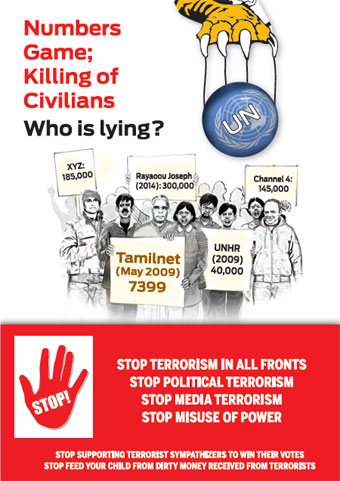
More importantly, Rajapaksa erred in going along with his advisors that it was a ‘zero casualty’ war, though as a political leader, who had witnessed the end to the ‘Second JVP insurgency’ from relatively close quarters, he should have known better. Already, the UN report of the time had acknowledged fewer than 8,000 casualties in the end-game of ‘Eelam War IV’. It was not impossible they included LTTE fighters and injured and immobilised cadres from previous battles who would rather go down with their leader.
It could have served the nation and its post-war reconciliation better if in Sri Lanka’s hour of triumph and introspection, President Rajapaksa had told Parliament in his famous 19 May speech (2009) that there had been unavoidable collateral casualties, and he apologised to the families of those victims. Better or worse still, he could and should have also announced cash compensation to those families, wherever they could be located and identified. This, if at all, was ‘triumphalism’ at its worse – and not as was being commonly misrepresented by his critics, then and now.
Whither Muslims?
It is in this context and background that TNA parliamentarian M. A. Sumanthiran’s open call for the party-controlled Northern Provincial Council (NPC) to pass a resolution of apology to the Muslim victims of the LTTE’s forced eviction programme from the Jaffna of 1990 becomes even more relevant. It is sad that another party veteran, ex-MP, P. Ariyanethiran, should contest Sumanthiran’s proposal. Sumanthiran has a point that the NPC, having passed the ‘genocide’ resolution viz the armed forces, would be the fitting forum for apologising to the Muslim community.
But the likes of him should remember that the LTTE’s anti-Muslim atrocities of the time did not stop with the forced eviction in the North, for which alone the NPC could apologise. Around the same time and even afterward, the LTTE killed Muslim devotees in their mosques in the Eastern Province, from where Ariyanethiran incidentally comes.
It would thus be in the fitness of things that the TNA, the single largest party in the Eastern Provincial Council, to move a resolution of the kind in the EPC, too.
Better still, considering the positive impact that it could vibrate and reverberate in the contemporary national context, and considering that TNA’s Sampanthan is also the Leader of the Opposition just now, the party should consider moving a comprehensive resolution of the kind in Parliament – and also canvass support for the same, from all sections of the House, including Rajapaksa’s SLFP-UPFA. It’s not without reason. The Muslim community is possibly the only one in the country, to have been victimised by the LTTE during war, and by the self-styled ‘pro-government’ Bodu Bala Sena (BBS), post-war.
It was sad that the Rajapaksa leadership let it all happen, not learning from the ruling UNP’s silence bordering on complacence if not conspiracy, during the anti-Tamil ‘Pogrom-‘83’. The leadership was also well aware that without a substantial Muslim voter-support, and without retaining a semblance of Northern Tamil vote-share, Rajapaksa did not stand a chance to win the presidential polls when held in advance in January 2015. No amount of Sinhala-Buddhist vote-share could have made the difference. So, when the early results indicated a near-clean sweep against the Rajapaksa candidacy from the Tamil and Muslim majority Provinces, all he could do was to readily concede the poll.
Thus, on the morning of 9 January, the counting day, there was no use for Rajapaksa to wait for all the Sinhala votes to be counted. It was no different in the parliamentary polls, months later. If anything, district-wise predictions came almost on the dot. While shifting his own constituency, and thus expanding his ‘electoral reach’ even while retaining his strong southern presence, Rajapaksa still needed the ‘cosmopolitan votes’ of the Tamil and Muslim, Catholic and Sinhala, kind, not to leave out the unsung Upcountry Tamil votes, if he had to make a mark.
Hoodwinking, who?
That way, national reconciliation is not just about ‘accountability’ to the Tamils, and Tamils alone. It is also about the accountability of the Tamils. The likes of TNA’s Ariyanethran claiming that the LTTE had apologised to the Muslims in its time, and also others claiming that the TNA or all the Tamils having to apologise to all the victims of the LTTE, Sinhalas included, would only make the TNA/Tamil demands on ‘accountability’ issues pertaining to the armed forces sound even more hollow. It all has to come from the bottom of the Tamil hearts, not just perfunctory, if at all.
The apologies do not stop there, though. It may not be too late in the day. President Sirisena and PM Ranil, heading a unique ‘national government’ could together apologise to the whole nation – Tamil civilian victims of the armed forces, if any, the Muslim victims of everyone else, and the Sinhala victims of the JVP and the LTTE kind, not to leave out the unsung Upcountry Tamils, who had suffered in silence, more than anyone else, without voice or protest. It would then be enough for the likes of the TNA and Rajapaksa to endorse the Government’s wholesome and whole-hearted apologies to the nation as a whole – speaking for the Government and the UNP perpetrators of ‘Pogrom-‘83’, where it had all begun. The ‘accountability probes’, whether of the domestic or international kind, would then have been rendered redundant, purposeless – and possibly, counter-productive, too. For without apologising to the Muslims, the TNA/Tamil demands on the ‘accountability’ front would sound hollow. Without apologising for ‘Pogrom-‘83’, UNP’s Ranil initiatives on domestic investigations would amount to political hoodwinking of the nation and the international community – nothing more, nothing less!
(The writer is Director, Chennai Chapter of the Observer Research Foundation, the multi-disciplinary Indian public-policy think-tank, headquartered in New Delhi. email: sathiyam54@gmail.com)
817 Viewers