Economy in the doldrums
20 per cent, is not bad, says Abeysuriya.
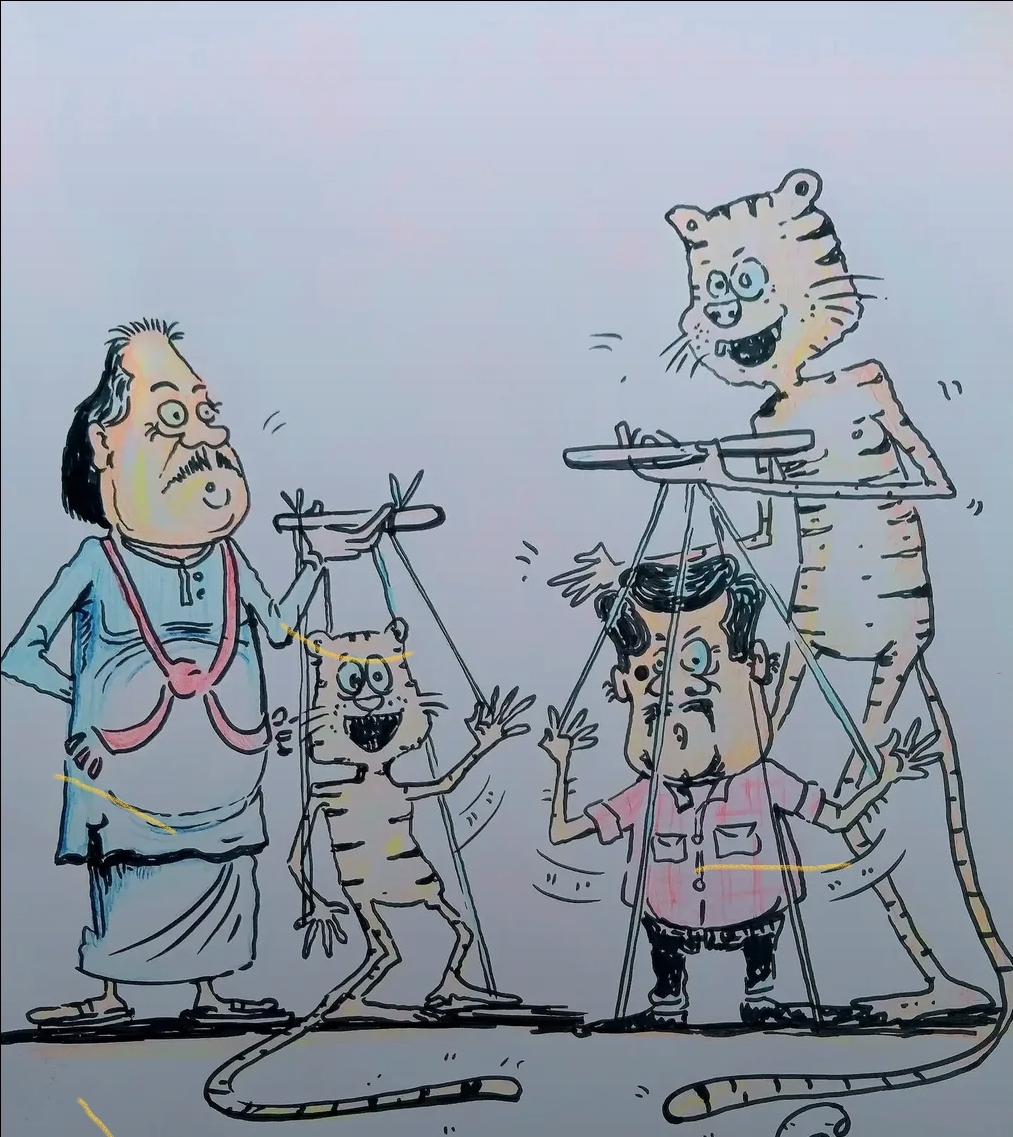
Investors however disagree. Our economic woes are much more complex to be thus simplified, they say. They explain that our macroeconomic fundamentals are weak and that has seriously eroded investor confidence – both local and foreign. The Wickremesinghe Administration has understood this problem and has taken a number of steps to build confidence and create positive vibrations, they acknowledge.
Economic forum
They kicked off 2016 with a well-publicized Sri Lanka Economic Forum funded by controversial billionaire tycoon George Soros and participated by Nobel Prize winner for Economics, Joseph Stigliz and Harvard Professor, Ricardo Hausmann. That same month, the PM led a large group of ministers, officials and private sector bosses to the Davos Summit in Switzerland. However, investors note that these so far had failed to kickstart the stalling Sri Lankan economic engine.
Furthermore, the 2016 Budget suffered a major blow to the government finances with the sudden suspension of the increases in percentages of the Value Added Tax (VAT) and Nation Building Tax (NBT), which were already passed in the Budget. This would seriously challenge the Finance Minister who is already struggling with revenues. The investors are seriously concerned, that many of his new revenue proposals are being struck down ‘unceremoniously by the President or the PM, in the face of even lukewarm public protests’.
Socio-economic conditions
This suspension along with the discontinuation of other tax and revenue proposals would substantially increase the fiscal deficit above 7 per cent. This will not be taken favourably by the IMF, which the PM has approached for a standby facility, notes the investors.
“It might come through,” says Gunawardena, “but it won’t come free. I’m not referring to the financial conditions, but the socio-economic conditions they will impose on us. As the government is desperate, they might be forced to accept these conditions, which will put them and the country into a lot of trouble.”
Investors seem to agree with Gunawardena. IMF will only materialize the facility if they are assured that the government and the Central Bank of Sri Lanka are not only disciplined in their monetary and fiscal management, but also give in on severe socio-political conditions of IMF. The IMF would insist on implementing tough, up-front measures. The fiscal deficit for 2015 had overshot its original 4.4 per cent target and is expected to widen close to 7.2 per cent. IMF had already called upon the government to broaden the tax base, simplify the tax system and improve its tax administration.
In the external sector, despite the reduction of the current account deficit, capital outflows have intensified and the country’s overall balance of payments has deteriorated. Compounding the situation, the erosion of the country’s foreign reserves that stood at only US$
7.3 B on 31 December 2015 would be under pressure this year as US$ 5 B is expected to be repaid on foreign loans.
Mystery men
“Then we have mystery men parking their billions in Sri Lanka,” charges Gunawardena. “The fact that the government require mystery men to come in with their billions indicates an economy in total crisis with insufficient foreign reserves.”
It does appear that the authorities have panicked and have resorted to unorthodox methods, agree the investors. If the Finance Minister thought the announcement of an unnamed Belgium investor parking more than US$ one billion in Sri Lanka at a low interest rate of 2 per cent would inspire confidence among stakeholders, it has backfired. Furthermore, a corresponding increase in the foreign exchange reserves or other indicators is yet to be observed, note the investors.
Central Bank Governor’s recent visit to Saudi Arabia with a team of top bankers to persuade the Saudi Arabian authorities as well as the Saudi banks to invest in Sri Lanka is claimed by the government as highly successful.
The Governor is optimistic that investments of around
US$ one billion would flow into Sri Lanka in the short-term.
Confidence
While in the past, such announcements would have injected confidence in the market, now the investors are however sceptical.
They feel, in the recent past, they have heard too many of these lofty statements which have materialized to no more than hollow boasts. As a result, instead of inspiring confidence, these statements are actually making the investors and other stakeholders wary.
“The Governor,” says Gunawardena, “appears distracted from his mandate. His statements seem more credible for a political spokesperson on politics of the ruling political party, than as an official of the State in charge of the monetary policy. Primarily he is to manage the interest rates that are on a climb, exchange rates that too are on a climb, supply of money further increased by printed money and general confidence in the currency, which appears to be lost!”
“The increase in interest rates in US will have a natural clear increase in our pay back interest components. This need to be addressed, as well as the inflation caused by the printing of money, and severe drop in foreign reserves. Also, the impact that will have after the ongoing Chinese currency adjustments should not be underestimated. Is the Central Bank Governor ready to face these issues?” asks Gunawardena.
Megapolis project
Speaking of the government’s recent unveiling of the proposed Western Megapolis Project, Gunawardena expresses serious concerns.
The plan reveals an envisaged investment of over US$ 40 B over the next 15 years in several key infrastructure projects. This mega scale project is billed to be the main anchor for development over the next two decades.
“Where is the government getting the money to do this project?” asks Gunawardena. “There is a massive global financial crisis that has put the investor in a very cautious mood. In such a scenario, would any investor be interested on investing in projects of a government that is in a two-year unstable power arrangement with their traditional political foes, when much lucrative options and facilities are offered by so many other countries across the world and in the region? Without solid investor backing, this will be nothing more than a beautifully coloured, flowery picture that will amount to nothing more than a mere propaganda stunt, full of waste of public funds.
“The other issue with this project is that its development is only concentrated on the Western Province, which should otherwise in contrast to the development that should take place right across the length and breadth of the country.”
Twist
There lies another twist, notes the investors. This development project is centred around the Port City project, which plans to reclaim over 250 hectares of land from the Indian Ocean, in the vicinity of the Colombo Port. Thus, the whole brouhaha created over the Port City now stands exposed as a mere political gimmick intended to mislead the voter. In that context, the investors feel the loss of 12 months so far and the further time it needs to restart is unfortunate.
The concern of the investors however is not so much on the lost time, but more on the Indian reaction. It has not been a secret that India was severely opposed to the upcoming Port City. One reason for their active underhand in changing the Sri Lankan Government was this project. Yet, India appears unconcerned that under the present administration the project looks to all intents and purposes getting resurrected.
While crediting the present government for winning over India to proceed with the project, the investors are very concerned over the price we have to pay for it. Some political and economic analysts claim that the current Sri Lankan authorities won India’s consent by agreeing to give Indian businesses the right to access Sri Lanka’s IT and engineering sectors via the much opposed ETCA, the continuous opportunity for LIOC to make super profits by keeping the ‘pump price’ of petrol at very high level compared to the costs, and very lucrative advantage that has been granted in a targeted manner for the mass-scale export of cheap Indian vehicles through the reduced duty structure, which the administration implemented immediately upon assuming office.
Economists
“During President Mahinda Rajapaksa’s administration,” notes Gunawardena, “we had so many specialist Opposition economists explaining the economic situation on television, late into the night on a regular basis. They are now in Parliament and in the government, but now they don’t come on TV and explain to us what is happening. We don’t even hear whether the present government is doing the job right or not. At least these specialist economists must come on TV and explain how the numbers are made!”
It will do well for the current regime to take note of Gunawardena’s observation. The downfall of the Rajapaksa Administration was their failure to engage with the public, which led to distortion of facts and misinformation filling the vacuum. Having benefited from their failure, the government should not repeat the same mistake that opportunists are surely hoping for to create further mischief in Sri Lanka.
-By Shivanthi Ranasinghe
795 Viewers