Preserve and protect archaeological sites in East
(Courtesy of The Island)
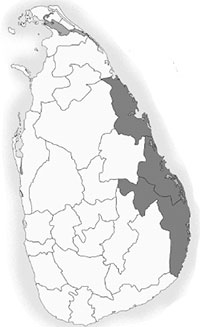
Reference the article of Dr Nirmala Chandrahasen (The Island, 12 June), I wish to draw the attention of readers to the very important fact that the Presidential Task Force was appointed for the survey and preservation of archaeological sites in the EAST. Therefore, any discussion on the Task Force should be based on the geography and the history of the Eastern Province, if one is to survey the historically important locations.
The Eastern Province was created by the British rulers, in 1833. Earlier, the area came under the rule of the Sinhalese Kings, but never under the invading forces from India, except for very small areas, for a short spell of time. The Portuguese did not possess any territory in the East, other than a small port in Trincomalee. The Dutch Governor, Ryckloff Van Goens, in his memoir, in 1663, mentioned that ‘the country between the Walwe and Tiriquenamalee is entirely inhabited by King Rajasinghe’s people’. Until the Sinhala-British Treaty (the Kandyan Convention), the British had administered only the ‘Maritime Districts’ (Colombo, Kalutara, Galle, Matara, Hambantotta, Chilaw, Batticaloa, Trincomalee and Jaffnapatam, Delft, Wanni and Mannar). Until well into the nineteenth century, there were only ‘Malabars’, who came from the Kerala coast.
Dr John Davy, who served in the British Army, from Aug 1816 to February 1820, wrote in his ‘An account of the Interior of Ceylon and its Inhabitants’, that Malabars and Moors are ‘foreigners naturalized’ and the former are confined principally to Northern and Eastern maritime provinces. Most of the Muslims, living in these areas, were settled down by King Senarath of Kandy, when they were expelled by the Portuguese from the South-West.
“The Eastern Province was created to dismember the Kandyan Province, in order to weaken the ‘national feeling ’ of the Kandyans. The heartland of the old irrigation civilization of the Sinhalese was broken up and part of it—Anurdhapura region or Nuwarakalaviya—was attached to Jaffna, Mannar and Mulativu, to form the Northern Province. The other part, Thamankaduwa, was linked with Trincomalee and Batticaloa to form the Eastern Province.” (Dr K.M.De Silva)
In the reports on ‘Forest Administration of Ceylon’, by F.D.A Vincent, published as Sessional Paper XL 11 of 1882, the gradual spread of Tamils, down the coasts, especially in the East, is mentioned. It is obvious from these facts that there were hardly any Tamil settlements in the East, before the 19th century, and therefore it is not scientific to ascertain that there are places of ancient archaeological importance of Tamils in the Eastern Province. Of course, there may be places which were constructed, since the 19th century, and an odd reference to a foreign – South Indian – king or an emissary, in the inscription such as in the case of the Velgam Vehera. The inscription says that ‘the chola king’ made the offerings to the Buddha. The inscription provides a vital clue, but that cannot establish the existence of a Hindu Kovil in Velgam Vehera.
As Dr Chandrahasen asserts, the Task Force should be mindful of a shared heritage, which is a noble sentiment. But, at the same time, the Task Force should seek the truth behind these archaeological places and try to preserve and restore the same for the benefit of posterity.
Some of the Sinhala Buddhist archaeological sites, out of many which had been wilfully damaged, or are encroached upon, by interested groups, are given below, specifically for the attention of the Task Force.
- Muhudu Maha Viharaya.
- Diga Vaapi.
- Velgam Vehera.
- Siriwaddana Bodhi Tree – Killiveddi.
- Gokanna Viharaya-Trincomalee.
- Monastery -Kucciveli.
- Monastery – Sembimalai.
- Monastery – Vilankulam.
- Cave Temple – Puliyankulama.
- Vihara – Ettama, Pottuvil.
- Monastery – Sangamkande.
- Vihara – Kottadicolai,
- Buddha statues – Nilaveli.
- Monastery – Nelligala,
- Monastery – Taravakulam.
- Stupa – Kirimeti Aru.
- Stupa – Samudragiri.
- Monastery – Sunethra Wewa.
- Monastery – Rahathgala or Santimalai.
- Monastery – Kanchikudichchi Aru
While sharing the sentiments of Dr Chandrahasen regards the methods to be adopted by the Task Force to minimise disturbances to the farmers and others who live in the concerned areas, we would like to request it to take action to earmark, preserve and protect the sites of archaeological value.
By Ranjith Soysa
120 Viewers