Prime Minister Trudeau’s Statement on the anniversary of Black July ignores those who “Idle No More”.
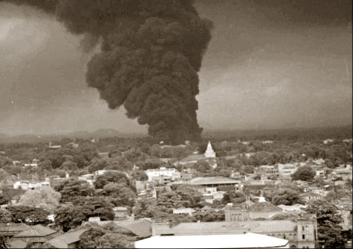
The Prime Minister of Canada issued a statement on 23rd July, stating that “Today, we remember the horrific events of Black July in Sri Lanka and honour the memory of its victims. “In July 1983, anti-Tamil pogroms swept across Colombo, Sri Lanka, following decades of unrest and rising tensions in the country. Thousands of Tamils were killed and countless others were displaced. These riots sparked 26 years of armed conflict in which tens of thousands more lost their lives, devastating communities and leaving lasting physical and emotional wounds”.

Many Sri Lankan immigrants to Canada have come to Canada because they wish to leave behind the strife-ridden politics of Sri Lanka. The armed conflict started in 1976 with the killing of the Mayor of Jaffna by the LTTE leaders, and the Separatist resolution of the Tamil United Liberation Front made in the town of Vaddukkoddai (Batakotte) to initiate an armed struggle. The FLQ made similar separatist resolutions in regard to Quebec, and they were militarily nipped in the bud by Trudeau Sr. But Sri Lanka had to face a protracted war due to the misguided “good offices” of foreign powers who had no clear understanding of the problems of that nation. Mr. Trudeau’s Black July statement shows that Canada does not still know how best to intervene in Sri Lanka.
However, we deeply appreciate Mr. Trudeau’s concern about what happened in Sri Lanka some four decades ago. We should note that the first Tamil-Sinhala riot began in 1939, when a Tamil politician began racial attacks on the majority community. The British Historian Dr. Jane Russell has discussed the rise of communalism and race politics in Sri Lanka since 1930. The chicken and egg nature of the blame game, and the role of the British Governors in hatching the egg and the chicken are clearly evident from Dr. Russell’s book.

However, we can be optimistic today because there have been no such Sinhala-Tamil riots since the 1983 conflict that Mr. Trudeau alludes to.
Nevertheless, as immigrants who have embraced the history and political legacy of Canada itself, we are very conscious that we need to also remember the horrific events of many many “Black Julys” that have been committed against the Native Peoples of this country, without resorting to the blame game, but with the intention to put matters right. The Ethical standards and human rights concerns of even a quarter century ago were different from those of today.
Also, if we concern ourselves of Sri Lanka, we should be even more concerned with our Southern Neighbour, and include the pogroms and massacres that have taken place against Native Peoples of all of North America, and by aboriginal people against many innocent European settlers who arrived here and pioneered the opening of the American continent.
We give below an incomplete list of such massacres, where over a million people have perished. These peoples’ memories and those events which recurred every year for 400 years should not be ignored when Mr. Trudeau gives priority to an event in Colombo that was not repeated again.
.
Mr. Trudeau has rushed to remember the Black July of the Tamils and the Sinhalese that occurred in Sri Lanka, ever since he became the Prime Minster, but he has yet to come forward to remember the horrific events that have gone through over four centuries of blood letting, murder and treaty cheating. Unfortunately, that process occurs even today, though in a different guise, as one may see from the economic and civil conditions endured by the people of the first Nations. However, the tragedy of the people of the First Nations is that they do not control important blocks of swing votes in Metropolitan areas, as is done by the ethnic groups that Mr. Trudeau has so readily responded to, in his “Black July” message.
We call upon Mr. Trudeau to correct this historic lacuna, review the history of Canada, the European occupation of North America, and understand the tremendous injustice of his witting or unwitting neglect of what we have to learn from Canada’s own history, and what injustices we need to remember
on Black July.
Bob Joseph’s 2018 examination of the Indian Act of 1876 — “21 Things You May Not Know About the Indian Act” — should provide Mr. Trudeau material for amending his Black July oration. Remember that Joseph argues that “there was a foregone conclusion that Indians would simply die out, cease to exist, thereby absolving the government of any financial responsibility and giving clear access to the lands reserved for Indians.” As the attached demographics plot shows, this objective was virtually achieved by 1900, the beginning of the 20th century.
Mr. Trudeau’s Black July statement ends with “ Canada remains committed to facilitating an accountability process that has the trust and confidence of all victims, which is central to achieving lasting peace and reconciliation. We continue to offer support to all those working toward these goals.”
But Charity, or good intentions must begin at home. The “Truth and Reconciliation Commission” regarding Native Peoples gave a 94-point checklist of tasks to ameliorate the legacy of Canada’s treatment of indigenous people. While Trudeau made justice for indigenous people a prominent part of his political campaigns, his unmet promises fueled the frustration of tribal activists and leaders. His $3.45 billion to purchase Kinder Morgan’s Trans Mountain pipeline contrasts with the allocation of $1.3 billion per annum over the next 5 years (since 2019) in new funding towards Indigenous peoples.
While Mr. Trudeau is far more sensitive to Native issues than his predecessor Mr. Harper who helped to hatch the “Idle No More” movement, Mr. Trudeau remains in the realm of good intentions and no real actions.
As Mr. Trudeau is a very busy Canadian, we offer him the following minimalist list, for him to include in his Black July orations. Furthermore, it is not too late for him to correct his statement of July 20202, and issue a new statement, following the exhortation “Thou hypocrite, first cast out the beam out of thine own eye; and then shalt thou see clearly to cast out the mote out of thy brother’s eye”.
1640 July Staten island massacre Whole village of Indians massacred
1689 July- August La Chine, Quebec massacre
1675 July Susquehannock Massacre, Wampanog-Sweansee massacre
1676 July Massacre of a band of band of Narragansetts, 92 women, 34 men and childere,
1695 July La Matanza – Place of The Slaughter.
1746 July Port La-Joye massacre,
1747 Feb Grande-Pre, Nova Scotia massacre
1751 May Dartmouth, Nova scotia massacre
1755 July Shawnee Indian massacre
1759 Oct Odanak, Quebec massacre
1771 July Kugluktuk, Nunavut massacre
1826 July Massacre of Karankawa tribe
1832 July-Aug Gen Atkison kills over 150 Sioux
1833 July Massacre of Osage tribe
1840 Clear lake Massacre, Indian Key massacres
1846 June-July SutterButts massacred
!847 July Massacre of Konkow-Maidu Indians
1848 July Massacre of Whichita and Kado Indians
1853 July Achulet massacred
1854 July Asbili and ward massacres
1855 Klamath valley massacres
1856 June-July Attack on Cayus and Walla Walla Tribes
1856-9 many months Massacre of of over a thousand Yuki Indians
1862 July-Aug Dakota wars, Siox kill white settelers
Massacre of the Tonkawa tribe
1864 April Bute Inlet, British Columbia massacres
1863-65 Mowry Massacres, Massacre of the Yana tribe
Skull valley massacre
1867 July Aquarius mountain massacred
1870 Piegan trie massacre of mainly women and children
1871-72 Apache and Yavapai massacres
1873 June Nakodas in Cyprus Hills, Saskatchewan were massacred
1877 July-Aug Battle of the Big Hole massacre
1879 Fort Robinson massacre, Meeker massacred
1880 Alama Massacres,
1880 Feb Black Donnaly Massacre, Biddulph, Ontario.
1885 April Frog Lake, Alberta massacres
1890 Massacre of many Sioux tries
1911 Shoshone and Washoe Massacres
1970 October FLQ kidnaps and assassinates

Canada followed an officially sanctioned genocidal policy of exterminating native people and handing over native lands to European colonists until at least about the time of the first world war. This is clearly seen in the decline of the population of native people from the time of the arrival of Europeans some 4 centuries ago, reaching a nadir around 1900-1920.
Chandre Dharmawardene, Canada
72 Viewers