Secular State
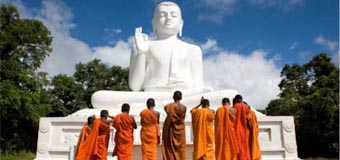
The non-Buddhists in Sri Lanka have a deep animosity to Buddhism . There is much jealousy and resentment among them regarding the special place given to Buddhism in the Constitution. They wish to remove this provision and use the argument of a secular state to do so.
A secular state is a state which is officially neutral in matters of religion. A country whose government is devoted to secularism even if its people favor one religion over another can be considered a secular country. So can a country in which both the government and the people accept all forms of belief and non-belief equally, said analysts. But absence of an established state religion does not mean that a state is completely secular. Some states that describe themselves as secular have laws that benefit one religion, they added.
The Sri Lanka Constitution did not make Buddhism the state religion. In 2004, when Jathika Hela Urumaya proposed a constitutional amendment to make Buddhism the state religion, Supreme Court rejected it. But Article 9 of Chapter 2, states “The Democratic Socialist Republic of Sri Lanka shall give to Buddhism the foremost place, and accordingly, it shall be the duty of the State to protect and foster the Buddha Sasana.”
This clause was not based on any desire to prop up Buddhism where other religions were jostling for position. The clause reflects the historical position of Buddhism. In ancient Sri Lanka Buddhism had the status of an official religion and had greatly benefited from royal support. Thanks to this, Sri Lanka became known for its high standard of Buddhism .Buddhists want this historic role to be recognized in the Constitution and also for the state to start once again to patronize Buddhism .
Sri Lanka is not the only Buddhist country that recognizes Buddhism .Thailand openly supports Buddhism . Section 9 of the Thai constitution (2007) states, “The King is a Buddhist and Upholder of religions”, section 79 says The State shall patronize and protect Buddhism as the religion observed by most Thais for a long period of time. In Thailand too, there have been calls by Buddhists to make Buddhism the country’s state religion, but the government has turned down these requests.
The Constitution of India, declares India to be a secular state with no state religion but India pays special attention to Hinduism. Article 48 of Indian constitution, prohibits the slaughter of cows . Pakistan is more direct. The name of the country is Islamic Republic of Pakistan.
There are at least two western countries which are definitely not secular. Britain has a state religion, the Church of England and the king of England is head of the Church. The Swiss Constitution begins ‘ in the name of the Almighty God’ and 24 of the 26 cantons support the Catholic Church or the Swiss Reformed Church, started by Switzerland’s own Zwingli. Religion is accommodated in other ways too. The President of USA took his oaths, placing his hand on the Bible.
The Anuradhapura kingdom, I am told by indignant local historians, has been described as a theocratic state, by a foreign researcher. From the little I managed to read on the issue, the author simply means an organic system in which local monastic centers played the role of towns acting as foci of economic, political and spiritual power”. He appears to know very little about the monastic system in Rajarata. The use of the word ‘theocratic’ is unfortunate.
The word theocracy originates from the Greek word meaning “the rule of God”. A theocratic state is one which believes in one God and is ruled by its religious leaders. Iran is the best known example today.
It is difficult to see any Buddhist country turning theocratic. Buddhism is concerned with control of the individual mind, not in controlling the collective mind. The Buddhist philosophy is bent on showing you how to get out of this world, not how to run it. Further, Buddhism does not believe in an almighty God and it does not feature a religious leader who issues mandatory orders.
by Kamalika Peiris
123 Viewers