The 13th Amendment
(By Courtesy of the Island)
By KAMALIKA PIERIS
The 13th Amendment to the Sri Lanka Constitution owes its existence to the Indo-Sri Lanka Accord. Under the Accord the government of Sri Lanka had, inter alia, to devolve political powers to the provinces. If the Accord was not signed India would intervene militarily. President J.R. Jayewardene was in no position to oppose. He had bungled Indo-Sri Lanka relations and antagonized the Indian Prime Minister. He signed the Accord on 28 July 1987.
There was strong public opposition to the Accord before and after it was signed. There were island wide protests with black flags and slogans expressing strong opposition to Indo-Lanka Accord, Tamil separatism and the UNP Government. Protestors had gone in procession to Panadura MP to request him not to vote for the 13th amendment. The day before the Accord was signed, 20,000 people gathered in Colombo to protest. Police tear gassed, baton-charged and fired on the crowd. 21 persons died. An island wide curfew was declared.
When Rajiv Gandhi left Sri Lanka after signing the Accord, Wijemuni Vijitha Rohana, 22 years, a naval rating in the honor guard at Katunayake airport, hit Gandhi on the shoulder with his rifle. Wijemuni was expressing his resentment at India for intimidating Sri Lanka and using force to impose the Accord. There was no serious injury. Several leading lawyers appeared voluntarily for Wijemuni, who was sentenced to six years rigorous imprisonment. He was pardoned and released in 1990.
Regardless of the protests, the 13th Amendment and Provincial Councils Bills were sent to Supreme Court to determine whether they conformed to the constitution and whether they needed a referendum. Five of the nine judges including Chief Justice Sharvananda, Justices Colin Thome and H.D. Tambiah found the Bills acceptable; while four others held that they were not acceptable , resulting in a wafer thin majority of 5-4 in favor. Justice Ranasinghe stated that two clauses required a referendum.
Critics differ in their interpretation of this Supreme Court ruling. Some say that the Supreme Court sent three separate determinations, not a single‘collective’ determination, leaving Parliament to figure out what to do with them. Others say that the Supreme Court did not make any ‘determination’ at all, but had sent recommendations for consideration of Parliament. They note that the Supreme Court did not specify the amendments necessary to make the Bills legal, either, though they were empowered to do so.
Critics declared that Parliament should have prepared fresh bills, taking care to omit the provision for a referendum and sent them back to Supreme Court. Instead Parliament approved the original Bills, (which called for a referendum), saying that they only needed 2/3 majority, not a referendum. No referendum was held. The Supreme Court had also said that the Provincial Council Bill should come only after the amendment Bill became law. Instead, the first bill, (13th Amendment) was passed in Parliament two days after the vote on the second (Provincial Council) Bill, which sought to amend the first bill.
In this confused manner, on 14 November 1987 the Sri Lanka Parliament passed the 13th Amendment to the 1978 Constitution of Sri Lanka and the Provincial Councils Act No 42 of 1987. Members of Parliament were put into a hotel the night before and taken to Parliament in a van from there, with President Jayewardene holding undated letters of resignation from them. Had there been a second assembly (Upper House), this matter would have taken longer. The Bills received the Speaker’s Certificate, preventing any further discussion of its validity within Parliament.
But the 13th Amendment continued to be discussed outside Parliament, specially the highly questionable manner in which it was passed in Parliament. The Amendment was forced upon Sri Lanka by India, critics said, any statement made under duress, threat or compulsion is illegal and invalid in Sri Lanka law and in the Vienna Convention on law of Treaties.
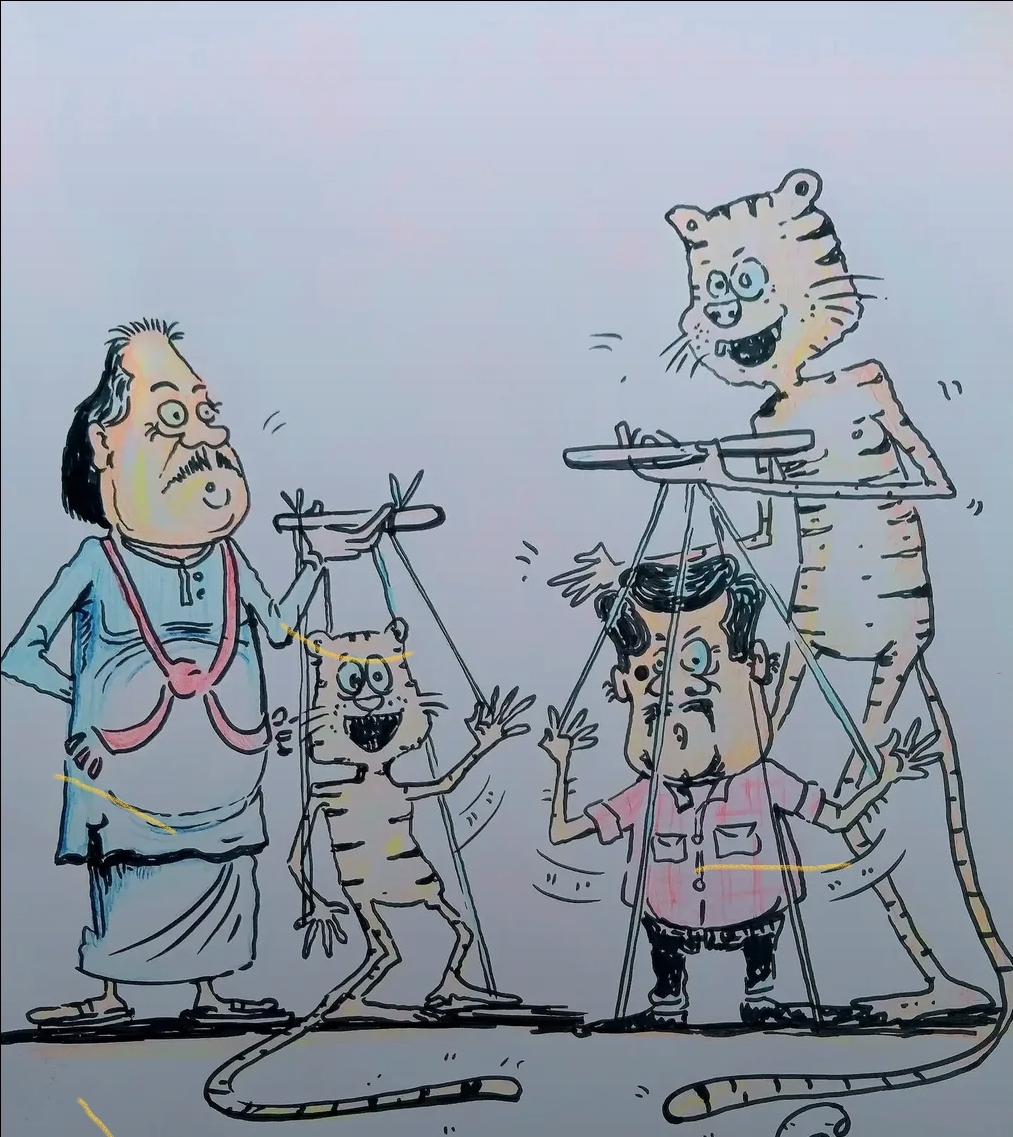
The 13th Amendment was dangerous, they added. It is a prelude to the breakup of the country. Provinces could merge, which meant that Sri Lanka could break up into autonomous units. The Provincial Councils will need to compete with each other, to attract foreign investment, creating greater disunity. The country would then become chaotic and ungovernable and interested parties, such as India, could move in.
The Provincial Councils were to get the all-important subject of land, as well as police, local government and a host of other subjects. Provincial Councils also had the right to pass laws (statutes). The intention was to transfer sovereign power to the Provincial Councils and weaken the central government. This meant a separate near-sovereign administration for the north, considered a majority Tamil area and one of the two homelands of the Tamils.
The central government could not pass any law relating to provincial matters unless it was seen and approved by the Provincial Councils first. This was seen as outrageous. The Divineguma bill had to first be approved by the Provincial Councils before the central government could pass it. A bill on industrial effluents also had to go to every single Provincial Council first. The North Western Provincial Council had to be persuaded to approve the Bill for National Environmental Amendment Act 53 of 2000 though the Bill had nothing to do with the North Western province. .
The 13th Amendment is directly linked to Eelam. The 13th Amendment gave legal recognition to the provinces of Sri Lanka and also permitted them to merge. The Indo-Lanka Accord of 1987 demanded that Northern and Eastern provinces be merged and a single Provincial Council be created. Accordingly, in September 1988 President Jayewardene, using emergency regulations, declared the Northern and Eastern provinces to be one administrative unit administered by one elected Council. The North- Eastern Province, with Trincomalee as its capital, was born.
This ‘Eelam’ had been planned in advance. M Sivasithamparam, A. Amirthalingam, R. Sampanthan of the TULF wrote to Rajiv Gandhi, Prime Minster of India, in 1987, drawing attention to the discussion between government of Sri Lanka and the TULF, in 1986, where it was agreed that the Provincial Councils would have ‘ near absolute’ legislative power and the Governor would be a ceremonial head. They had expected a single administrative unit of north and east with legislative and executive powers similar to the powers given to a state in India especially in executive and legislative matters (Sunday Leader. 17.2.08 p 12).
Northern Province Chief Minister, C.V.Wigneswaran, stated in 2016, that the 13 Amendment, when conceived in 1987 was intended to provide for a merged northern and eastern province “by the Government of India on behalf of the Tamils of the north and east in its negotiations with the Government of Sri Lanka.’(Daily News 20.1.16 p 14)
The merger of North and East was bitterly opposed by those against Tamil separatism. The combined North Eastern Province occupied one fourth of Sri Lanka. This merger was to be temporary until a referendum was held in the Eastern Province on the matter. This was to be held by 31 December 1988, but the Sri Lankan president could postpone the referendum at his discretion. The referendum was never held. The President of Sri Lanka annually issued a proclamation extending the life of the Council. In 1990, Varatharajah Perumal, chief minister for the North-East Provincial Council declared a Unilateral Declaration of Independence (UDI) and fled to India. President Premadasa dissolved the Council. The North-east Province was ruled directly from Colombo thereafter.
In 2006, Janatha Vimukthi Peramuna filed petitions against the merger, requesting a separate Provincial Council for the Eastern province. They said that the merger was illegal. The relevant clause in the Provincial Councils Act had not been amended and the referendum never held. Supreme Court ruled that the merger was unconstitutional. The North-East Province was formally de-merged into Northern and Eastern Provinces on 1 January 2007.
Most people, judging by comments in the media, are against the 13th Amendment and want it repealed. Jathika Sangha Sammelanaya, All Ceylon Buddhist Congress and the Collective for the abolition of Provincial Council systems (CAPCS) formed in 2013, say 13th Amendment was imposed on the country from outside. It challenges the supremacy of Parliament. They are opposed to the granting of land and police powers to the provinces, and the power to merge provinces. .”
OPA has called for the repeal of the 13A, saying Sri Lanka did not ask for it, the PC system has totally failed and only added a financial burden, and also administrative confusion. Provincial Councils are a temptation to separatism, 13A it a threat to sovereignty, independence and unitary status. Neither the government nor people wanted it (Island. 1.12.12. P 4).
The limitations of the 13th Amendment have been noted. The Provincial Councils cannot go beyond the country’s constitution. They can function only ‘subject to the provisions of the Constitution’. Provincial statutes could be declared void by the law courts if they are inconsistent with Constitution. The President of Sri Lanka can take control of a province, if there is mismanagement. Further, Article 157A of the Constitution prohibits a wide range of acts which relate to the creation of a separate state within Sri Lanka. Chapter 6 of the Penal Code gives a list of offences against the state prohibited by the Penal Code. A ‘new’ constitution is now mooted to strengthen the 13th Amendment. If barriers like the ‘Concurrent List’ are removed the Provincial Councils will become autonomous.
4239 Viewers