The Enduring Impact of Tamil Separatism
By Asoka Bandarage
(Courtesy of https://asianstudies.georgetown.edu/sites/asianstudies/files/documents/gjaa_3.2_bandarage.pdf)
In May 2009, the Sri Lankan military defeated the Liberation Tigers of Tamil Eelam
(LTTE), a “most lethal and well-organized terrorist group in the world,” which had
fought for nearly thirty years to establish a separate Tamil state in Sri Lanka.1 Since
that decisive victory in what was considered the “longest-running conflict in Asia,” significant
steps have been taken towards the reconciliation and integration of the Tamil
minority into the country’s political system.2 Local government elections held in July
2011 brought the Tamil National Alliance into power in the Northern Province, which
signified a return to democracy and normalcy in the north, as elections could not be
conducted during the armed conflict.3 Despite possible dangers to national security,
the current Sri Lankan government, which came into power in 2015, lifted the ban on
Tamil separatist organizations, released imprisoned Tamil rebels charged with terrorist
activities, and returned thousands of acres of land in the north and the east that the
military confiscated during the thirty-year war.⁴
Members of the Tamil elite have taken important government positions, including
Chief Justice and Governor of the Central Bank, notwithstanding ethical and legal
controversies surrounding some of those appointments. A Tamil politician was appointed as the Leader of the Parliamentary Opposition, even though his Tamil National Alliance party won only sixteen seats as opposed to the fifty-one seats gained by the United People’s Freedom Alliance of the Sinhalese in the 2015 Parliamentary elections.
In an effort to appease Tamil sentiments, Sri Lanka’s national anthem was sung
in the minority Tamil language at the official Independence Day celebrations in 2016
1 Asoka Bandarage. The Separatist Conflict in Sri Lanka: Terrorism, Ethnicity, Political Economy (London:
Routledge, 2009), 1.
2 Ibid.
3 Asoka Bandarage, “Towards Peace and Justice in Sri Lanka: An Alternative Perspective,” India Quarterly
68, no. 2 (2012): 103-118.
⁴ Shihar Aneez, “U.S. Lauds Sri Lanka Government on Post-War Tamil Reconciliation,” Reuters, 24
November 2015, http://in.reuters.com/article/sri-lanka-conflict-reconciliation (date accessed: 29 January
2017).
[38] Georgetown Journal of Asian Affairs Policy Forum
for the first time since 1949.5
Regardless of such efforts, Tamil separatism has not been halted. Since the military defeat of the LTTE, a faction of the Tamil diaspora in the West has regrouped, forming
new initiatives to carry on the separatist struggle through political means. In June 2009, a “Transnational Government of Tamil Eelam” was inaugurated with New York-based
attorney Visuvanathan Rudrakumaran, the international legal advisor to the LTTE,
as its first prime minister. The Global Tamil Forum, a “conglomerate” of pro-LTTE
diaspora organizations, has renewed the call for the creation of an “Autonomous Tamil
Region” in the northern and eastern provinces through a “rearrangement of Sri Lanka’s
governance structures.”6 In Sri Lanka, the Northern Provincial Council, which is
dominated by the Tamil National Alliance, has passed a resolution that the north and
the east provinces should merge into one. A Northern Provincial Councilor (a relative
of LTTE leader Velupillai Prabhakaran) has said that if constitutional reforms uphold
the unitary state, “we will not be in a position to accept it…there will not be any room for reconciliation and the country will split into four or five parts.”7
Internationally backed constitutional changes that focus merely on Tamil separatist
interests overlook the interests of the Sinhala majority and the Muslim minority. By
ignoring the island’s historical, demographic, and geopolitical evolution, they could
reignite violent conflict, leading to ethnically based balkanization. The international
community tends to see the Sri Lankan civil conflict simply as a case of Sinhala Buddhist
majoritarian aggression and Tamil minority oppression. The various peace initiatives
built upon this narrow perspective, such as the Indo-Sri Lanka Treaty imposed by
India in 1987 and the peace initiative facilitated by Norway in 2002, sought to create a
separate region for Tamils in the north of Sri Lanka. Given the marginalization of all
groups opposed to separatism, those initiatives led to the intensification of the conflict and violence rather than to peace and conflict resolution.8 It is important, then, to develop a balanced historical and pluralist perspective and to consider the wisdom of international support for Tamil separatism, which threatens multiculturalism, peace, and stability in Sri Lanka and the South Asian region.
Evolution of Tamil Separatism
British colonial policies had differential impact on the diverse ethnic, religious, and
caste groups. The colonial state’s grants-in-aid provided most of the Christian missionary schools to the Northern Province. As a result, the Vellala caste, dominant in
the Jaffna Peninsula, gained disproportionate access to English language education,
6 Global Tamil Forum, http://www.slguardian.org/wp-content/uploads/2016/11/Submission-to-Public-
Representations-Committee-on-Constitutional-Reforms-from-Global-Tamil-Forum-GTF-1.pdf
(date accessed: 29 January 2017).
7 Mirudha Thambiah, “North and East merger non-negotiable—Sivajilingam,” Ceylon Today, 8 November
2016, http://www.ceylontoday.lk/print20161101CT20161231.php (date accessed: 29 January
2017).
8 Bandarage, The Separatist Conflict in Sri Lanka, 4.
Spring 2017 [39]
Bandarage | The Enduring Impact of Tamil Separatism
university science faculties, careers in the civil service, modern professions, and the trust of the colonial masters. The post-independence Sri Lankan government of the 1950s and 1960s introduced some language and university entrance policies to redress those ethnic, class, religious, and caste disparities established in the colonial era. The government has reversed those policies since then, and Tamil is now an official language, a status it does not have even in India where there is a much larger Tamil population.
When the shift towards electoral democracy beginning in 1921 first threatened the
Vellala Tamil advantage, Ponnambalam Arunachalam, a Sri Lankan Tamil leader,
turned to the idea of a pan-Tamilian state. At the inaugural meeting of the Ceylon
Tamil League, he stated its objective: “to keep alive and propagate…throughout Ceylon,
Southern India and the Tamil colonies…the union and solidarity of ‘Tamilakam,’
the Tamil Land.”9 In 1949, one year after the island became independent from the
British, the Malaysia-born Tamil politician S.J.V. Chelvanayakam formed the Tamil
Federal Party. In the Tamil language, it carries a distinctly separatist connotation as
Illankai Tamil Arasa Katchu (the Tamil State Party). Chelvanayakam saw federalism as
a stepping stone to eventual secession, the motto of his approach being “a little now,
more later.”10 The traditional Tamil “homeland” that has been invoked since the 1950s
constitutes the Northern and Eastern Provinces, which the British carved out largely
from the Sinhala Kandyan kingdom for administrative convenience. The Sinhala origin
of place names and extensive historical evidence reveal the existence of Sinhala
Buddhist settlement and culture throughout the northern and eastern regions;11 it did
not constitute a unified Tamil political entity that has existed from the “beginning of
history.”12
The militant movement for the creation of a Dravidian state, Dravidasthan, in South
India, encompassing Tamil Nadu, Mysore, Kerala, and Andhara, where Dravidian languages
are spoken, goes back to the late British colonial period. Tamils in South India,
however, were compelled to give up the formation of a nation-state in their own
country when the Indian government adopted the draconian anti-secessionist constitutional amendment in 1963 following the Sino-Indian War.13 Then, in conjunction with policies introduced in Sri Lanka to redress grievances of the Sinhala majority, South Indian Tamil support for a “surrogate” Tamil state in Sri Lanka expanded. The confluence of local and regional factors resulted in the armed conflict between the Sri Lankan state and Tamil militant groups in the mid-1970s, leading to the anti-Tamil pogrom of 1983. Increased terrorism and state violence followed.
9 Bandarage, The Separatist Conflict in Sri Lanka, 35 and 216.
10 Ibid., 39-41.
11 Asoka Bandarage, “Ethno-Religious Evolution in Pre-Colonial Sri Lanka,” Ethnic Studies Report 11,
no. 2 (July 2003).
12 K.M. De Silva, Separatist Ideology in Sri Lanka: A Historical Appraisal (Kandy: International Centre
for Ethnic Studies, 1995).
13 Duncan B. Forrester, “The Madras Anti-Hindi Agitation, 1965: Political Protest and Its Effects on
Language Policy in India,” Pacific Affairs 39 (1966), 23; Robert L. Hardgrave, “The DMK and the Politics
of Tamil Nationalism,” Pacific Affairs 37 (1965).
[40] Georgetown Journal of Asian Affairs Policy Forum
Tamil militant separatists would not have had the ability to emerge as a strong threat
to the Sri Lankan government without the arms and military training given by India
starting well before the riots of July 1983. Prime Minister Indira Gandhi’s covert
support for Sri Lankan Tamil insurgent groups, including the LTTE, stemmed from
concern over India’s regional security and the importance of the electoral support of
the Tamil Nadu region. When the Sri Lankan army was just about to vanquish the
LTTE in May 1987, India intervened militarily and stopped the Sri Lankan advance.
The Thirteenth Amendment and Indian Intervention
The Thirteenth Amendment to the Sri Lankan Constitution emerged from the Indo-
Sri Lanka Accord, signed in July 1987, and the arrival of the Indian Peace Keeping
Forces (IPKF). The stated objective of this accord was “resolving the ethnic problem of
Sri Lanka” by recognizing that “the Northern and Eastern Provinces have been areas
of historical habitation of the Sri Lankan Tamil-speaking peoples.”14 In an attempt
to create a Tamil-majority area, the accord resolved to join the Northern and Eastern
Provinces to form one administrative unit with one elected provincial council. It also
called for a referendum to determine if the people of the Eastern Province wished for
their province to be joined to the Northern Province.
The hasty and confused process of adopting the Thirteenth Amendment violated the
island’s democratic and legal traditions. The assertion of the existence of a unified
“Tamil-speaking people” ignored the pluralism of the north and the east and the regional differences between the northern Jaffna Tamils and the eastern Batticoloa Tamils and marginalized the Muslims, who, though predominantly Tamil-speaking, do not identify themselves as Tamils.15 Given the failure to hold a referendum in the east and continued opposition to the Indian-imposed merger, the Northern and Eastern Provinces were de-merged by the Sri Lankan Supreme Court in 2006.
The Indian intervention gave rise to one of the bloodiest and most anarchic periods in
the modern history of the island. Violent resistance by the Sinhala Janatha Vimukthi
Peramuna (JVP) against Indian intervention turned into a horrific reign of terror in
the south. Struggle against the IPKF allowed the LTTE—one of several Sri Lankan
Tamil militant groups originally funded and armed by India—to emerge as the “sole
representative of Tamils.” Tamil separatist violence and ethnic cleansing of Muslims
and Sinhalese intensified.16 In March 1990, the Indian Army finally withdrew from Sri
Lanka, leaving behind a trail of death and destruction. In addition to the thousands of
soldiers, rebels, and civilians killed by the IPKF and the LTTE in the north and the
14 Bandarage, The Separatist Conflict in Sri Lanka, 133.
15 Neville Ladduwahetty, “Democracy: Direct vs Representative,” The Island, 15 November 2016,
http://www.island.lk/index.php?page_cat=article-details&page=article-details&code_title=155542
(date accessed: 29 January 2017); Pieris, Kamalika, “The 13th Amendment,” Lankaweb, 8 June 2016,
http://www.lankaweb.com/news/items/2016/06/08/the-13th-amendment (date accessed: 29 January
2017); Bandarage, “Towards Peace and Justice,” 111.
16 Bandarage, The Separatist Conflict, 153.
Spring 2017 [41]
Bandarage | The Enduring Impact of Tamil Separatism
east, anywhere from 40,000 to 60,000 deaths occurred in the JVP-Sri Lankan government
war in the south.17 Although the LTTE was banned in India following its assassination of former Indian Prime Minister Rajiv Gandhi in Tamil Nadu in 1991, support for a separate Tamil state in Sri Lanka has persisted. It plays a major role in South Indian electoral politics; rival politicians and parties manipulate the issue for self-advancement. A pan-ethnic sense of relative deprivation has played a significant role in both regional and international Tamil support for the Tamil separatist struggle in Sri Lanka. Tamils—about eighty million people worldwide, with over sixty million in Tamil Nadu—consider themselves to be a “nation without a state” or a “trans-state nation.” LTTE leader Prabhakaran envisioned a “Greater Eelam,” going beyond just Sri Lanka.18
Post-LTTE Developments
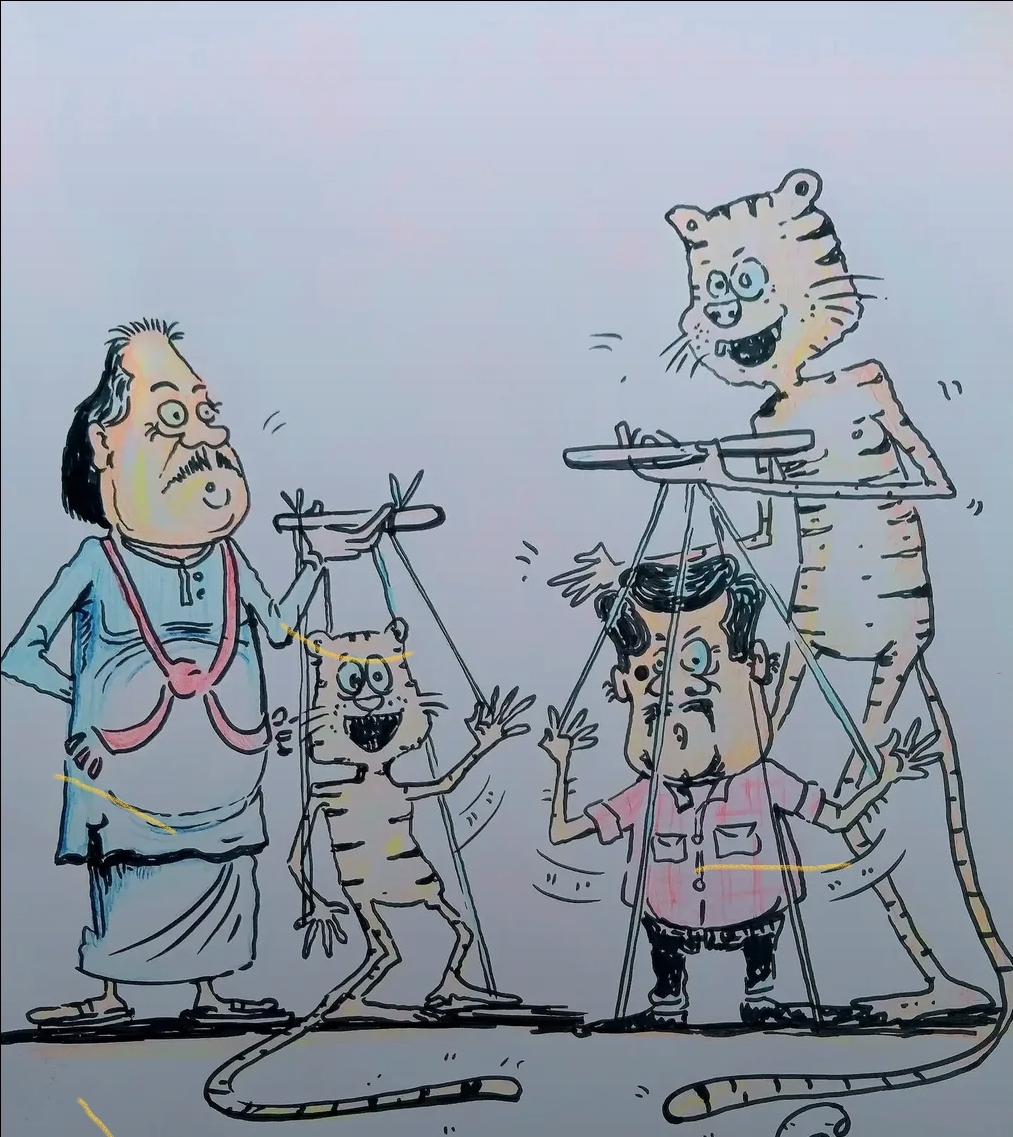
Since the defeat of the LTTE, Tamil diaspora groups have deflected international attention away from LTTE terrorism and its atrocities, including those toward Tamils.
Using ample funds, lobbying, and media connections, they have cultivated access to the
British, United States, and other Western governments and international non-governmental organizations (NGOs) and have succeeded in bringing war crime charges
against the Sri Lankan government. These efforts have influenced the adoption of the
UN Human Rights Council’s Resolution (co-sponsored by the current U.S.-backed
Sri Lankan government) in Geneva in 2015 and the 2015 Report of the Office of the
UN Human Rights Commissioner. They call for accountability and an international
investigation into war crimes and human rights violations in the final stage of the
armed conflict in Sri Lanka, as well as international monitoring of transitional justice
and reconciliation. Clause 16 of the Geneva Resolution explicitly states that the Sri
Lankan government must devolve power through constitutional means, namely the
Thirteenth Amendment, which: Welcomes the commitment of the Government of Sri Lanka to a political settlement by taking the necessary constitutional measures, encourages the Government’s efforts to fulfil its commitments on the
devolution of political authority, which is integral to reconciliation
and the full enjoyment of human rights by all members of its population;
and also encourages the Government to ensure that all Provincial
Councils are able to operate effectively, in accordance with the
thirteenth amendment to the Constitution of Sri Lanka.19
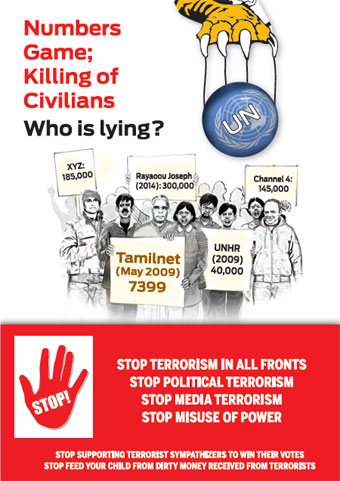
The legitimacy of the UN to continue to intervene in and monitor Sri Lanka, however,
is questionable given its admitted “systematic failure” to carry out its duties and uphold
17 Bandarage, The Separatist Conflict in Sri Lanka, 153.
18 Ibid., 141-152.
19 Ibid., 4, 20-22.
[42] Georgetown Journal of Asian Affairs Policy Forum
humanitarian interests during the final phase of the Sri Lankan armed conflict.20 The
former UN Secretary General Ban Ki Moon himself has admitted this failure. The
“Report on Secretary General’s Internal Review Panel on UN Actions in Sri Lanka,”
concludes: …events in Sri Lanka mark a grave failure of the UN to adequately
respond to early warnings and to the evolving situation during the
final stages of the conflict and its aftermath, to the detriment of hundreds
of thousands of civilians and in contradiction with the principles
and responsibilities of the UN. The elements of what was a systemic
failure can be distilled into…a UN system that lacked an adequate
and shared sense of responsibility for human rights violations…an
incoherent internal UN crisis-management structure which failed to
conceive and execute a coherent strategy in response to early warnings
and subsequent international human rights and humanitarian
law violations against civilians.21
Although UN documents refer to human rights violations by “both parties,” calls for
accountability are directed solely at the Sri Lankan government, as the LTTE no longer
exists as such.22 An international investigation that focuses merely on one party—
the Sri Lankan government—and on just the final phase of the war, absolves the
LTTE, the Tamil Diaspora that funded the LTTE, the IPKF, and various other parties
of human rights violations. Indeed, is the ultimate objective of international pressure,
humanitarian justice, or coercion of the Sri Lankan government to concede Tamil regional
autonomy?
Tamil Regional Autonomy
Since the end of the armed conflict, Indian Prime Minister Narendra Modi has been
pressing Sri Lanka to go beyond the Thirteenth Amendment and to devolve powers to
provide for Tamil regional autonomy.23 The U.S. Ambassador in Sri Lanka, Atul Keshap,
stated on record that the United States supports a federal structure as the means
for reconciliation between the Sinhala majority and the Tamil minority.24 Erik Solheim,
0 Neville Ladduwahetty, “Who Monitors the Monitors?” The Island, 26 July 2016, http://www.island.
lk/index.php?article-details&code_title=149274 (date accessed: 29 January 2017).
21 “Report of the Secretary General’s Internal Review Panel on United Nations Action in Sri Lanka,”
28-29 November 2012, http://www.un.org/News/dh/infocus/Sri_Lanka/The_Internal_Review_Panel_
report_on_Sri_Lanka.pdf (date accessed: 29 January 2017).
22 Manjula Fernando, “Panel Report Fails to Recognize: Terrorists, Biggest Violators of HR,” Sunday
Observer, 1 May 2011, http://archives.sundayobserver.lk/2011/05/01/fea04.asp.
23 “Modi in Jaffna: PM urges Sri Lanka to implement 13th Amendment, delegate power to provinces,”
FirstPost, 14 March 2015, http://www.firstpost.com/world/modi-jaffna-pm-urges-sri-lanka- implement13th-
amendment-delegate-power-provinces-2153845.html (date accessed: 29 January 2017).
24 Daya Gamage, “Power & Soros in Sri Lanka to press for Federal Constitution,” Asian Tribune, 20
December 2015, http://www.asiantribune.com/node/88205 (date accessed: 29 January 2017).
Spring 2017 [43]
Bandarage | The Enduring Impact of Tamil Separatism
who led the failed Norwegian intervention into the Sri Lankan conflict, and the financier
George Soros are among those in the West calling for federalism in Sri Lanka.25
These calls ignore the complex demographic realities, multiculturalism, and mutual
co-existence in Sri Lanka. The majority of Tamils in Sri Lanka are estimated to be
living in the southern regions of the island outside the disputed “Tamil Homeland.”
The Eastern Province is the home to Tamils, Sinhalese, and Muslims, approximately
one-third each. Even the overwhelmingly Tamil Northern Province had a significant
Muslim population and a smaller Sinhalese population that was driven out by the
LTTE during the course of the war. As U.S. geographer Robert Stoddard observed, the
“distribution of ethnic populations in Sri Lanka cannot be regionalized to form a single, contiguous territory for each group. The final resolution to the ethnic conflict in the country will have to recognize this geographic reality.”26 A grant of regional autonomy to Sri Lankan Tamils could revive the call for a separate Muslim administrative unit in the east, as happened during the 2002 Norwegian-facilitated peace process which
sought to establish LTTE control over the north and the east.
Similarly to developments elsewhere in the world, efforts to enforce regional autonomy
along ethnic lines are leading to ethnic cleansing and new forms of conflict and violence
in Sri Lanka. Recent examples of ethnic cleansing include the plight of Buddhist
monks whom Tamil politicians have ordered to remove their historic temples from the
Northern Province, attacks on Sinhala students at the University in Jaffna in July 2016,
which compelled them to leave the campus after including a Sinhala dance form at a
campus ceremony, and a Special Gazette notification on 21 August 2015 that transferred
the only remaining Sinhala village in the Northern Province, Bogaswewa, to the
North Central Province.27
Notwithstanding these disturbing ground realities, the Sri Lankan government is now
forging ahead with proposals for constitutional reform in response to the Geneva Resolution’s demands for comprehensive judicial and non-judicial measures and political devolution. Zeid Ra’ad Al Hussein, UN High Commissioner for Human Rights, has stated that the constitutional reform process has “achieved significant momentum” and would provide “an opportunity to rectify structural deficiencies that contributed to past human rights violations, and reinforce guarantees of non-recurrence.”28 However, the recently released recommendations of the Sub-Committee on Center-Periphery Relations on constitutional reform are raising serious concerns over political destabilization
25 “Prabhakaran’s reluctance to embrace federalism and lack of bipartisan spirit of SLFP and UNP:
Two difficulties encountered by Norway Erik Solheim,” Asian Tribune, September 2015, http://www.
asiantribune.com/node/87848 (date accessed: 25 January 2017).
26 Robert Stoddard, “Regionalization and Regionalism in Sri Lanka” (Paper presented at the Annual
Conference on South Asia, Wisconsin, 7 November 1986): 9-10.
27 Asoka Bandarage, “United Nations Special Rapporteur on Minority Issues: Statement on Sri Lanka,”
Huffington Post, 26 October 2016, http://www.huffingtonpost.com/entry/united-nations-special-rapporteur-
on-minority-issues_us_58112250e4b096e870696133 (date accessed: 29 January 2017).
28 Statement by Zeid Ra’ad Al Hussein.
[44] Georgetown Journal of Asian Affairs Policy Forum
and renewed conflict in Sri Lanka and the region.29
Constitutional Reforms and Devolution
The draft report of the Sub-Committee on Center-Periphery Relations refers to the
present unitary character of the constitution as an “impediment” to devolution. It
recommends going beyond the Thirteenth Amendment to transform the governance
structures of the country by dismantling the powers of the central government and
equipping and empowering each province to pursue full independence from the center
and from each other.
Among the many recommendations of the draft report are: repeal of the center’s exclusive powers and giving the provinces power over land, finances (including the power to receive foreign direct investment), and police powers; abolition of the present Concurrent List (on subjects shared between the center and the provinces) and the reduction of the governor—the representative of the central government—to a nominal status; and limitation of the center’s powers to bring provincial administrations under direct judicial review.30 There is no provision in the draft proposals for retaining the center’s power to override provincial statutes with a two-thirds majority vote in parliament.
Without such a provision, each province would be constitutionally independent and
have the freedom to secede from the federal union through a provincial referendum or
other mechanism.
The proposed constitutional changes pose a threat to the sovereignty and unitary character, as well as the territorial integrity, identity, and national security of Sri Lanka.
Although only the northern region has been clamoring for separation, the proposed
decentralized structure is likely to encourage political elites in other regions also to
secede to augment their own powers. Such a situation could lead to multiple conflicts
between the separated regions over boundaries, waterways, coastline, cultural heritage
sites, etc. It would undermine the central government’s ability to respond to common
threats to the environment and the security of the island as a whole.
The Sub-Committee on Center-Periphery Relations has not taken up the recommendations by Sinhala activists and organizations, such as the Global Sri Lankan Forum, to repeal the controversial Thirteenth Amendment and the failed Provincial Councils and establish district-based devolution.31 Rather, the current recommendations of the Sub-Committee would weaken existing district and village level authorities by bringing them firmly under the control of the vastly strengthened Provincial Councils.
Devolution on the basis of smaller district units may better accommodate the regional
29 Report of The Sub-Committee on Centre-Periphery Relations appointed by the Sri Lankan government,
2016 unpublished draft manuscript, 2; Sinhalanet, “Centre-Periphery Relations report Leading
to Tamil eelam,” 9 November 2016, http://www.sinhalanet.net/centre-periphery-relations-report-
leading-to-tamil-eelam (date accessed: 29 January 2017).
30 Ibid.
Spring 2017 [45]
Bandarage | The Enduring Impact of Tamil Separatism
ethnic, cultural, and social heterogeneity of the island. It may allow local people greater control over land, water, and other natural resources and preclude many communities from turning into minorities within larger multi-ethnic provincial units. However, devolution at the provincial level, which is the stepping-stone to separatism, prevails over economic and political rights of people at the district level.
Dangers Ahead
The proposed political devolution in Sri Lanka could facilitate increased militarization
and exploitation of national wealth, natural resources, and people by powerful countries.
It could exacerbate fragmentation, destabilization, and conflict, requiring even
greater foreign intervention by external actors, such as the UN. The enforcement of
the Thirteenth Amendment and a grant of Tamil regional autonomy could result in a
Tamil region in the north that is subservient to India. These concerns are aggravated by
new projects planned by India, such as the sea bridge and tunnel to connect the southern tip of India with the north of Sri Lanka. While the proposed bridge could provide the basis for realizing the long-held Tamil separatist dream of “Greater Eelam” it could simultaneously threaten the stability and unity of India, as well as the environment.32
Proposed changes could also aggravate geopolitical competition in the region. India,
China and the United States are all struggling for influence over Sri Lanka, which
is strategically located in a major international trade route in the heart of the Indian
Ocean. Sri Lanka is an active participant in China’s extensive network of ports and
maritime facilities connecting the Pacific and Indian Oceans. There is a plan under
way to cede the Hambantota deep-sea port and land for a massive economic zone in
southern Sri Lanka to China.33 India is concerned about Chinese encirclement and is
in turn expected to sign an accord to develop the Trincomalee Harbor in the east of Sri
Lanka.34 In August 2016, the first joint operation between the United States and the
Sri Lankan militaries took place in Jaffna with participation of Tamil National Alliance
31 “Global Sri Lankans Forum Calls for Devolution of Limited Powers to Districts,” 20 March 2016,
http://www.sinhalanet.net/global-sri-lankans-forum-calls-for-devolution-of-limited-power-todistricts
(date accessed: 29 January 2017); Shenali Waduge, “Repealing the 13th Amendment and
Listening to the Patriotic Nationalists,” Lankaweb, 8 June 2011, http://www.lankaweb.com/news/
items/2011/06/08/repealing-the-13th-amendment-listening-to-the-patriotic-nationalists (date accessed:
29 January 2017); Gomin Dayasiri, “Much blood spilt on the 13th Amendment but India still
wants it?,” Daily Mirror, 7 June 2011, http://print.dailymirror.lk/opinion/46195.html (date accessed:
29 January 2017).
32 Asoka Bandarage, “The Transformation of Sri Lanka and the Indian Ocean,” Huffington Post, 27
September 2016, http://www.huffingtonpost.com/entry/the-transformation-of-sri-lanka-and-the-indian-
ocean_us_57ea9c0ce4b095bd8969ffdf (date accessed: 29 January 2017).
33 Wade Shepard, “Violent Protests Against Chinese ‘Colony’ In Sri Lanka Rage On,” Forbes, 7 January
2017, http://www.forbes.com/sites/wadeshepard/2017/01/08/violent-protests-against-chinese-colony-
in-hambantota-sri-lanka-rage-on/#79ec75b529ed (date accessed: 11 February 2017).
34 “India, Sri Lanka talks to develop Trincomalee port enters final stage,” Express News Service, 18 January
2017, http://www.newindianexpress.com/nation/2017/jan/18/india-sri-lanka-talks-to-developtrincomalee-
port-enters-final-stage-1560979.html (date accessed: 11 February 2017).
[46] Georgetown Journal of Asian Affairs
Policy Forum
36 “Editorial: ‘Independence,’” The Island, 3 February 2017, http://www.island.lk/index. php?page_
cat=news-section& page=news-section&code_title= 60 (date accessed: 11 February 2017).
politicians at the launch.35 Political devolution could contribute to making the island a
stage for the foremost geopolitical struggle of the twenty-first century.
Ordinary Sinhalese and Tamil youth have spilled much blood over the Thirteenth
Amendment, devolution, and separatism in recent Sri Lankan history. The Sinhalese,
Tamil, and Muslim elites in Sri Lanka and the Indian and western elite must not let
that happen once again. Mass discontent and protests against unjust policies and external intervention are growing in Sri Lanka. The volatile situation requires balanced
perspectives and policies which transcend narrow ethnic and separatist interests and
protect all communities and the island’s natural environment.
Asoka Bandarage has taught at Brandeis, Georgetown, Mount Holyoke, and other colleges
and universities. She is the author of Colonialism in Sri Lanka (Mouton De Gruyter, 1983),
The Separatist Conflict in Sri Lanka (Routledge, 2009), and Sustainability and Well-Being:
The Middle Path to Environment, Society, and the Economy (Palgrave MacMillan), and
numerous other publications on South Asia, global political economy, ethnicity, gender, population, and ecology. She currently writes a column on global political and environmental issues in The Huffington Post.
818 Viewers