Vadamarachchi – Was President JRJ a traitor? – Another Angle
(Courtesy of The Island)
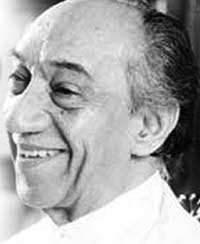 Now that the conduct of President JRJ in relation to Vadamarachchi is opened for discussion in The Island, I thought it may be useful if I would reveal what I knew to shed some light on the matter from a different dimension.
My familiarity with JRJ commences with this. I had the opportunity to record his statement as SP CID, on two occasions when he was the Leader of the Opposition. And later, had a few encounters with him as DIG (Central Range). Also, I was able to watch him at fair distance from Police HQ where the heat of things is felt almost at first level.
Rightly or wrongly, I gathered the impression that JRJ was less courageous than, say, Mrs. Bandaranaike, Mahinda Rajapaksa, Felix Dias Bandaranaike or even Lalith Athulathmudali (I had interrogated him too at the CID) and had some direct encounters with FDB too. They were very interesting. Courage was shown by Mrs. B. during the ’62 Coup, when the ’71 insurgency took her by surprise and also when she had to decide to allow Pakistani planes to re-fuel at Katunayake during the Indo-Pakistan war in 1971. She also displayed firmness when she dealt with the issue of the North Korean Embassy in1971. Of course she had the advantage of having by her side her brash young and clever nephew, FDB. Bravery of Mahinda of course is fresh in our minds. Yet, we do not know how all of them would have behaved if confronted by a bully like J.N. Dixit, who JRJ had to contend with.
When it comes to Athulathmudali, we would recall that neither he, Gamini Dissanayake, nor Premadasa appear in that photograph that The Island publishes often showing signing of the .Indo-Lanka Accord by JRJ and Rajiv Gandhi. Atulathmudali, quite apart from his open opposition to the Indo-Lanka Accord, had this to his credit. It was due to a firm order made by him for LTTE’s Dileepan and companions who were in Navy custody to be brought to Colombo, in the face of LTTE’s strong demand that they be released to them, that eventually sparked off the fighting between the LTTE and the IPKF. Again, Athulathmudali had the daring to bring the impeachment motion against Premadasa while Premadasa was in full cry, knowing the man’s ruthlessness in dealing with adversaries.
Some people charge that JRJ deliberately delayed moving to put down the ’83 riots at its start. My understanding in this regard is that when the violence broke out that night in such fury, JRJ himself was flustered, whether the mobs would break into his house too. Here again, the Defence establishment took a long time to decide whether to send the bodies to the villages of the dead soldiers or to have the funerals in Colombo where they thought that any violence could be better contained. All that delay too helped build more tension. It was a catch 22 situation indeed; a situation that no one would fancy being in. In hindsight again, perhaps we were then not as hardened as we are today to face such highly critical situations.
Given the above mentioned circumstances, my submission is whether it would be prudent to rush to ask whether the conduct of JRJ as that of a traitor would be appropriate, taken on face value. If such a thing happened in the US for example, the issue would have been extensively studied & debated in many US universities in their Public Administration and Political Science Graduate Schools. I find that in some graduate schools, the Cuban Missile Crisis or Dropping of the Atomic Bomb on Hiroshima etc. are still being discussed and written about. To that extent this discussion is a healthy exercise. I believe if the issue is looked at apolitically as far as possible, though difficult, such an exercise will be more fruitful.
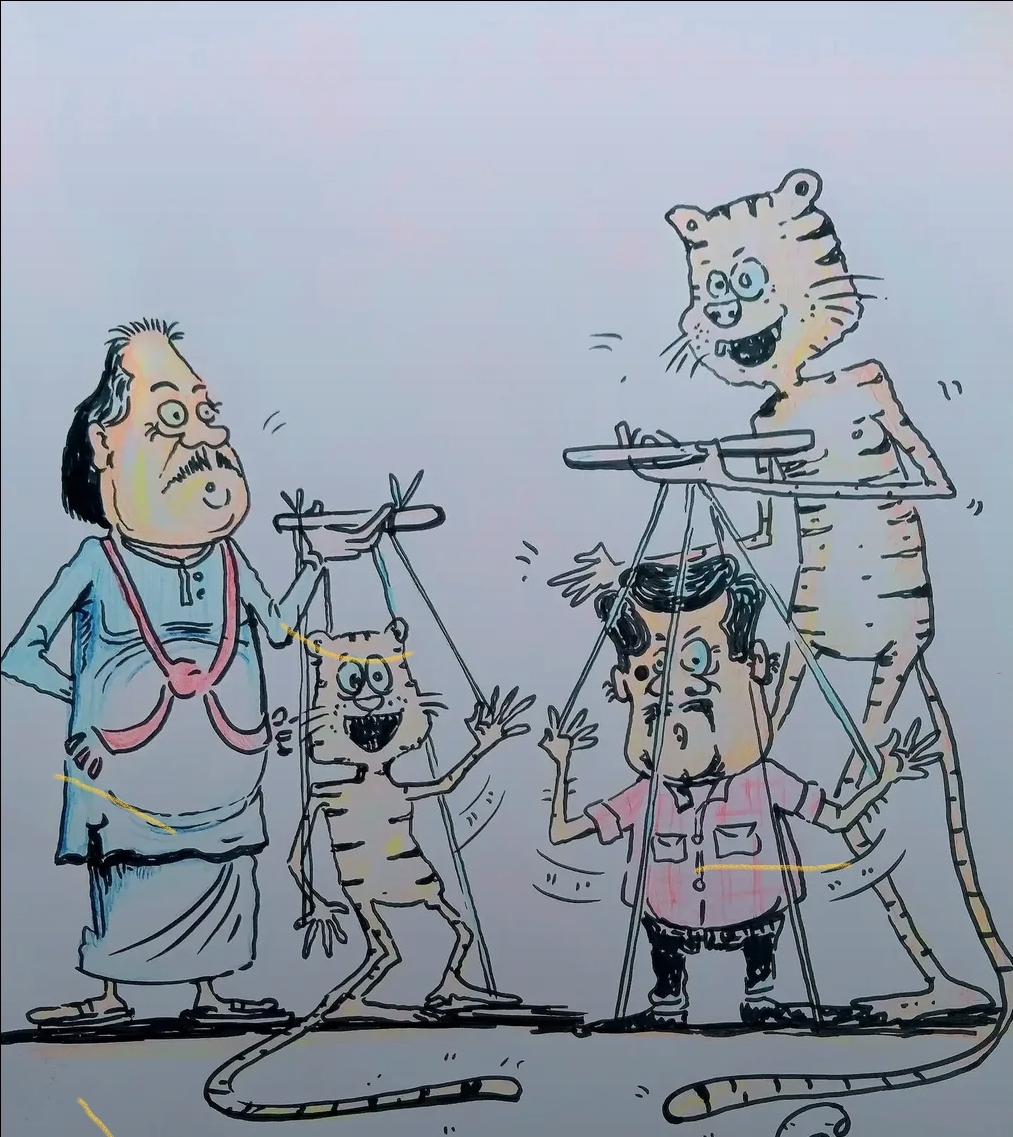
Coming back to the Vadamarachchi scenario, again thinking in hindsight, I do not know whether JRJ kept India informed of his intended major campaign against the LTTE before he started off. I believe Mahinda Rajapaksa did this and kept India in the picture. It is strange that JRJ did not use the conduit of Gamini Dissanayake who then maintained a healthy relationship with the Editor of The Hindu who appeared to have some clout with the Indian top levels. In fact, Gamini was then sporting handsomely one of those Modi jackets! He was perceived as a friend of India which was perhaps one of the reasons why he was done away with by the LTTE. JRJ would have had the appreciation that what he was about to undertake may be sensitive to India especially since he was going to take on India’s child. It would not have been to India’s liking if JRJ was able to wipe out India’s protégé, for many reasons. Besides in Rajiv Gandhi, he had a young Turk, though Bhandari was far different in attitude from Parthasarathi under Indira Gandhi. Dixit was in Colombo. Situation was dicey. I sometimes wonder now whether, if JRJ had allowed the Indian flotilla to deliver their symbolic cargo and had allowed them to go back peacefully, he could have been able defuse the tension for India, and obtained the space to complete his project? However, JRJ may have been concerned had he permitted that, how he would have been viewed by his own people who probably were in a hostile mood. Unlike in the Cuban Missiles case, once the flotilla was sent back, the humiliated or hurt ego of India had reached a point of no return. She had to react hard. In the Cuban Missile Crisis, probably both Kennedy and Khrushchev were scared of each other – I mean, of the power of the two countries. Luckily, the situation was saved by the political sagacity of Nikita Khrushchev. In our case the two countries, India and Sri Lanka, were no match whatsoever, though of course LTTE taught India a different lesson. It reminds me of Kumaratunga Munidasa’s ‘Heen Seraya’, the famous battle between the elephant and the chameleon for supremacy over the jungle!
Anyway once the ‘Parippu Drop’ happened, the threat was clear. A decision had to be taken. My feeling is that JRJ who had not done his home work enough and was overawed by the situation. That is one way of looking at it. Perhaps, to compensate for what I perceived as his deficit in courage compared to others mentioned, JRJ was a far thinking man and a strategist. Some said he was a schemer. At conferences, he spoke little and listened more. It was difficult to fathom whether the speakers were cutting any ice with him or otherwise. Sometimes his eyes were closed. One would think he had even fallen asleep. But when he spoke up we know that he had been listening intently.
JRJ thus disposed of the two major threats to his survival. He probably considered Mrs. Bandaranaike could upset him in the future assisted by her brilliant nephew, Felix Dias Bandaranaike. Hence JRJ set up the Special Presidential Commission where these two were charged for abuse of power. They were found guilty. He had their civic rights taken away despite stiff opposition of his stalwart supporters like Gamini Dissanayake. However in the process, he lost his sense of priority which was to address the problem in the North which if he applied himself assiduously at that stage, could have been sorted out with the advantage of his having enormous goodwill in the South.
At the very early stages of the ’88 JVP second uprising, he did not seem to take it seriously at the beginning. Late SSP Terrence Perera who was appointed to monitor the intelligence collection by a special unit located at Longdon Place had direct access to JRJ. He was able little by little apprise him of the dangerous rise of and the real threat that was looming. It is said that he had once told the President in no uncertain terms that the JVP would kill him. Once he possessed the full information, he took it seriously. He summoned all Government Ministers and MPs and also the IG and the DIGs to a meeting at a Committee Room in Parliament and asked Terrence to brief the gathering of the evolving threat. He allowed those present to ask questions. I recall that Mr. Jinadasa Weerasinghe MP for Tangalle, ridiculed the Police and asserted that he could look after himself. When the JVP troubles really broke out, he was one of the first politicians to be killed. Terrence Perera was also killed.
Later, when I paid a courtesy call on JRJ as is the custom when he took up residence at the President’s Lodge at Nuwara Eliya in April, he told me during a chat that why he allowed the IPKF in was because he wanted to release the Sri Lanka forces to take on the JVP threat which was in full cry then. Then I wondered whether he had seized an opportunity in the crisis of the Indian aggression. Then there were also some people who thought that it was a shrewd move by JRJ to have allowed the IPKF move in here in order that they be made to fight the LTTE since it was India who engineered Tamil terrorism here. I do not know whether all that was really so. However, I recall reading some articles in India Today and in Frontline etc. of Indian journalists calling him ‘Jackal’ – from Le Carre’s Day of the Jackal (or was it ‘Old Fox?’) and that he had trapped Rajiv Gandhi in his web; and that a cocky Rajiv walked into it.
The other incident I recall was in terms of Tamil terrorism. At that point of time in mid-eighties, the Northern terrorism was rapidly spreading over to the Eastern Province. There were rumblings in the hill country too. During a discussion at the President’s House in Kandy one day, JRJ called me to a side and told me “I cannot afford to have a third front opened.” I understood it as a serious assignment to me. I worked out a strategy to ensure that the third front did not open. It worked; and holds to-date. I thought that was a far thinking strategic move by him. He did not need any information to foresee that. That is what, we were taught as ‘anticipation’ at Staff College. On the political front, I believe he had struck a deal with that wise statesman Saumyamurthi Thondaman in a quid pro quo bargain by granting citizenship to the remaining stateless estate Tamils which in any case had to be done some day.
On another occasion when I with Kumar Abeysinghe, GA Nuwara Eliya, were in a conversation at the President’s Lodge where he was in a relaxed mood, he told us that why he had replaced the first past the post system with district proportional representation. He said that he had found, when he analyzed the past general election statistics and voting patterns that, even on the occasions the UNP had lost in an election, overall it always polled more votes than polled by the SLFP. Therefore he thought that under his new system the UNP would never lose an election in the future. I for a moment wondered why was he telling this to us, two mere public servants? Only later it dawned, it was a soft warning – “beware!”.
Then another thing I remember. When all ministers, deputies, MPs and high officials go to the Presidents’s House with their problems for discussions, there was a lobby for us to sit, waiting for our turn. On the coffee table tops, there stood a card on which was written the following:
Do you have a problem?
Do you have a solution to the problem?
OR
Are you a part of the problem?
I felt a chill pass down my spine when I first saw it.
PS.
In my view, politically speaking, the real issue does not lie, in the question whether JRJ acted as a traitor or not in the Vadamarachchi crisis; but in the fact that he accepted the 13th Amendment and what he did to have it passed in Parliament without going for a Referendum, thus landing us in the present soup that we are now in.
by Gamini Gunawardane
1045 Viewers