මානව හිමිකම් චෝදනා ද්වේශ සහගතයි – රජය තදින් පිලිතුරු දෙයි.
DRAFT – Response to the communication received from the Office of the High Commissioner for Human Rights (OHCHR)
එක්සත් ජාතීන්ගේ මානව හිමිකම් කොමසාරිස් මිෂෙල් බැෂෙලේ මහත්මිය විසින් ශී්ර ලංකාවේ මානව හිමිකම් කඩවී ඇති බවට චෝදනා කරමින් ඉදිරිපත් කරනු ලැබූ වාර්තාව ශී්ර ලංකා රජය මගින් මුළුමනින්ම ප්රතික්ෂෙප කර තිබේ.
ඇය විසින් ඉදිරිපත් කළ වාර්තාව සම්බන්ධයෙන් ශී්ර ලංකාවේ ප්රතිචාරය ලිඛිතව දන්වා යවමින් එය ප්රතික්ෂෙප කර ඇත.
ඉකුත් රජය සමයේ අත්සන් කෙරුණු 30/1 සහ 40/1 යන යෝජනාවලින් ඇයට ලබාදුන් විෂය පථයට පටහැනිව යමින් ඇය සිය වාර්තාව ඉදිරිපත් කර ඇති බවද සදහන් කර ඇත.
වත්මන් ශී්ර ලංකා රජය කෙරෙහි ද්වේෂයෙන් යුතුව කිසිදු සාක්ෂියක් ඉදිරිපත් කිරීමට අපොහොසත්ව සිය විෂය පථයෙන් බැහැරව ඇය එම වාර්තාව ඉදිරිපත් කර තිබීම හේතුවෙන් රජය එය ප්රතික්ෂේප කර ඇත.
ශී්ර ලංකා රජය මගින් ඇය වෙත ලිඛිතව දක්වන ලද ප්රතිචාරයේ පලමු දල පිටපත පහත සදහන් වේ:
DRAFT
Response to the communication received from
the Office of the High Commissioner for Human Rights (OHCHR)
March 2021
Preamble:
- It is pertinent to recall that Sri Lanka has been subject to a brutal terrorist campaign unleashed by the Liberation Tigers of Tamil Eelam (LTTE), which sought to divide Sri Lanka on ethnic lines and carve out a separate State. This protracted terrorist campaign had affected the entire social fabric of Sri Lanka and caused extensive destruction. The Government having regards to its Constitutional obligation to protect its subjects from acts of terror devoid of race, religion, language, caste, sex, political opinion or place of birth, embarked upon a humanitarian operation by the deployment of the armed forces to protect and liberate all Sri Lankans, in keeping with the Constitutional guarantees. The defeat of terrorism ended the proliferation of unlawful activities in the country in May 2009, ushering peace and normalcy.
- The LTTE, described by the Federal Bureau of Investigations (FBI) of the United States of America as the ‘most dangerous and deadly extremists’ in the world whose ‘ruthless tactics have inspired terrorist networks worldwide, including Al-Qaeda in Iraq’[1], featured in the FBI Report in 2008 to have “quite a resumé”:
- Perfected the use of suicide bombers;
- Invented the suicide belt;
- Pioneered the use of women in suicide attacks;
- Assassinated two world leaders— the only terrorist organization to do so.
- The LTTE remains listed as a terrorist organization in 32 countries including Australia, Canada, India, Malaysia, UK, USA and the Member States of the EU even a decade after the group has been militarily neutralized. Its international network with organized crime and terrorist activity continues.
- It is a matter of regret that the LTTE carried out dastardly attacks of terror against innocent civilian targets, inclusive of [2];
- The killing of 120 civilians, and injuring 85 civilians, mainly Buddhist devotees at Sri Maha Bodhi, Anuradhapura, North-Central Province on 14 May 1985.
- The killing of 96 civilians, and injuring 44 civilians at Aralaganwila, Habarana, on 17 April 1987.
- The killing of 106 civilians, and injuring 295 civilians at Pettah Bus Stand, Western Province by planting a large explosive device on 21 April 1987.
- The killing of 31 Buddhist priests and 4 civilians, and injuring 14 civilians at Aranthalawa Eastern Province on 02 June 1987.
- The killing of 23 civilians, and injuring 106 at Zahira College, Maradana, Western Province on 09 November 1987.
- The massacre of 147 civilians, and injuring 70 civilians at Kattankudy mosque, Eastern Province mainly Muslims whilst on prayer on 03 September 1990.
- The killing of 146 civilians and injuring 83 civilians at Palliyagodella & Ahampedura villages on 15 October 1992.
- The killing of 80 civilians, and injuring 1200 civilians by remaining an explosive filled truck into the country’s Central Bank on 31 January 1996.
- Bombing a public passenger train, killing of 57 civilians and wounding 356 at Dehiwala on 24 July 1996
- Bombing of the Temple of the Sacred Tooth Relic in Kandy (a UNESCO World Heritage site) killing of 9 devotees and injuring 15 on 25 January 1998
- The killing of 68 civilians travelling in a public bus by planting and detonating an improvised claymore mine in Kebithigolleawa, a town North of Anuradhapura, North Central Province on 15 June 2006
- The killing of 38 civilians and injuring 66 in the attack on Madhu church complex in Mannar, Northern province on 20 November 1999.
- One of the strategies of the LTTE’s separatist agenda was ethnic cleansing. The most striking example of this was the expulsion of almost 75,000 Muslim residents from the Jaffna peninsula in October 1990, ordering them to leave their homes within 48 hours. The LTTE also carried out numerous brutal attacks on Muslim villages in the North and in the East, massacring almost 600 civilians. The brutal impact of the LTTE’s ethnic cleansing programme can be understood in its full amplitude by the fact that of the 19,334 Sinhala civilians (recorded in the census of 1981) were evicted from the Northern Province.
- The LTTE also engaged in local and international economic crime by mastery of its widespread and organized networks of terrorist financing (mainly concentrating in western capitals), money laundering, gun running, human smuggling, human and narcotic trafficking to support and supplement their barbaric campaign against the people of Sri Lanka. Legal processes concluded in 2019 in Germany and Canada against former LTTE members who had fled to these countries bear testimony to the criminal culpability of this organization.
- The terror tactics of the LTTE included the silencing of all forms of dissent. This included the cold-blooded assassination of a large number of Tamil politicians, academics, intellectuals, officials, Hindu clergy and members of the Tamil community, with a view to neutralizing any form of resistance to the furtherance of its terror campaign. In the long list of assassinations carried out by the LTTE included a serving President, a former Foreign Minister (who himself was of Tamil ethnicity) of Sri Lanka and a former Prime Minister of India. An attempt was also made by a suicide bomber to assassinate a former President of Sri Lanka, which resulted in grievous injury.
- Successive Sri Lankan Governments with all sincerity engaged in a series of peace negotiations with the LTTE, facilitated by international interlocutors, concluded Cease Fire Agreements (CFA), which the LTTE repeatedly reneged from. It is seen in hindsight that the LTTE did not engage in the peace talks in good faith. It is clear that the periods of truce were made use of to regroup, retrain, re-equip, revamp and to re-engage in their acts of terror with greater brutality. One such brutal act of terror was the massacre of 600 police personnel who had laid down arms in furtherance of a Government directive pursuant to a truce in 1990. It may also be noted that the LTTE paid scant regard to maintaining the truce even under the oversight of the Sri Lankan Monitoring Mission which consisted of European monitors.
- During the period of this violent terrorist campaign Sri Lanka was losing an average of over 250 lives in a month. This ended after May 2009. The action taken by the Government of Sri Lanka to neutralize unlawful activity by a humanitarian operation saved thousands of lives that would have otherwise been lost had terrorism continued.
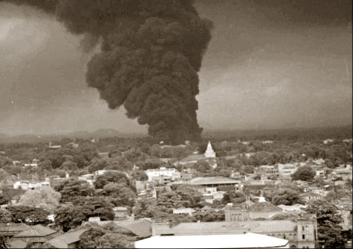
- LTTE attacks on economic targets and key civilian infrastructure facilities were aimed at crippling economic activity within Sri Lanka. Its attack on the country’s Central Bank in Colombo in 1996 imperiled the entire financial system. Its attack on the country’s International Airport in July 2001, in which several passenger jets including an Airbus A-340 and an Airbus A-330 were completely destroyed and many others seriously damaged, had a devastating impact on the tourism industry for many years. The LTTE also targeted the critical Kolonnawa Oil Refinery on several occasions, the last of which was an air raid it carried out in 2007. It is pertinent to mention that the LTTE was the only terrorist organization in the world to use improvised aircraft to attack against civilian and economic targets. The LTTE targeted essential transport infrastructure facilities such as the Central Bus and Train Stations in Colombo, and carried out attacks on numerous buses, trains and civilian aircraft.[3]
- During the last phase of the conflict the GOSL opted to launch the ‘Humanitarian Operation’ which rescued the civilian population held by the LTTE as a human shield. This is well documented and even witnessed by some of the heads of missions based in Colombo at that time.
Unsubstantiated Reports, misconceived notions and assumptions
- It has been observed that several Reports commissioned by the UN to examine the conflict in Sri Lanka are seriously flawed. For an example, the Report of the Panel of Experts (PoE) privately appointed by the UN Secretary General (UNSG) on Sri Lanka in 2011 without the imprimatur of the UN General Assembly (ostensibly to advise the UNSG) has been rejected by the Government of Sri Lanka. It might be of interest to note that one of the three members of the PoE was a former member of the International Independent Group of Eminent Persons (IIGEP) on Sri Lanka who had minimal engagement in the work of the IIGEP. The other is now a leading advocate for pro-LTTE diaspora groups. This lends serious doubts with regard to the credibility of the private report submitted by the PoE and their motives.
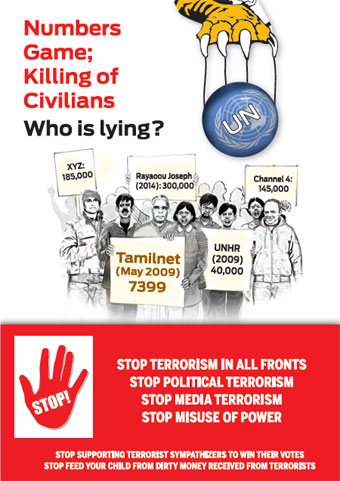
The alleged “40,000 civilian casualties”
It must be noted that there are varying estimates regarding the civilian casualties which have been made available from time to time.
For example, even the POE Report, which is rejected by the Government of Sri Lanka, in paragraph 134 states that “The United Nations Country Team is one source of information: in a document that was never released publicly, it is estimated a total figure of 7,721 killed and 18,479 injured from August 2008 up to 13 May 2009, after which it became too difficult to count” while it states in paragraph 137 that “A number of credible sources have estimated that there could have been as many as 40,000 civilian deaths…”
- The dispersion of the numbers given above only demonstrates the inaccuracy, surmise and the conjecture upon which opinions have been expressed with regard to the numbers of the IDPs. The Government however had taken a considered decision that the way forward was to pursue a policy of restoration, reparation, re-integration, rehabilitation and reconciliation within the overall concept of restorative justice. It is this policy that enabled Sri Lanka to rehabilitate and release over 12,000 ex-LTTE combatants, 594 child soldiers, restore destroyed infrastructure, restore civilian life in the affected areas inclusive of housing, schools, hospitals, roads, and other amenities to enable the citizens of affected areas to pursue their livelihoods. It is also a matter of record that the Government of Sri Lanka maintained the ordinary civilian life in the entire country including the conflict areas even during the height of the terror crisis and ensured all facilities including housing, schools, hospitals, roads, and other amenities were provided to enable the citizens of affected areas to pursue their livelihoods.
- It must also be noted that the much flawed OISL Report, was used as the basis not only for Resolution 30/1 and its preceding Resolutions, but also to unjustly vilify the Sri Lankan security forces. This was despite there being an abundance of evidence to the contrary, contained in;
- domestic reports such as the Lessons Learnt Reconciliation Commission (LLRC) and the ‘Paranagama Commission’
- information presented before the UK House of Lords by Lord Naseby, challenging among other things the vastly exaggerated civilian casualty figures,
- other reports from the UN and international agencies including the ICRC
- leaked diplomatic cables.
- However, Sri Lanka remains committed to pursue its policy to respect, secure and advance the rights of its people in terms of the fundamental guarantees and the directive principles of State policy as enshrined in the Constitution of the Republic.
- Sri Lanka views the continued arbitrary allegations made against its security forces in OHCHR Reports, other statements and unilateral actions by certain countries, unacceptable as being unsubstantiated and made for a collateral purpose at the behest of the LTTE remnants.
Post – conflict:
- It is regretted that the focus on Sri Lanka in the Human Rights Council (HRC) ignores the complex nature of issues in Sri Lanka during the struggle of a country dealing with a deadly terrorist group over three decades. The HRC continues to addresses this issue in a vacuum, disregarding the context within which that the narrative must be examined. It fails to give due regard to the intense, complex and multi-faceted military response by democratically elected governments against ruthless, unrelenting terrorism that has claimed the lives of many Sri Lankans of all ethnicities, and affected the development of the country, with particular impact in the areas held by the LTTE.
- Notwithstanding this misplaced approach, the Government of Sri Lanka remains committed and engaged with the international community and the UN Human Rights Council.
New mandate:
- The people of Sri Lanka elected a new President in November 2019 with a clear mandate. The co-sponsored Resolution among other things was subject to political debate during the election campaign in the context of its constitutionality and the inalienable sovereign rights of the people. The outcome of this debate found favour with the electorate which gave the Government the mandate to withdraw from the co-sponsorship of the Resolution in February 2020. The Parliamentary elections were held in August 2020 amidst the multifaceted challenge of the COVID-19 pandemic. The present Government was formed with a two-third majority in the Parliament, which further confirmed the approval of the people regarding the Government’s decision amongst others to protect the inalienable sovereign rights of the people of Sri Lanka. It is reiterated that the Government is unconditionally committed to the maintenance of the rule of law, the protection of human rights, and all other rights and freedoms that its people are entitled to in a democracy.
- It is noteworthy to mention that during the general election the government secured the support of all ethnic and religious groups, which is a clear manifestation of their aspirations for economic development, as against the promotion of narrow ideological political rhetoric pursued for political expediency. This was manifestly clear when the parties which campaigned purely on ethnic lines lost the support of the electorate they previously enjoyed.
- On his inaugural address on assuming office at the historic city of Anuradhapura, the President clearly declared that he is the President of all communities living in the country. The commitment of the Government led by him is to all citizens of Sri Lanka, not based on race, ethnicity, religion. It is of ‘one people -one country’. The government will implement a common policy for all, without allowing for practices based on divisive politics and establish an era of peace and prosperity for all its people.
- The President further stated that he remains committed to fulfill the basic needs of the people: security, livelihood, housing, health and education, and be guided by the Sustainable Development Goals. Towards this end, with a view to revive the national economy, the government has already undertaken the following steps:
- Setting up of a Presidential Taskforce on Economic Revival and Poverty Eradication, headed by a Special Representative of the President.
- Appointing a representative from the Northern Province to a key Cabinet portfolio of economic importance.
- Appointing District Development Councils to each District for the purpose of alleviation of poverty and development of respective areas.
- Appointing members to the SDG Council and a Steering Committee, in order to work towards achieving the SDGs.
- The Government of Sri Lanka is committed in its resolve towards comprehensive reconciliation and an era of stable peace and prosperity of its people within the framework of Sri Lanka’s domestic priorities and policies.
- While development programmes and reconciliatory efforts are underway in Sri Lanka, extremists’ segments of Tamil diaspora continue to glorify terrorism and collect funds for inciting violence and promoting separatism, abusing rights and freedoms of speech and association. Their acts support revival of terrorism, recruitment of child soldiers, violent extremism and suicide terrorism. These acts were clearly seen taking place in some western capitals and recorded evidence has been shared with respective missions based in Colombo.
- These efforts are similar to those carried out by the LTTE prior to their defeat in 2009. It is re-emphasized that the money collected through these terrorist funding networks were used to kill people and will continue to be used to disrupt the peace enjoyed by people in Sri Lanka.
- It is regrettably observed that the UNHRC mechanisms are being exploited as a platform to interfere in the internal affairs of a sovereign State which is entitled to the protection of the Council from unwarranted incursions by virtue of its entitlement to be treated within the principles of universality, impartiality, objectivity and non-selectivity, as stipulated in the GA resolution 60/251. As such, questioning of the 20th Amendment to Sri Lanka’s Constitution, which was adopted following the Constitutional procedure, is respectfully out of place.
General Comments:
- Since February/March this year, the entire world was challenged by the COVID-19 pandemic, a health crisis of a global scale, which had impacted many aspects of governance in many countries, and Sri Lanka was no exception. In its efforts to address the impact of the COVID-19 pandemic, the measures taken by the Government have been inclusive, non-discriminatory and holistic, providing foremost importance to safeguarding the health and safety of its people.
- Sri Lanka while successfully containing the spread of COVID-19 through a balanced, multi-sectoral approach, was able to demonstrate its commitment to the democratic processes, and conduct free and fair Parliamentary elections in August this year. During the period from the Presidential elections in November 2019 until the Parliamentary elections in August 2020 the Cabinet of Ministers continued to function as mandated in terms of the Constitution with due adherence to the principles of democratic governance which Sri Lanka has always upheld.
- The Government’s own initiatives to uplift the lives of the poor, including those living in the former conflict-affected areas are continuing. These efforts have made a considerable impact on the daily lives of the people. The shift of the polling pattern in the Northern and the Eastern Provinces is reflective of the confidence reposed in the government in its pledge towards their economic upliftment and well-being.
- However, while the Government’s determination towards development remained steadfast, its efforts have been impacted by the global pandemic, which required the reallocation of its resources.
Matters raised by the OHCHR:
- The GoSL made it clear even as it withdrew from the co-sponsorship of Resolution 30/1 and its preceding resolutions, that it will remain committed to achieve reconciliation, accountability and human rights within the framework of the Sri Lankan Constitution, through a domestically designed and executed process in line with the Government’s policy framework. The GoSL would like to state further that the new Government which assumed office with the election of the new Parliament on 5 August remains committed to the assurances given before the Human Rights Council in February this year.
- As undertaken at the 43rd Session of the HRC, the following measures have been taken:
- The Office of the Missing Persons (OMP) will continue. In this context, a draft Plan of Action has been called for by the Ministry of Justice from the OMP in order to make appropriate financial provisions for the immediate implementation of its statutory mandate. It may also be noted that a former Supreme Court Judge has been appointed as the new Chairperson of the OMP, having regard to the importance of this mechanism.
- The Office of National Unity and Reconciliation (ONUR) will continue its mandate which includes restorative justice and reconciliation. Financial provision of over Rs. 500 million has already been made in this regard by the Ministry of Justice. Cabinet approval has been sought for the appointment of a senior President’s Counsel as its Chairperson, and a senior civil servant as its Director General with a Board of Directors.
- The National Human Rights Commission of Sri Lanka (HRCSL) has been reconstituted in accordance with the procedure mandated by the Constitution and financial provision of Rs. 229 million[4] (229,450,000) has been allocated to perform its statutory mandate.
- The Office for Reparations (OR) will continue functioning in accordance with its statutory mandate and for this purpose a sum of Rs.910 million has been allocated from the 2021 Budget. Guidelines have been prepared for the consideration of the applications for reparations. The Office has received 16,275 applications of which 4,358 have been processed from January – November 2020 and a total sum of Rs. 142 million has been paid as compensation.
- On 17 November 2020, the Cabinet of Ministers approved the appointment of a Commission of Inquiry (COI) headed by a Justice of the Supreme Court, to review the reports of previous Sri Lankan COIs which investigated alleged violations of Human Rights and International Humanitarian Law (IHL), to assess the status of implementation of their recommendations, and to propose deliverable measures to implement them keeping in line with the new Government’s policy.
- The Report of the Presidential Commission of Inquiry into alleged political victimization was handed over to the President on 8 December 2020.[5] The Commission was entrusted with the task of inquiring into political victimization and associated background took place in the wake of investigations conducted by the Commission to Investigate Allegations of Bribery or Corruption, FCID, CID and the Special Investigation Unit of the Police from January 8, 2015 to November 16, 2019. The Report is presently under consideration for appropriate action.
- It may also be noted that the Counter Terrorism Bill was not pursued with and withdrawn, having had due regard to the views expressed by Parliamentarians including the Sectoral Oversight Committee on International Relations of the Parliament, religious leaders, trade unions, student organizations, civil society groups and public organizations that such legislation was unwarranted at this point in time.
The Government however is intent on re-visiting the provisions of the Prevention of Terrorism Act (PTA) having due regard to the progress made in the area of development and reconciliation. In that process, the Government will draw in aid international best practices adopted by other jurisdictions. In this process, the Government will take cognizance of the remaining ex-LTTE cadres on Detention Orders (DO) and in fiscal custody. (It may be noted that over 12,000 ex-LTTE combatants have been released after rehabilitation and 594 ex-LTTE child soldiers have been released.) The Government is also considering the setting up of a dedicated Court for the expeditious disposal of these cases.
- Of the lands previously held by the security forces, i.e. 89.26% of State lands and 92.22% of private lands, have already been released to the civilian owners by 31 December 2019. The releasing of the remaining land would be considered, having regard to the strategic requirements of the security forces establishments in the North and the East subject further to the procedures established by law with regard to the vesting of land and the divesting of land in terms of the procedures established by law.
- The National Authority for Protection of Victims of Crimes and Witnesses continues to function and Rs.90 million[6] has been allocated from the 2021 Budget for its operation. The Victim and Witness of Crime Protection Act has been reviewed by an expert Committee and amendments to the current victim protection regime are under consideration for its efficacious implementation.
Justice sector Reforms
- It is noteworthy that the Government has increased budgetary allocation for capacity building in the justice sector from the 2021 Budget. This allocation is a 500% increase compared to the previous allocations. This includes the establishment of new Court houses, the digitalization of the systems, increase of judicial officers, enhanced training, law reforms, the promotion of alternate dispute resolution, and the adoption of new techniques in legal education. It may also be noted that there is already in place an increase in the number of Judges in the Court of Appeal and the Supreme Court and such appointments made consequent to the promulgation of the 20th Amendment to the Constitution.
Sustainable National Security
- The Government is committed to pursuing a policy of sustainable national security. In furtherance of this policy, it has engaged in a number of proactive steps to journey beyond the traditional notion of national security and to include inter alia humanitarian assistance, disaster management, maritime security, health security, food security, access to justice, and nation building.
- The prime focus of the Government is to ensure national security in the context of the above ethos, and to uphold the rule of law with the aim of creating “an environment where any citizen can live freely without any fear for the safety of themselves and their families.”[7]
- It must also be noted that the Sri Lankan military academies and training centres have been conducting regular programmes of awareness on International Humanitarian Law (IHL) and Human Rights (HR) among its troops with a view to emphasizing the importance of adherence to the IHL and HR law. The adherence to IHL and HR is also further manifested by the dissemination of knowledge and conduct of training programmes among the different segments of the society.
- E. the President in his inaugural speech reaffirmed Sri Lanka’s commitment to Sustainable Development Goals[8]. In line with the above policy framework, the Government is committed to achieve the Sustainable Development Goals of the UN, with a determination to uplift the lives of all its citizens and ensure that there is no threat to peace, reconciliation or development in Sri Lanka. Steps are underway to appoint the members to the Sustainable Development Council and also to appoint a steering committee as per the provisions of the Sustainable Development Act No. 19 of 2017. A Working Group established under the guidance of the Foreign Minister has produced its recommendations with a view to further streamlining of the work of the Sustainable Development Council which acts as the national focal point for coordination, facilitation, monitoring and reporting on SDG implementation in Sri Lanka.
- As stated by the Foreign Minister at the 43rd session of the HRC, Sri Lanka will continue to remain engaged with, and seek, as required, the assistance of the UN and its agencies, including the regular human rights mandates/bodies and mechanisms, in capacity building and technical assistance, in keeping with domestic priorities and policies. In continuation of this engagement, the following two special procedures mandate holders will undertake visits next year:
- Special Rapporteur on the Right to Education (which was postponed due to the COVID pandemic. The SR has now requested a time to undertake the country visit in 2021.)
- Special Rapporteur on Contemporary forms of slavery, including its causes and consequences (the visit to be undertaken in 2021 at a mutually convenient time)
- In conclusion, the Government of Sri Lanka looks forward to continue its engagement with the Office of the UN High Commissioner for Human Rights, UN Human Rights mechanisms and procedures, and to continue to work in close cooperation with the international community through capacity building and technical assistance in mutually agreed areas, in keeping with domestic priorities and policies with the final objective of bringing economic prosperity and well-being to all its citizens.
[1] https://archives.fbi.gov/archives/news/stories/2008/january/tamil_tigers011008
[2] MOD Publication titled “Humanitarian Operation Factual Analysis (July 2006 – May 2009) published on July 2011 http://slembassyusa.org/wp-content/uploads/2011/08/Sri-Lankan-Humanitarian-Operation-Factual-Analysis.pdf
[3] Ibid. para 27.
[4] 2021 budget, https://www.treasury.gov.lk/documents/budget/2021/2021_aprovedBE_English_V_1.pdf
[5] Report of the Commission to Investigate Political Victimization handed over to President, 8 December 2020, https://www.pmdnews.lk/report-of-the-commission-to-investigate-political-victimization-handed-over-to-president/
[6] 2021 Budget, https://www.treasury.gov.lk/documents/budget/2021/2021_aprovedBE_English_V_1.pdf
[7] H.E. the President’s Policy statement at the opening of the 9th Parliament on 20 August 2020
[8] Ref. H.E. the President’s inaugural speech in Anuradhapura on 18 November 2019, where it is stated that “We will have our fullest commitment to achieve the sustainable development goals of the UN”, https://www.presidentsoffice.gov.lk/index.php/2019/11/18/new-president-sworn-in-2/?lang=en
72 Viewers