P de S Kularatne – Principal of Ānanda College in 1918
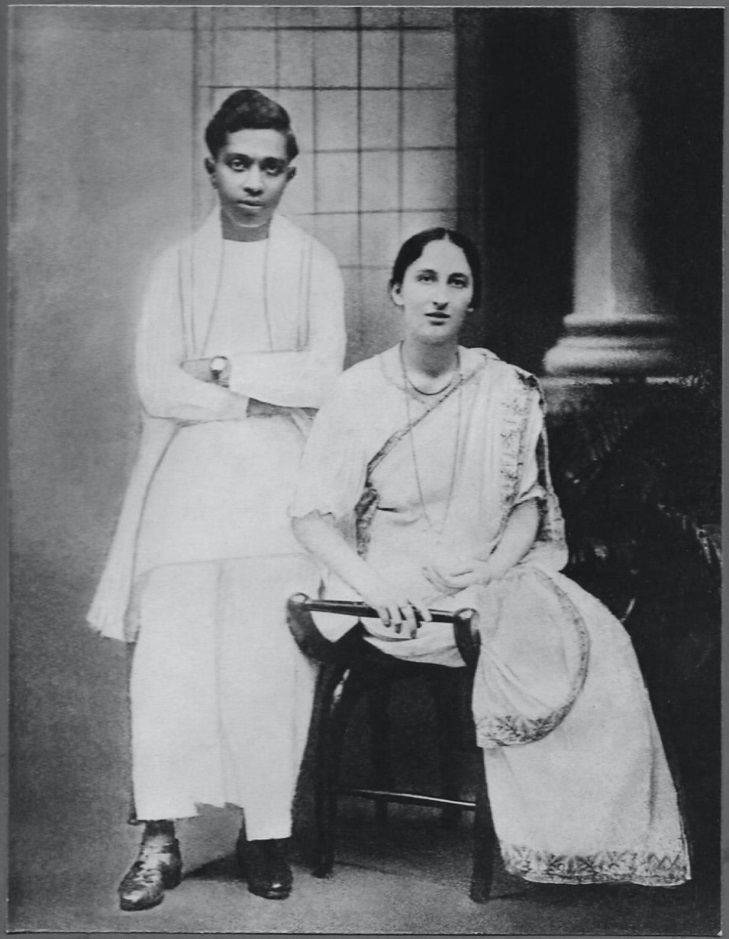
P de S KULARATNE, born Sella Kapu Pamis de Silva in Ambalangoda, excelled at Richmond College, Galle, and won the Government Arts Scholarship that enabled him to attend the University of London in 1913, where he was awarded a BA and a BSC in 1916, and an LLB from University College in 1917. He was called to the Bar at Middle Temple but, having been offered the post of Principal of Ānanda College, returned (during WWI) to take up the post in 1918 at the age of 24. As a result of being treated differently on one occasion because he was wearing trousers, he adopted the ‘national costume’ for most of the rest of his life (as seen in this photograph).
Though he had never taught before, his experience of the biases and inequalities of church mission schools made him determined to implement progressive ideas and foster a sense of national identity, particularly for Buddhist boys.
His innovations at Ānanda, and also the other schools he founded or developed – Dharamaraja, Nālanda, Dharmapala and Moratu Vidyalaya, among others – included instruction in Sinhala and Tamil, as well as Pali and Sanskrit in addition to the then-obligatory Latin and Greek; Sri Lankan history; handicrafts and local music, dancing and vernacular theatre; and cadeting.
After 25 years as principal he moved into politics, serving on the Second State Council of Ceylon, and later as an MP. He was also involved in the suppression of this 1962 coup against Mrs Bandaranaike.
HILDA WESTBROOK was born in Dulwich, London, into a Theosophist family with an interest in eastern religions. Her father, the Chief Registrar of the Colonial Office, translated passages of the Bhagavad Gita as a hobby and her mother, Jessie Duncan Westbrook, published verse renditions of a number of Sufi and Hindu texts. Hilda attended the progressive James Allen’s Girls’ School, and went to Newnham College, Cambridge, where she graduated with an MA in Modern Languages in 1917 (though she wasn’t awarded the degree for 30 years, as Cambridge did not admit women as graduates until 1946).
Hilda applied and was accepted for a position as English teacher for Ananda, but soon after arriving in Ceylon in 1920 was co-opted as Principal of the Buddhist Girls’ School, later Visākha Vidyalaya, also at the age of 24. She had to resign upon marrying, as was the convention of the time, but was able to continue teaching ‘post-seniors’ at Ānanda, as well as holding a variety of teaching positions at tertiary level.
In addition to becoming able to make public speeches in Sinhala by the mid-1920s, in later years she went on to be the founder of 4 Buddhist girls’ colleges: Ānanda Bālika in Colombo, Sri Sumangala (girls’) in Pānadura, Māliyadeva Bālika in Kurunegala, and Pushpadana Bālika in Kandy.
P de S and Hilda had 3 children: RAF Pilot Office Ananda (“Andy”), who married Holly Bradley in England during WWII but was lost in a bombing raid over Germany in 1944; Parakrama (“Malli”), a civil engineer who married Lalani, the daughter of Mr Justice ARH Canekeratne and Nellie de Mel; and Maya, who married Stanley Senanayake, later the IGP, and who was also the mother-in-law of Rosy Senanayake.
227 Viewers