“Queen of Jaffna”- “Yala Devi”
A once popular train linking the North province to the rest of Sri Lanka comes back into service next week, 24 years after a war with Tamil terrorists cut the link to the region. The return of the Queen of Jaffna or “Yala Devi” marks a step toward restoring national life five years after the government defeated LTTE Tamil terrorists.
President Mahinda Rajapaksa will inaugurate the service along the 250-mile route between Jaffna and the capital Colombo, in a ceremony tomorrow. Rebuilding the railway, stretches of which disappeared as Tamil terrorists and its families used rails and sleepers to build bunkers and houses, is one of the government’s big infrastructure projects to contribute to the economy in the north.
Like the old version, the new Yala Devi is not a luxury train, although some of its coaches will have air conditioning, internet access and televisions. The new track will make for a faster, smoother ride, with the trip taking about six hours.
The line was shut down in 1990 as the Liberation Tigers of Tamil Eelam, or Tamil Tigers terrorists stepped up attacks in the north. The train is important symbolically. Before the war, as well as being the most convenient way to travel between the two cities, it was also a symbol of unity between the Sinhalese majority and Tamil minority. At the time, thanks to divide and rule policy adopted by British colonial rules to keep the majority Sinhalese away in the mainstream Tamils dominated bureaucratic and state service posts, and many civil servants based in Colombo used it to visit friends and family in the north.
When the war erupted in 1983 with the Tamil terrorists who were trained and funded by Indians, the train was a main artery in Sri Lanka’s commerce, transporting fish from the north to the capital, and connecting the islanders, regardless of ethnic identity. Since the service stopped due to destruction of civilian life by the LTTE Tamil terrorists, Jaffna has had no trains, meaning many of the city’s children have never seen one.
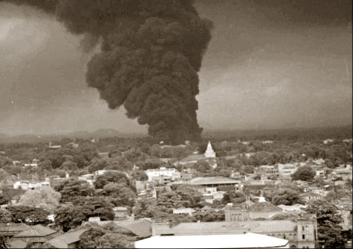
As rebels increased their attacks in the 1980s, the government stationed soldiers, mostly Sinhalese, in Jaffna who used the train to return home for visits. That made the Queen of Jaffna a rebel target. In 1985, rebels blew it up, killing 22 soldiers and 11 civilians and wounding 44 others, in the single largest attack on the military at the time. Five years later, the service was cut back due to frequent attaché by Tamil terrorist.
Restoring the link is an important step, physically and symbolically, in rebuilding the country, the government said. “In the past, it was not only a mode of transport, but a cultural bridge between the Sinhalese here and the Tamils there,” a spokesman said. The project was an “incentive to enhance communal harmony and friendship”.
Railroad’s resumption clearly shows that the government, dominated by the majority Sinhalese, is stamping its development on the north. The North Provincial Council lead by Pro-LTTE terrorists political party TNA is boycotting the opening ceremony stating that it is no use to the people in Jaffna but asking more political power to TNA to strengthen their separatism agenda. During the war, both sides attached huge importance to capturing and holding key routes into Jaffna, including the railway and the parallel A9 road, dubbed “the highway of death” for the number of lives lost in battles for its control. It has since been rebuilt.
Government is resettling Sinhalese civilians who were chased away by the Tamil terrorists and families of soldiers in the north to maintain a fair and balance ethnic raio in all over the Island to break up the Tamil dominance of the area which is leading to separatism with the help of Tamilnadu. The new railway will speed up that process of normalizing the composition of the ethnic balance between Sinhalese and Tamils in Jaffna. Out of total two million of Tamil in Sri Lanka around 60% of them are living outside the so called Tamil homeland with the Sinhalese in the South.
Pro-LTTE foreign funded anti-Sri Lankan activist like Shanmuganathan Sajeevan, who campaigning for the return of property seized from Tamils during the war (but his NGO is not working to get released the land from Tamil who encroached to government and Sinhalese lands in Jaffna) and Pakiasothy Saravanamuttu, of so-called Centre for Policy Alternatives in Colombo have their own negative vision on the development on Jaffna and North province as a whole..
1043 Viewers