Questioning the Integrity of Nominees to the Constitutional Council
If some thought it was wrong to have one man with Executive Powers to rule Sri Lanka what is their opinion when many with dubious track records are to be given the mandate to decide for the country? The Constitutional Council is said to be empowered with appointing the members to the Independent Commissions – Chief Justice, Judges of the Supreme Court, Court of Appeal, Attorney General and other key appointments. The Executive President is elected by the People of Sri Lanka. While some of the MPs nominated are questioned the members currently nominated as civil society is being seriously questioned in view of their track record of not serving the interests of the country but the interests of their pay masters which conflicts with national interests in particular the sovereignty and integrity of the unitary nature of Sri Lanka.
The composition of the Constitutional Council includes 3 permanent positions
- The Speaker
- The Prime Minister
- The Opposition Leader
- Ministers nominated from Parliament elected for a term. As per media reports of the current nominated lists we seriously have to question the integrity of these:
R. Sambanthan:
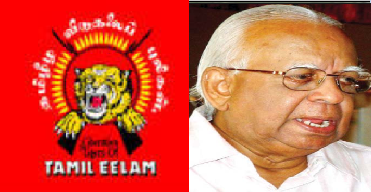
- Belongs to the TNA which was set up by the LTTE in 2001 immediately after 9/11 when US declared war on terror fearing LTTE may be targeted and the best option was to secure itself politically.
- The links to TNA and banned pro-LTTE fronts remain uninvestigated
- TNA leaders are on record for seeking self-determination & separatism as given in their election manifestos – TNA announced that the LTTE was the ‘sole Tamil National Entity’ in 2001.
- They have been sponsored and regularly speak at pro-LTTE events abroad.
- TNA Parliamentarians paying homage to dead LTTE suicide cadres – See more at: www.dailynews.lk
- Their role in Parliament is questioned by the public who have been repeatedly requesting an impartial investigation to TNA members links to terrorism and in the absence of such no TNA leader should hold any position in decision making roles relevant to the country.
Wijedasa Rajapakse :
- Present Justice Minister claims Sri Lanka is not a Sinhala Buddhist Nation which has seriously affected a lot of Sinhalese who are very hurt in view of over 74% of the population being Sinhalese and from whom MPs emerge into power!
- He was both MP & Bar Association President & appeared for the greatest corporate swindler because of whom over 20 people have committed suicide because their life savings was lost! It was a direct conflict of interest for him to be taking a salary from the public and appearing as legal counsel in private for a man who had swindled the public.
- Stood silent as MP & Bar Association President when irregularities in the Law College exam led to an unusually high number of a minority group secured top spots in the exam and did not request an investigation which many believe was due to not wanting to upset his vote base! Such actions are conflict of interest and raises question about his integrity in functioning in a Council as important as the Constitutional Council which is tasked to appoint key positions that affects the entire country.
Being nominated into the category of the 3 civil society are:
Radhika Coomaraswamy:
- Does she represent civil society to be suddenly nominated for the Constitutional Council given that she has been overseas working for her employer the UN and not serving the interest of Sri Lanka
- Radhika Coomarswamy, Under-Secretary General for Children in Armed Conflict involved in scandal involving
- Mismanaging finances of ICES – International Centre for Ethnic Affairs,
- Playing politics with opposition by carrying on its Board Bradmon Weerakoon political advisor and Secretary to the head of the UNP, Ranil Wickremasinghe
- Conflict of interest playing dual role as Under-Secretary General and Board Member of ICES after assuring the UN she had given up positions in Sri Lanka.
- Behind the scene manipulations to use World Bank funds to set up an office in Sri Lanka with Gareth Evans. Both Radhika and Gareth were on the Advisory Board of the Global Centre to incorporate R2P (Responsibility to Protect) without the consent of the Ministry of Constitutional Affairs and National Integration with which the ICES had a MOU
- Re-instating Dr. Rama Mani, former Executive Director of ICES-C after she was dismissed for lack of transparency and accountability according to the Peace Secretariat
Reference:
- http://www.asiantribune.com/?q=node/9346 – Peace Secretariat calls for UN inquiry into Radhika Coomaraswamy, UN Under Secretary General, stuck in NGO scandal
- Radhika & Jayantha promotes the anti-Sri Lankan R2P – www.sundayobserver.lk By H L D Mahindapala
A T Ariyaratne (now 81)
- The Island editorial of 30 September 2004 titled “Go to Jaffna, Mr. Ariyaratne” found fault with A T Ariyaratne for not going to Jaffna to tell LTTE to stop its carnage instead of staging protests for peace implying that the objectives of these demonstrations were to pull wool over the eyes of the public who opposed the ISGA. The editor bluntly asks “Does the Sarvodaya leader Mr. A.T. Ariyaratne along with other peace activists want the government to commence negotiations with the LTTE on the terms demanded by the terrorists? This is in accordance with the call of many foreign NGOs and the ‘international community’.” (should such a man be included into the Constitutional Council?) www.island.lk
- Findings of the Fraud: The Public Commission’s Report on NGO Commission of Inquiry 1990
- There had been a large amount of complaints against Sarvodaya’s conduct. The Commission requested A T Ariyaratne to appear in person to evidence which his lawyer objected and eventually evidence was given via affidavit. The reason for this is that he had obligations to the international organizations. Why was Sarvodaya shy to disclose its activities publicly?
- The Commission investigations also revealed that other organizations working with Sarvodaya were though supposedly ‘independent’ were however linked – Sarvodaya had in fact mislead the Commission that these entities were ‘independent’.
- The Commission also discovered the ‘enormous power’ wielded by his wife & children.
- Sarvodaya also did not supply the Commission with documents requested – auditors statements, vehicles owned by Sarvodaya, list of duty free articles bought by Ariyaratne, land, buildings owned by Sarvodaya, final accounts of projects!
- Examples of wrongdoings by Sarvodaya highlighted by the Commission included:
- “Sarvodaya Shramadana International’ registered in Netherlands as “Stichting Sarvodaya Shramadana International” under one Van der Werf de Wilde. This Sarvodaya International had received millions from various foreign organizations and individuals as well as from Sri Lanka. There was two-way traffic of money. Monies sent to Sarvodaya International had been diverted to Sarvodaya Sri Lanka, and monies sent to Sarvodaya Sri Lanka had been diverted to Sarvodaya International. “This arrangement” the Commission noted had enabled “Ariyaratne to divert foreign donations to this unit and operate it at his discretion”. Donation of Rs.3m from a Japanese organization for rehabilitation of families due to ethnic violence diverted for other purposes than what was intended but Ariyaratne had made a statement that ‘rehabilitation grant fully utilized’ which was not true.
- The Commission had also requested Sarvodaya to provide details of purchases of land/buildings/houses in Sri Lanka what was stated in the questionnaire was only to the value of Rs.12m but audited balance sheets later examined gave value of Rs.65million.
- The Commission also discovered discrepancies in the vehicles Sarvodaya owned as donations.
- The Sarvodaya Press – Vishvalekha Press had discrepancies as well.
- The Commission also noted that foreign donations received by Sarvodaya for rehabilitation work in the Northern and Eastern provinces had not been classified as to type of activities or projects
- USAID funds to Sarvodaya by its Regional Auditors/Singapore revealed that Sarvodaya did not represent fairly the receipt and payments under grants with USAID/Sri Lanka.
- Commission found 49 financial irregularities which included misappropriation of cash, shortage of cash, fraud, failure to account for loan recovery, failure to account for money, false debtors, improper payments, falsification of accounts, expenditure not supported y documents, unauthorized advances, shortage of goods sent for relief work, misappropriation of relief goods, unaccounted assets, unauthorized expenditure – all amounting to millions.
- These are just a handful of the findings of the Commission, but reading this should Parliament select such a person to sit on the Constitutional Council to decide on important positions relevant for Sri Lanka?
For more details of the wrongdoings of NGOs and Sarvodaya please read Susantha Goonatilake : Recolonisation: Foreign Funded NGOs in Sri Lanka (2006 Sage).
Of the 3 permanent titles to the Constitutional Council, the present PM is also questioned.
Ranil Wickremasinghe:
- The issue with Ranil Wickremasinghe that the general public faces is where his allegiance really lies – is it to maintain the unitary nature of Sri Lanka or to abide by the dictates of the West. This is clearly revealed in the Wikileaks cable of US Ambassador Ashley Wills dated May 29, 2003 states that “Since coming to power in late 2001, Prime Minister Ranil Wickremesinghe has taken steps to steer Sri Lankan foreign policy closer to the U.S. Wickremesinghe’s pro-U.S. views have been long-standing and are in part a function of family connections.”
- Much to the anger of the public he signed a cease fire agreement with the LTTE demarcating state territory to LTTE terrorists and gave open access to LTTE which facilitated LTTE’s ability to re-group and re-arm and prepare for another deadly onslaught.
- Leanings to the West and corporatization of Sri Lanka is among the many fears the public has about Ranil and throughout the present 6 months as PM having ignored calls to investigate and remove a non-citizen from the position of the head of Central Bank to a host of other decision making blunders have all raised the people’s confidence in his leadership abilities – he has proved once again unfit to lead the nation by his own mismanagement.Many believing another chance after 2002 debacle would have made him learn from mistakes have now discovered nothing has changed.
Thus, these nominations are being challenged from the position of the need to select nominees who love this nation, values its history, desires to preserve that history and will ensure it is not divided/separated or given to foreign hands.
To have a Council made up of the above draws serious reservations of where the country will end up if these persons are selected and tasked to select people for key positions such as Chief Justice etc. If their ideology and leanings as per the foreign funds received makes them function in direct conflict to what the majority of the nation expect of them, the nation is heading for bigger trouble.
Therefore, only those that love this nation and believes in a unitary undivided nation should be selected as civil society and with elections round the corner the public should not vote for any politician that crosses over, who has criminal records, who are opportunists and will do anything for money for these are the people who have in the past led the country astray.
Shenali D Waduge
1886 Viewers