The Political Dilemma of Choosing the “Best Thief” Among Thieves and the Future of Sri Lanka
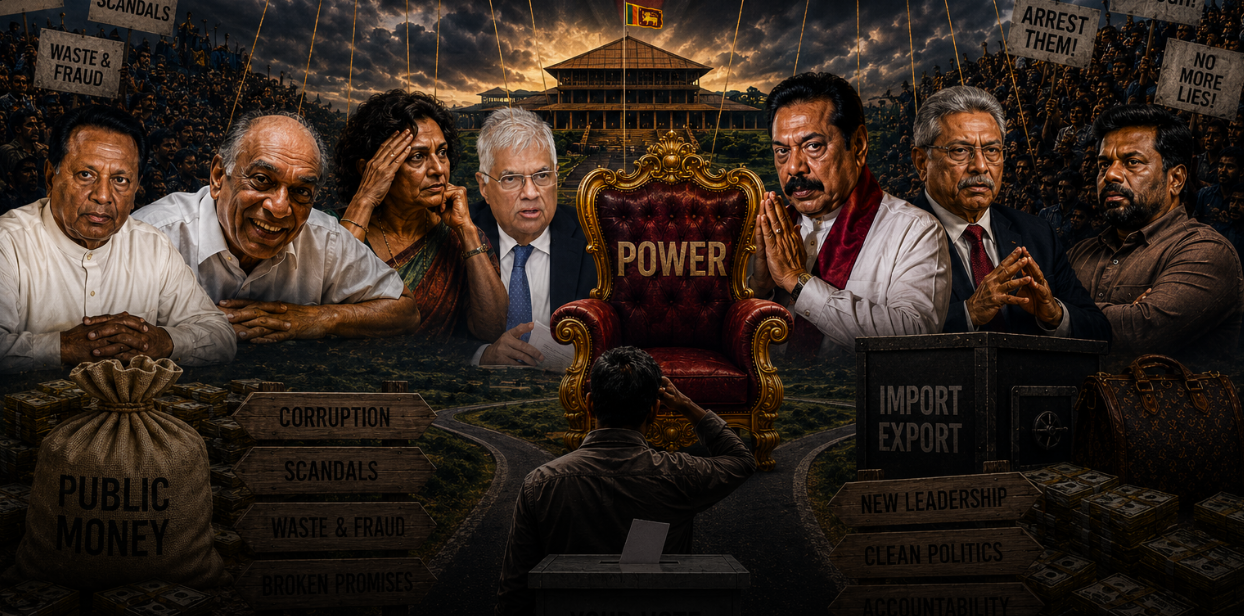
The belief that Sri Lanka’s entire political system and all political parties have become corrupt is no longer merely a criticism; it has now evolved into a deeply rooted public sentiment embedded in the minds of the people. Decades of economic decline, nepotism, the collapse of state institutions and governance systems, and the continuous exposure of fraud and corruption involving political elites have been the main contributing factors to this situation.
Today, even the word “politics” itself evokes strong disgust within society. This is not simply dissatisfaction, but rather the tragic consequence of the complete breakdown of social, economic, and moral trust in the country caused by the irresponsible behavior of politicians.
A Citizen’s Life Cannot Escape Politics
No matter how disillusioned we may be with politics as citizens, none of us can live outside of it. From the moment of conception in the mother’s womb to the annual almsgiving rituals performed after death, the entire process of human life is determined by the system of governance, economic policies, and public service mechanisms of the state. Therefore, even if it appears on the surface that we remain distant from politics, every aspect of our daily lives is governed by political decisions.
The “They Are All Thieves” Cycle and the Current Political Reality
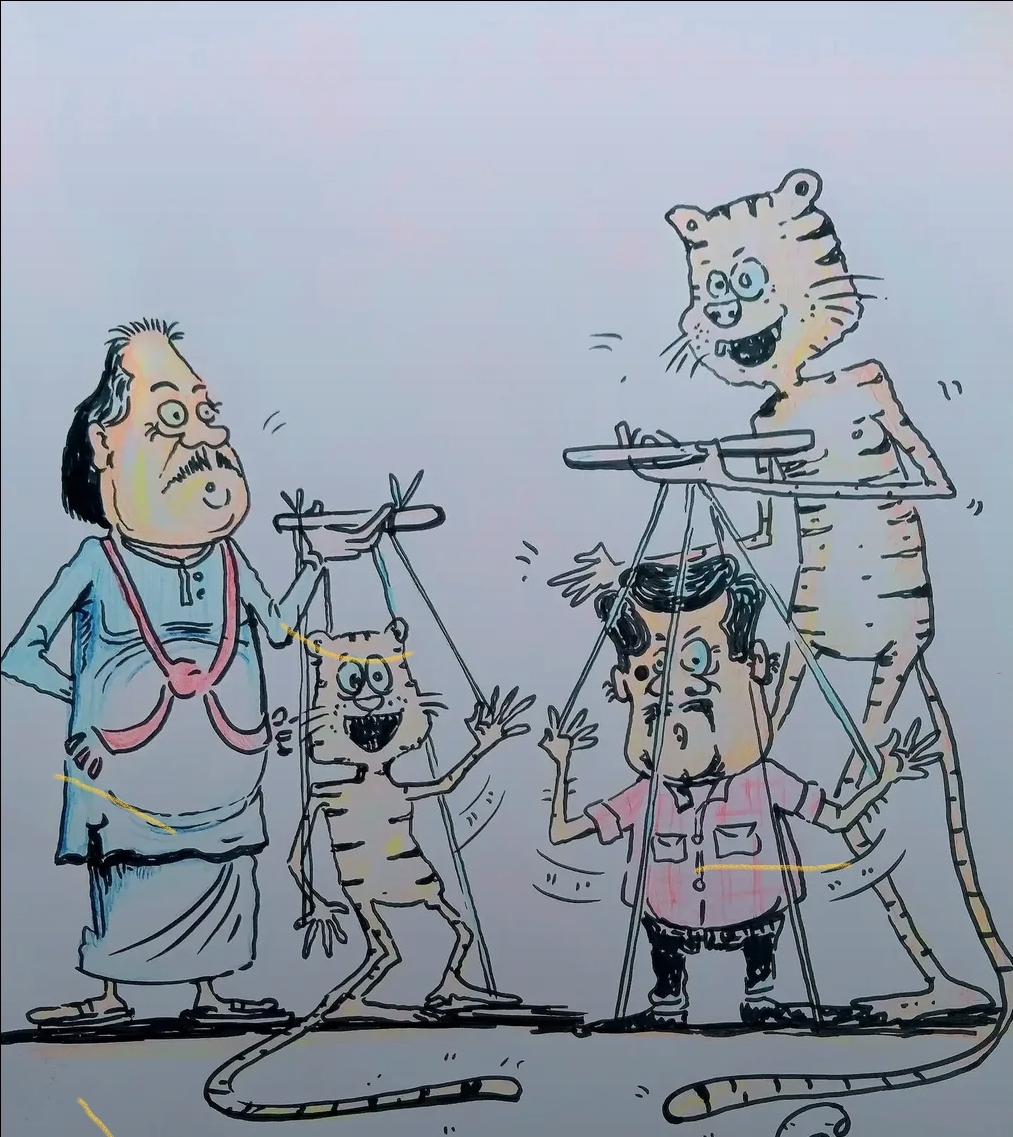
A common feature of Sri Lankan political culture is that while in opposition, parties accuse the government of being “thieves,” and once power shifts, the same accusation is directed back at the new rulers. This distorted cycle, repeated for decades, has led the people to place all politicians on the same level and attach to them the general label: “They are all thieves.”
In recent years, the main argument popularized by the Janatha Vimukthi Peramuna (JVP-NPP) was that, “Since we have never governed the country before, we are not corrupt.” This slogan attracted significant public support and gave them a powerful opportunity to establish all other traditional parties as corrupt. However, within a short period after coming to power, allegations related to coal transactions, container re-export deals, and various financial activities have also been directed at the current administration. As a result, the image of being a “corruption-free party” has faced serious challenges. Consequently, the public has once again been pushed back to the traditional position of frustration: “They are all the same.”
Practical Politics and the Value of Leadership That “Actually Delivered”
One of the most commonly discussed, sarcastic yet realistic questions in society today is: “Should we choose the best thief among thieves—someone who at least gets work done for the country..?” Though this may sound like a joke, it reflects the severely broken trust people have in the political system. The citizen is now compelled to think pragmatically: “Compared to rulers who simply looted national wealth without doing anything, isn’t a leader who may have misused funds but still left behind development and moved the country forward more valuable?” Within this context, public discussion has once again turned toward three leaders who left significant marks on Sri Lanka’s economy and development:
J.R. Jayewardene – for introducing the open economy and bringing about a massive economic and physical transformation in the country. Mahinda Rajapaksa – for ending the three-decade civil war and leaving behind large-scale infrastructure and development projects. Ranil Wickremesinghe – for stabilizing the state during the severe economic collapses of 2001 and especially in 2022.
In an environment where the country once again faces the risk of falling into economic collapse, people are increasingly looking at the roles of these experienced leadership figures with a more practical perspective.
“L-Board” Teams and the Alternative Political Space
Another choice voters may face in the next election is: “Should we once again give an opportunity to a new, inexperienced (L-Board) political group?” In this regard, attention is drawn toward emerging political alliances such as the Frontline Socialist Party and Sarva Jana Balaya.
However, since the general public tends to view the Frontline Socialist Party as merely another extension of the current JVP-NPP ideology, people seeking a truly non-traditional alternative are increasingly focusing on newer political forces such as Sarva Jana Balaya. Ultimately, the sovereign power to decide which force should govern the country lies with the people themselves.
Conclusion and Final Note
Although public trust in Sri Lanka’s political machinery has been completely eroded, we cannot escape politics. The upcoming election should not merely be another traditional gamble of choosing “the best among thieves.” Instead, it must be an opportunity to reject false promises and political slogans that drag the country further into crisis and to establish a government built on accountability, stability, and a long-term national policy framework. This may well be the final and decisive opportunity for the Sri Lankan citizen to secure such a future for the country.

— Sudath Chandrasekara —
A senior expert with over 40 years of practical experience in Sri Lankan politics, administration, and communications. He has served as the personal secretary and senior advisor to a Cabinet Minister, an Opposition Leader, and a Prime Minister. He has also functioned as
the Director General of the Media Unit and the Communications Force of the United National Party.
29 Viewers