The Proposed 19th Amendment to the Constitution- Who’s Purpose
The views so expressed leave us without doubt that the power of the President to appoint the Cabinet of Ministers and to govern this country through such Cabinet shall remain with the President. Although the Supreme Court without any ambiguity expresses its views in this manner, some of the sections that give the Prime- Minister Executive Power has not caught the attention of the SC. For instance, Article 43(2) and 43(3)which gives the sole discretion to the Prime- Minister as to who should be appointed to the Cabinet of Ministers. This probably is an omission, which may need ectification.
The spontaneous response of the Government was that it would not pursue with the transfer of power from President to Prime- Minister as sought to be done by the Bill, but would proceed with the rest of the Provisions. Disqualifying the Former President and His Family The 19th Amendment not only seeks to abolish the Executive Presidency and to establish these so called “Independent Commissions” through the mechanism of a Constitutional Council, but also introduces three specific disqualifications that would apply to a prospective candidate contesting a future Presidential/Parliamentary Election, namely, that,
1. No person who has been twice elected to the office of President can thereafter be reelected to the office of President (Amendment to Article 31(2) and 92(2)(c));
2. To increase the threshold age to contest a Presidential Election from 30 to 35 (Amendment to Article 92(1)(a));
3. Disqualify dual citizens from contesting a Parliamentary Election (Article 91 (1)(d)(xiii)).
These three clauses will effectively disqualify Mahinda Rajapakse and Namal Rajapakse (born on 10th April 1986) from contesting the next Presidential Election and, Gotabhaya and Basil Rajapakse from contesting a Parliamentary Election, if they are in fact dual citizens. This type of legislation is ad hominem, directed against particular persons, which would certainly not be considered as good law. “Independent Commissions’
It would be interesting to examine whether the 19th Amendment would transform these existing commissions to independent entities. When the 17th Amendment was enacted in 2001, at the initiative of the UNP and JVP, removing the powers of the President with regard to appointment to these numerous commissions and other high post appointments and placing it in a body called the “Constitutional Council”, it was thought (at least by those who supported it), that the holders of these high offices would be more independent.
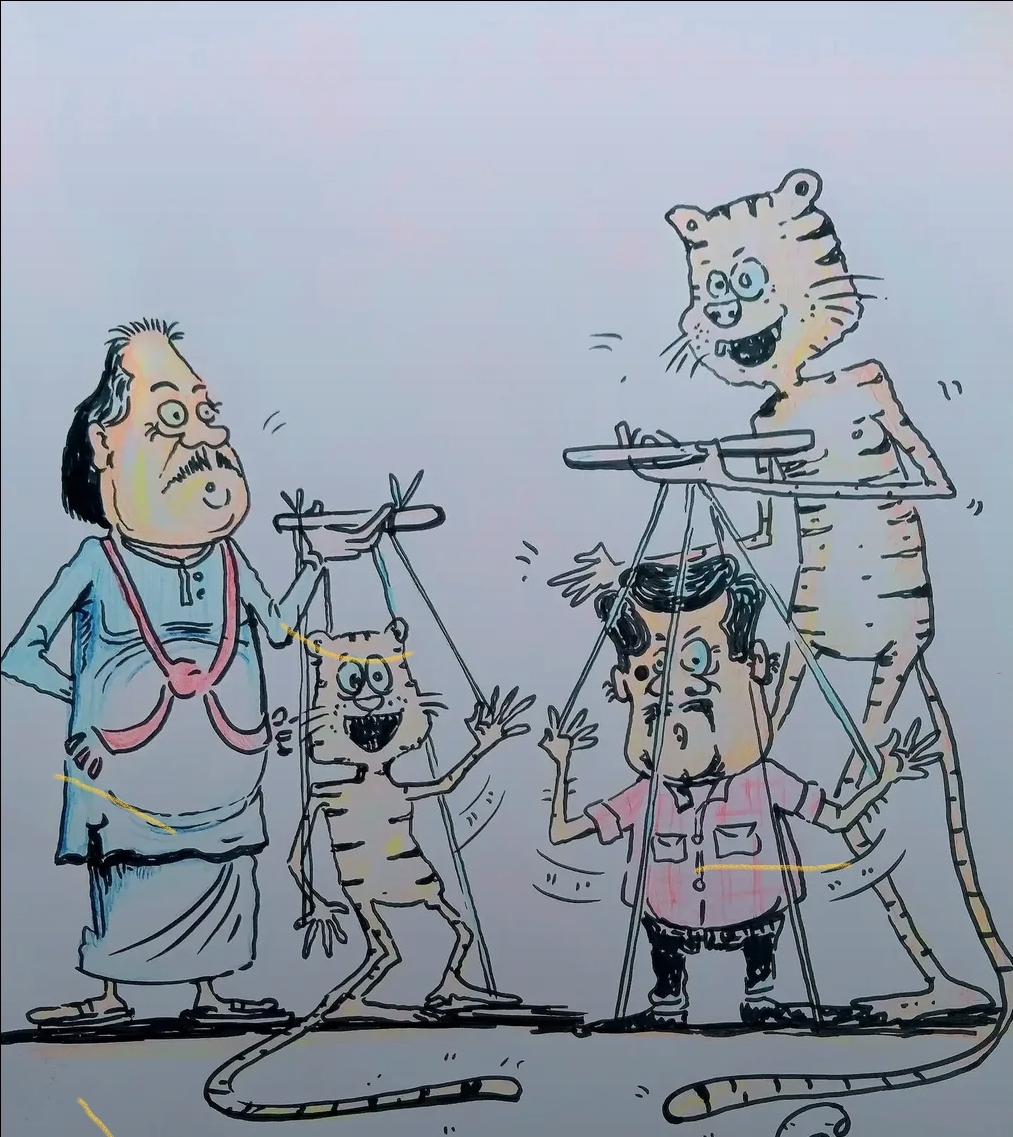
The 19th Amendment seeks to introduce the same provisions of the 17th Amendment with minor modifications. Let’s look at the compositions of the Constitutional Council (CC). The CC consists of ten members. 3 of them hold office ex- officio, namely the Prime- Minister (PM), the Speaker, and the Leader of the Opposition (LO). Out of the balance 7, five are nominated jointly by the PM and the LO. The sixth is appointed by the President and the other appointed by agreement of the majority of the MPs who do not belong to the political parties the PM and LO represents (hereinafter referred to as the ‘Minor Parties’). It is important to note that one member is appointed by members of Parliament of minor parties by agreement. However, none of the MPs of the two major political parties can participate in appointing a single member to the CC.
The Government owes a duty to the public to disclose the reasons why it does not want the Members of Parliament of the two major political parties, to have any say in the process of appointments. More so, for the reason that minor parties are mostly ethnic based and representing minority communities, whilst the MPs of the two major political parties are from the majority community. When the Amendment provides for Members of Parliament of minor parties to appoint one member to the CC by agreement, that would mean that all the Members of Parliament of minor parties would have the opportunity of proposing any qualified person of their choice for one slot in the CC and taking a vote to decide who they wish to nominate for that slot.
The Government could have easily made provisions for Members of Parliament of major political parties also to nominate five persons in a similar manner by agreement, after giving the said MPs an opportunity of proposing suitable candidates for the five slots allocated. Instead, the power of nomination is given to the Prime- Minister and Leader of Opposition. Therefore, when these Members of Parliament are voting in favour of the 19th Amendment, they should be conscious that they have abdicated their power to two Members of Parliament who are holding the Office of PM and LO.
The Amendment further provides that when nominating the said five members, it should ensure that the CC reflects the pluralistic character of the Sri Lankan society. Which means that, if the Prime-Minister or Leader of the Opposition is Sinhalese, then, the said five members should be out of the seven minority ethnic groups identified by the Department of Census and Statistics, namely, Sri Lanka Tamil, Indian Tamil, Sri Lanka Moore, Burger, Malay, Sri Lanka Chetti, and Bharata. Therefore, at any given time, a majority of the voting members of the CC will necessarily be from the minority communities.
It is true that, the Amendment provides for the Prime- Minister and the Leader of the Opposition to nominate five persons to the Constitutional Council after consulting leaders of political parties and independent groups represented in Parliament. The PM and the LO nominate the aforementioned five members not in their capacity as leader of their respective political parties, but as the holders of office of PM and LO. Further, although they are required to consult leaders of other political parties, they’re not obliged to concur with their views. In reality, these five members will be nominated at the sole discretion of the PM and LO. Out of the 10 members of the CC, the Speaker who is the Chairman, does not have a vote, other than a deciding vote in the event of an equality of votes at any time. Therefore, decisions will be taken by the nine members other than the Speaker. Thus, 5 out of 9 members will decide all decisions of the CC. Out of the said nine members, seven members will constitute the PM, LO, and the nominees of the PM and LO. Hence, it is the views of the PM and LO that will prevail and not the will of the Members of Parliament. PM represents only the people of one district. So is in the case of the LO. How could the choice of the PM and LO be better than the choice of the President who is elected by the majority of the people of this country? In practice what would happen is that the PM and LO will nominate two each of their personal choice and it is only the 5th that they need to agree between them. What we are going to do by the 19th Amendment is to substitute the wish of PM and LO who represents two districts out of 24 districts in this country, in place of the President who is elected by the majority of the people of the whole island.
The present Parliament consists of UNF (60 members), UPFA (144 members), TNA (14 members) and DNA (7 members). Accordingly, the Members of Parliament that will be able to participate in the nomination of members to the CC will be 1. Ranil Wickramasinghe (PM) 2. The MP who will be appointed as the Opposition Leader 3. The 14 members of TNA 4. The 7 MPs of the DNA. Therefore, the 60 members from the UNF and the 144 members of the UPFA (other than the PM and LO) will not be able to participate in nominating a single member to the CC. If the leader of the TNA becomes the Opposition Leader, being the largest political party in the opposition at present, (assuming PM and LO nominate jointly) 6 out of the nine voting members of the CC will be nominated according to the wish of the TNA. The DNA being supportive of the UNP, the PM will have 8 out of the nine voting members in deciding any matter before the CC. Therefore it is abundantly clear, that the net result of the 19th Amendment is to take away the right of the Members of Parliament of the SLFP and JHU, having any say in making appointments to the CC and vesting the sole discretion in the hands of the PM. It is also important to remember that all the members who are presently holding office in these Commissions will ipso facto cease to hold office with the enactment of the 19th Amendment, and the PM will be able to make the necessary appointments for the next few years in a manner favourable to him. It is illogical to assume that the appointees of Prime- Minster Wickremasighe will be more independent than the appointees of the President. There appears to be a sinister motive behind this exercise. It has always been the view of the TNA and their predecessors to deprive the majority community of their legitimate right of governance. In the Pre-Colonial period, the fifty-fifty demand was placed before the Soulbury Commission to achieve that end. The TNA has now, half a century later, been able to re-inject their thinking to the Constitutional structure through the 19th Amendment.
In South Africa, nominations to high posts are approved by the legislature consisting of all MPs represented in Parliament. Section 193(4) and (5) of the South African Constitutionreads as follows;
“193(4): The President, on the recommendation of the National Assembly, must appoint the Public Protector, the Auditor- General, and members of-
a) the Human Rights Commission;
b) the Commission for Gender Equality; and
c) the Electoral Commission.
193(5): The National Assembly must recommend persons-
a) nominated by a Committee of the Assembly proportionally zomposed of members of all parties represented in the Assembly; and
b) approved by the Assembly by a resolution…”
There seems to be a deliberated move to prevent the majority of MPs representing the majority community from participating in this process. The President is elected by over 50% of the voters in this country. How can the appointees of TNA, DNA, PM, LO, (excluding all other MP’s) be “more independent” than the appointees of the President?
Although the supporters of the 19th Amendment often speak of good governance and an independent Public Service, the 19th Amendment does exactly the opposite with regard to provincial governance . The proponents of the Amendment boast of an Independent National Police Commission, but the Provincial Police Commission is not so. Item 11:1 of Appendix 1 of the Provincial List states that the DIG of the Province who heads the Provincial Police Force “shall be responsible to and under the control of the Chief- Minister” of the Province. The Constitutiondoes not say that the IGP is under the control of the President. Even if that is so the powers of the President is clipped by the creation of the National Police Commission (NPC), but the provincial police force headed by the DIG will be under the control of the Chief- Minister. The 19th Amendment provides that the NPC shall not in the exercise of its powers derogate from the powers and functions assigned to the Provincial Police Service Commission (Proposed Article 155G(1)(b)). Whilst the 13th and 19th Amendments make the center weak, it strengthens the Chief- Minister enabling him to exercise control over the provincial police force and the national police force operating in his province.
The National Police Commission is responsible for appointments promotions, transfers, disciplinary control and dismissal of all Officers of the National Police Force. Therefore the President will no longer through the IGP be able to confidentially place even a Police Intelligence Officer in a place he seems appropriate. Such decisions will be determined by the seven members of the NPC. However, the Provincial Police Commission is under the total control of the Chief- Minister. Out of the 3 members of the Provincial Police Commission one is an appointee of the Chief- Minister and the DIG who heads the Provincial Police Commission is under the control of the Chief- Minister (vide clause 11:1). Therefore, 2 out of the 3 members of the Provincial Police Commission are controlled by the Chief- Minister. Item 11 states that not only the Police Officers of the Provincial Police but also the Police Officers of the National Police should function under the “ direction and control of the DIG who in terms of 11.1, refers to above function under the direction and control of the Chief- Minister. This provision will completely negate the powers of the center to have the Police under their control. The cumulative effect of the 13th and 19th Amendments is nothing but a national catastrophe. Even if the NPC places any National Intelligence Officer in a Province, he will have to function under the control of the DIG, who in turn is under the control and direction of the Chief- Minister.
The 19th Amendment has created a new commission to be known as the National Procurement Commission. Although the proposal to have such a procurement commission is commendable, the only thing that they are empowered to do is to monitor and report to the “ appropriate authorities”. The Bill does not interpret the term “appropriate authorities” and therefore we do not know who this appropriate authority’ is. In any event, if there is such an authority, do we need a National Procurement Commission in the first place? This Commission has no power other than reporting to the appropriate authority to take action to reverse a wrong decision taken by a Procurement Committee. Therefore, this proposal will not serve the purpose it purports to establish.
The 19th Amendment also proposes an Amendment to Article 154R. This Article as amended by the 19th Amendment provides for a Finance Commission consisting of the Governor of the Central Bank, the Secretary to the Treasury, and 3 other members to represent the 3 major communities. Therefore, notwithstanding the ethnicity of the Governor of the Central Bank and the Secretary to the Treasury, the 3 other members should belong to the three communities. Therefore, the ethnicity of the Governor of the Central Bank or the Secretary to the Treasury will most probably determine which community would be in control of the Finance Commission. The present Governor of the Central Bank is from a minority community. Whether the Secretary to the Treasury in a future administration will also be from the minority community is anybody’s guess. Therefore, under the present arrangement a future Finance Commission can be under control of a minority community. The Finance Commission exercises the power of recommending the allocation of funds to respective provinces. Whilst it is not desirable for a Constitution to provide for ethnic representation in such an important body, introducing ethnic and racial considerations would precipitate serious consequences if these members see it fit to act in the interest of their respective communities and not in the larger interest of the people in this country. In the previous 17th Amendment, it was provided that 3 out of the 5 persons nominated by the PM and LO be from the respective minority communities, “to represent minority interests”. Advisedly, this particular phrase has been removed from the 19th Amendment. It would be in the best interest of all citizens of this country, if when drafting constitutional provisions or any other law, we could refrain from infusing racial and religious considerations.
Manohara R. de Silva
1052 Viewers