UK decision to ban LTTE Tamil Terrorists is ‘flawed’- UK to play geopolitics
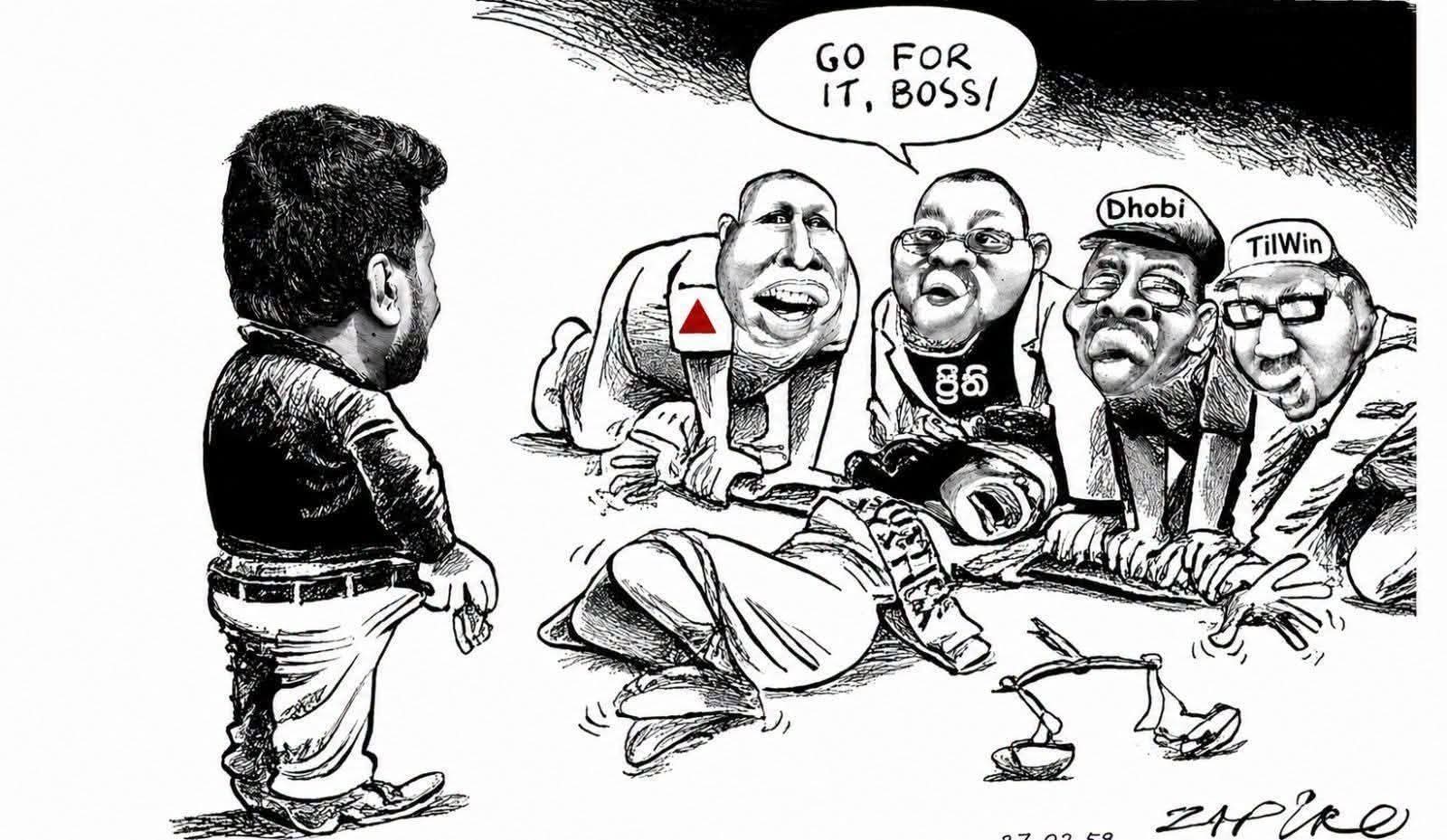
A landmark judgment from Britain’s Proscribed Organisations Appeal Commission found that the Home Office decision to keep the Liberation Tigers of Tamil Eelam (LTTE) proscribed as a terrorist organisation was “flawed” and unlawful, and paves the way for the LTTE Tamil terrorist organisation to possibly being legalised in the United Kingdom considering geopolitics play be Western and US with Sri Lanka guise of so called Human Rights.
This is only the second time in the Commission’s history that such an appeal has been heard in the past twenty years.
The Commission which issued its judgement in London, will now hold a second hearing to decide on relief to be issued to the applicants, pro-LTTE Tamil terrorist front organization Transnational Government of Tamil Eelam (TGTE) and Tamil terrorist diaspora sympathizers. The Commission may instruct the UK Home Secretary to lay a statutory instrument before parliament that may ultimately remove the LTTE terrorist’ from the list of proscribed organisations in the UK.
However, the UK government is likely to oppose this form of relief and instead request that the matter be remitted back to the Home Secretary to make a new decision on the ban appropriately taking into consideration all of the evidence.
The judgement also shed light on the various pieces of evidence solicited and considered by the UK Home Office, after it received the application from the TGTE in November 2018 calling for the LTTE to be de-proscribed. The LTTE has been designated a Proscribed Terrorist Group under the UK’s Terrorism Act 2000 since 29 March 2001.
The Home Office asked members of the Proscription Review Group (PRG) to provide any relevant information on the LTTE, which requested a report on “current terrorist activities” of the LTTE from the Joint Terrorism Analysis Centre (JTAC), a report on international relations implications of a removal of the ban from the Foreign and Commonwealth Office (FCO) and a community impact assessments (CIAs) from “various organisations” looking at the impact of de-proscription on the pro-LTTE Tamil community in the UK. Based on this evidence, the PRG held its own meeting wherein it discussed its analysis. The PRG meeting minutes and the JTAC report were seen by the Commission to be the two most important pieces of information considered by the Home Office in making their decision.
The ruling revealed several contentious assumptions and questionable factual conclusions made by various branches of the British establishment due to poor representation by the Home Office legal team in front of the commission.
Most glaringly, the Joint Terrorism Analysis Centre (JTAC), concluded that it was “reasonably confident” that LTTE members were behind the November 2018 murder of two Sri Lankan policemen in Batticaloa.
Though a former LTTE cadre was arrested and detained for months over the murder, he was eventually released with all charges dropped after a clear link established between the murder of the policemen and the Islamic extremists who carried out the Easter Sunday bomb blasts and were possibly linked to the Sri Lankan state. Last year, a Sri Lankan cabinet spokesperson claimed that at least four army officers were involved in organising the assassination of the police officers and that dozens of National Thawheed Jammath members (NTJ) were on the payroll of Sri Lankan intelligence linked to current president Gotabaya Rajapaksa as informants for the SL military intelligence teams.
The JTAC, later on, went on to “cast doubt on the attribution of that incident to the LTTE”.
It did, however, maintain there had been at least six significant events possibly attributed to the LTTE between 2012 and 2017, including the January 2017 alleged plot to assassinate a “moderate MP” – alluding to the Tamil National Alliance’s MA Sumanthiran – and the killing of the bodyguard of a Tamil High Court judge in July 2017.
It also claimed that the arrests of former LTTE cadres by Sri Lankan security forces, reportedly with stashes of weapons or ammunition, were signs of continued activity and that the “LTTE’s ideology almost certainly continues to inspire individuals to commemorate and prepare for acts of terrorism”. These findings make no mention of numerous human rights reports that question the credibility of the intelligence behind these arrests and seizures, and suggest that they may be more likely to be tools of repression by the State.
The Foreign and Commonwealth Office (FCO), meanwhile, claimed that LTTE supporters outside of Sri Lanka routinely displayed paraphernalia “in connection with calls for violence against the Sri Lankan state” and worried about the “implications for the United Kingdom in a number of areas of international relations”. The FCO’s overall recommendation was “strongly… that the LTTE should continue to be proscribed”.
The British High Commissioner also wrote a strongly-worded letter to the PRG on 5 February 2019, claiming that the TGTE “appear to have little ambition to see on-going efforts to advance reconciliation and the prospect of long-term peace in Sri Lanka succeed”. The High Commissioner added that the UK’s “reputation in Sri Lanka would suffer” and concluded “the probable harms and risks of harms arising from de-proscription at this time significantly outweigh any possible benefit”.
Whilst the Commission doesn’t list the organisations who carried out the community impact assessments (CIA) it noted that the majority of Sri Lankan-born people in the UK are Tamils and who have a significant influence in the politics in general elections in which many British are not interesting to vote but Tamils are do vote in organized manner to selected candidates to gain advantages for asylum seeking cases, formalizing of refugee status for the LTTE Tamil terrorists who entered to UK illegally and to de-proscribing campaign of the LTTE Tamil terrorists.
However, it went on to claim that the LTTE was “unlikely to have widespread support” and “a minority had a positive view of the LTTE”. They then stated that “de-proscription would be likely to be opposed by more of the Sri Lankan community, in particular Tamils in the UK who were severely taxed and harassed by LTTE Tamil terrorist operatives in the UK but would be likely to lead to greater tensions between the two communities namely Tamils and Sinhalese of Sri Lankan origin”.
It seems that the Commission did not expound upon evidence supporting the conclusions drawn from the latter three reports from the FCO, British High Commissioner or CIAs.
The Commission ultimately found that the decision was fatally flawed because the minutes of the PRG meeting were not attached to the submission made by officials to the Secretary of State due to their negligence or possible influence by LTTE operative who are infamous to bribe government officials to meet their sinister motives before they made their decision and instead, the submission made by officials on which the Secretary made their decision offered a broad and inaccurate summary of the PRG meeting saying that the Secretary of State should “agree to maintain the proscription of the LTTE in accordance with the PRG recommendation”.
Officials reported that the PRG had concluded that the statutory test was met and the assessment of the discretionary factors was compelling, but in actuality, the PRG “expressed a lukewarm view about the weight to be given to the discretionary factors” and that “this was a finely balanced case”. The Commission noted that in a finely balanced case, “it is essential that any summary of the views of an expert body about discretionary factors is scrupulously accurate.” The Commission noted that the submission prepared by officials for the Secretary of State to review before coming to their decision on whether to uphold the ban “materially misstated the PRG’s views”.
A date has not been set for the Commission’s hearing on relief as of yet.
38 Viewers