A U.S. Truth And Reconciliation Commission on Racism: Let Sri Lanka Propose
(Courtesy of Asiantribune.com):
Does the global advocate for justice, fair play, rule of law and racial amity – the United States of America – needs a Truth and Reconciliation Commission on Racism? Does the U.S. need to search its soul before advocating racial reconciliation to Sri Lanka? Should the Sri Lankan diplomats in Washington get the cue from their American counterparts in Colombo – who release official statement and pronouncements on issues connected with racial amity – to make representations to the officials in the (US) State Department that America needs to take positive measures to arrest the situation emerged nationwide harassing and discriminating the 13% Black population when America’s overseas public diplomacy agency officials raise Sri Lanka issues in the next cycle?
Or should the handlers of Sri Lanka’s external affairs and their representatives in Washington allow the two Washington and Las Vegas lobbying firms commissioned for millions of US dollars a month ago and confine themselves to visa issuances?
All these questions have emerged after what this country – the United States – witnessed last week – the killing of an unarmed Black youth by a White police officer in the City of Fergusson in the State of Missouri; that in a city of 70% Black community the police force has only three Black officers; the highlighting of racial discrimination – not only in the State of Missouri – but nationwide with poverty and unemployment and limited opportunities for the nationwide Black population.
The U.S. is definitely not a “post-racial” society by any stretch of the imagination. “No such decision on racism can be made without first convening a Truth and Reconciliation Commission,” asserts Browne-Marshall, an associate professor of constitutional law at New York City’s John Jay College of Law and the author of “Race, Law, and American Society: 1607 to Present” just early this year .
Browne-Marshall emphasizes that U.S. racism remains threaded through criminal justice, housing, unemployment and education. “Like oil stains, racism taints the joy of oppressed Americans. Their spiritual wounds are left to fester, for fear that a Truth Commission would unleash uncontrolled emotions and stir prejudices.”
Now, why did we bring out the ‘Role of Sri Lankan diplomats’ in Washington and their ‘guiding lights’ who handle external affairs in Colombo?
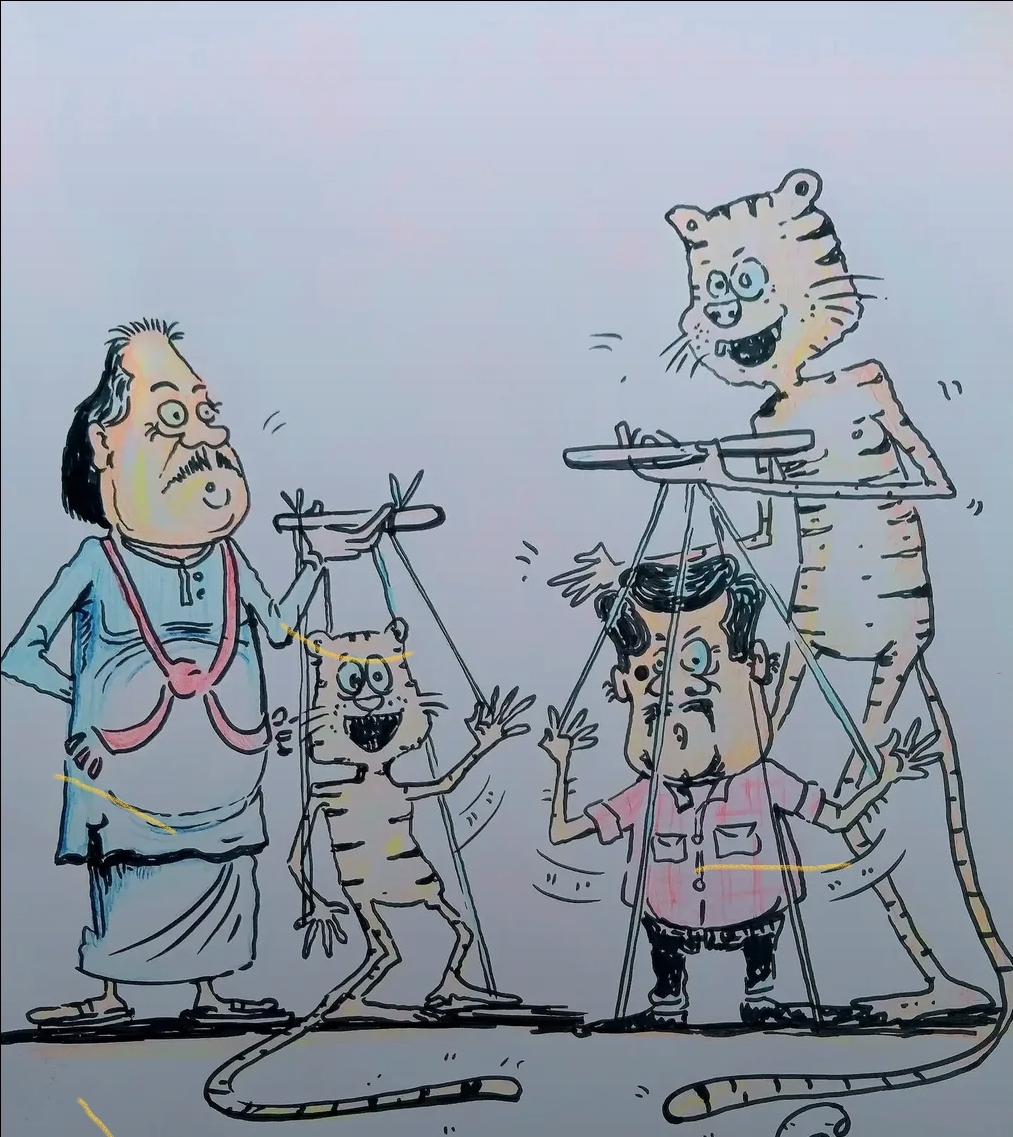
These two groups of people seem to have abandoned the task of researching, analyzing and understanding the connections between the US scenario of race relations and the measures taken by Sri Lanka since the domestic annihilation of the terror/separatist movement Tamil Tigers in May 2009 towards racial reconciliation.
Did Sri Lanka diplomats in Washington abdicate that task expecting the two lobbying firms to undertake that responsibility so that when the state department officials raise the ‘race issue’ in Sri Lanka next time around to remind the USG officials that it is the United States that needs to focus the searchlight inward to remedy the situation here – meaning providing long overdue redress to the 13% Black population.
This is nothing but outsourcing public affairs, public diplomacy and strategic communication to some lobbying firm (s) not allowing the new Sri Lanka ambassador in Washington give his full potential to safeguard the image of this South Asian Island nation.
All these questions and issues came up after what happened last week in Ferguson, Missouri. And one has no option but looking into the larger picture of ‘race’ in the United States which uses its Washington and worldwide public diplomacy personnel to give lectures and advocate what’s good for other nations on issues such as race and nationalities issues, rule of law and human rights.
Long-simmering tensions are boiling over in suburban St Louis, drawing international attention to the racial disparities that still plague the US long after the Civil Rights Bill came to effect in the sixties.
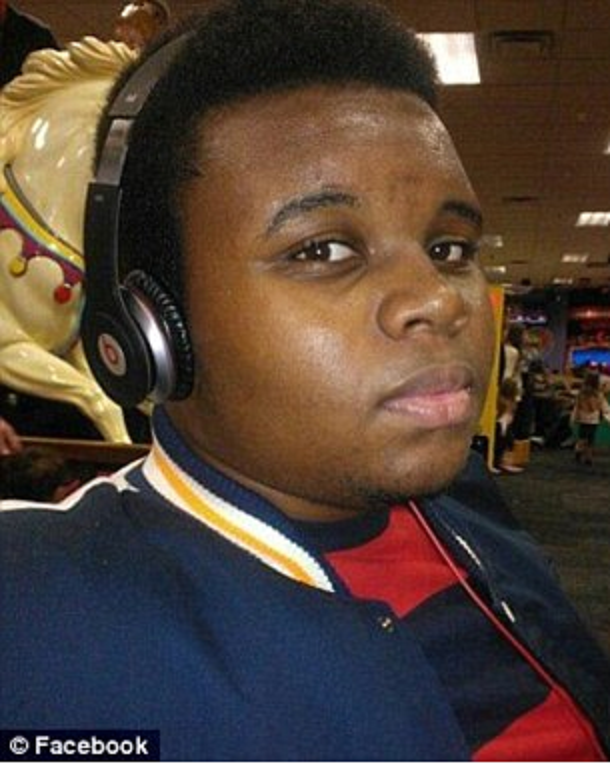
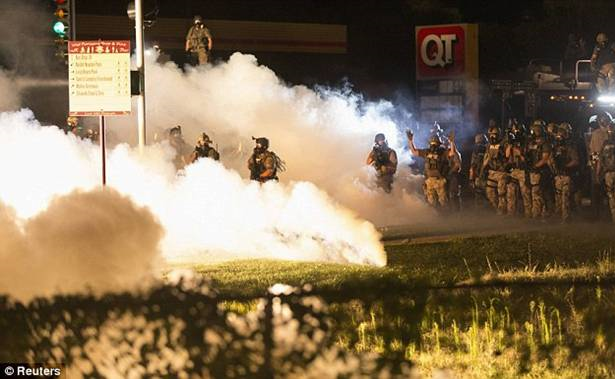
Protesters have taken to the streets every night since a policeman shot and killed Michael Brown, a recent high school graduate, in the predominantly African-American town of Ferguson, facing off against heavily armed, tear gas-wielding police.
Heavily armed SWAT police trained their guns on the public and fired tear gas in Ferguson, Missouri, last few night as racial unrest over the fatal shooting of an unarmed black teen rocked the St. Louis suburb for almost a week running.
An estimated 500 people, who had been protesting 18-year-old Michael Brown’s death, ignored the night curfew imposed by police and instead faced-off against officers chanting ‘Hands Up! Don’t Shoot!’
After repeatedly asking them to disperse, the riot police then fired tear gas into the crowd to break it up, causing scenes that resembled a war zone as another night of clashes was sparked between authorities and furious protestors.
The protestors that remained entered into pitched street battles with police and lobbed Molotov cocktails at the camouflage-clad officers who responded with more tears gas and smoke bombs although there were no immediate reports of injuries but at least 18 arrests.
Authorities said the officer shot the unarmed teenager during a scuffle. But witnesses, including a friend who was with Mr. Brown at the time, say the white officer opened fire after the pair ignored his order to move out of the middle of the street – and that he shot Mr. Brown as he held his hands up, shouting “don’t shoot”.
Residents said police have for years created an atmosphere of harassment, where young black men are stopped for arbitrary reasons.
Standing feet from the spot where Mr. Brown was gunned down in the Canfield Green apartment complex, Marcus Henley, 23, said the shooting was not surprising.
A report by the Missouri attorney-general last year revealed that blacks are nearly seven times as likely as whites to be stopped by Ferguson police, and twice as likely to be arrested during traffic stops.
The situation is similar for black men throughout the country, says Ron Weitzer, a sociologist at George Washington University who has studied the relationship between police and African-Americans.
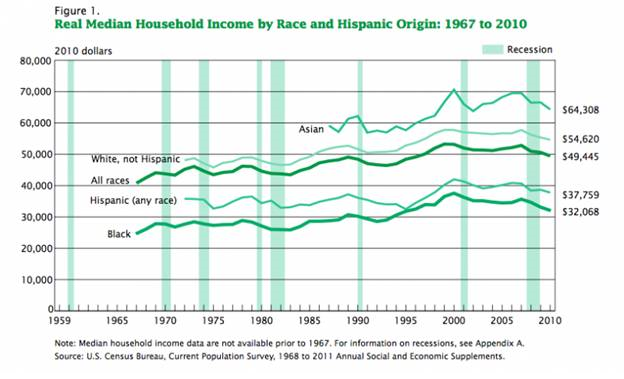
In Ferguson, 28 per cent of black residents live below the poverty line. Median household income for blacks is $37,517, compared to the $47,333 Missouri average.
“Throughout history, black unemployment rates are typically twice the rate of white unemployment, and that’s commonly the case in recession or expansion, and also the case at all levels of education throughout the country,” says Valerie Wilson, economist at the Economic Policy Institute in Washington.
This scenario is no different to that of the rest of the United States.
It is this reason that the U.S. civil rights advocates aired their concerns about the unprovoked shooting of Michael Brown to the United Nations in Geneva, according to a press call from the organizations on Wednesday.
“This issue was front and center,” Hilary O. Shelton, director of the national association of colored people, the NAACP Washington Bureau.
According to Shelton, Trayvon Martin’s mother Sybrina Fulton and Jordan Davis’s father Ron Davis, both Black youths killed by the Whites in recent times, told their stories about losing their teenage children in shootings in each of the pre-briefings of the process.
“I think that everyone was outraged and horrified to hear that, yet again, it had happened in St. Louis, Missouri,” he said.
The group of activists presented to a U.N. panel in Geneva, Switzerland, documenting their concerns of U.S. compliance with the Convention on the Elimination of All Forms of Racial Discrimination (CERD) treaty.
Hillary Shelton also pointed out that U.N. delegates at the hearing made a point of asking the U.S. delegation about African-Americans being “disproportionately targeted” by law enforcement.
The Plight of the Black in the U.S.
The black unemployment rate has consistently been twice as high as the white unemployment rate for 50 years:
A recent report – 2013 – from the Economic Policy Institute (EPI) notes that this gap hasn’t closed at all since 1963. Back then, the unemployment rate was 5 percent for whites and 10.9 percent for blacks. Today, it’s 6.6 percent for whites and 12.6 percent for blacks.
“Indeed,” notes EPI, “black America is nearly always facing an employment situation that would be labeled a particularly severe recession if it characterized the entire labor force. From 1963 to 2012, the … annual black unemployment rate averaged 11.6 percent. This was… higher than the average annual national unemployment rate during the recessions in this period — 6.7 percent.”
Black children are far more likely than whites to live in areas of concentrated poverty:
And those poorer neighborhoods have a way of perpetuating inequality, the report points out: “Poor black neighborhoods also have environmental hazards that impact health. A very serious one is higher exposure to lead, which impedes learning, lowers earnings, and heightens crime rates. While rates of lead exposure have been declining for all races, African American children continue to have the highest exposure rate.”
Schools are more segregated today than in 1980
“Although the share of black children in segregated schools had dropped to 62.9 percent by the early 1980s, the subsequent lack of commitment by the federal government and multiple Supreme Court decisions antagonistic to school desegregation have led to a reversal,” notes EPI.
Why does that matter? “Promoting school integration is important because — now as a half century ago — segregated schools are unequal schools,” the report adds. “The more nonwhite students a school has, the fewer resources it has. A 10 percentage-point increase in the share of nonwhite students in a school is associated with a $75 decrease in per student spending.”
A new poll suggests that a majority of Americans believe the country is divided by race.
The Newsweek/Daily Beast poll shows that 72% of whites and 89% of blacks say the country is racially divided.
And almost four years after the election of the nation’s first black president, majorities of whites and blacks say race relations have either stayed the same or gotten worse.
There continue to be fundamental disagreements about when blacks will achieve racial equality. Whites are much more likely to think blacks have the same chance as they do to get housing and jobs.
As for the killing of Trayvon Martin, an unarmed black Florida teen two years ago, there are more differences along racial lines. Blacks are more than twice as likely as whites to say Martin’s death was racially motivated. African-Americans are convinced that Martin was targeted because he was a young black man, while whites are divided.
Blacks overwhelmingly approve of how President Obama has handled the controversy, while a majority of whites disapprove.
The differences go on and on. It’s a sad statement on race relations in the U.S. even fifty years after the passage of equal rights and civil rights legislations in the US Congress.
Last week’s killing of 18-year-old Michael Brown’s death has renewed the issue of race relations and the raw deal the 13% Black community in the United States in the areas of education, employment, household income, justice system and widespread discrimination.
Under these circumstances, one cannot turn a blind eye to the manner in which America’s foreign policy handlers look at other nations their race relations and connected issues.
Since the conclusion of the terrorist war in May 2009, Sri Lanka has been progressively attending to the ‘nationalities issue’ not only to uplift the marginalized minority Tamils but also other communities. All three communities in Sri Lanka, Sinhalese (74%) Tamils (11%), Muslims (7%) and Indian plantation Tamils ((6%) were marginalized for many decades in Sri Lanka if they were domiciled in the rural communities, and Sinhalese, Tamils and Muslims who were in urban and semi-urban regions had the privilege of having access to good education, employment and other facilities that the others were denied.
Post-war Sri Lanka is addressing these issues despite lectures from American officials in Washington and Colombo.
These connected issues – race relations in the US and Sri Lanka and continued discrimination of the Black community in the US – need to be highlighted by Sri Lanka’s external affairs handlers both in Colombo and Washington when the officials of the American administration advocate these issues to Sri Lanka.
Reconciliation has been the key issue the US is emphasizing since the domestic annihilation of the terror movement Tamil Tigers, and it is this ‘reconciliation’ that the United States needs to focus at a time the 13% Black community is being harassed, discriminated and denied equal opportunities in the fields of education, employment opportunities and equal justice in the judicial system.
Does the United States need a Truth and Reconciliation Commission? Should Sri Lanka outsource its diplomatic responsibities to some American lobbying firms? Shouldn’t Sri Lankan external affairs handlers summon some guts to tell the American officials to clean its own back yard before advocating race relations and human rights to countries like Sri Lanka which is currently struggling to raise its head after an almost three decade of misery that was brought by a terrorist movement?
If Sri Lanka gives this strong message to American officials in Washington the bilateral relations between the two nations will be at equal footing helping the US to abandon the disastrous path it has taken to bifurcate Sri Lanka using ‘diplomatic offensive’ that the Tamil Tigers failed using the ‘military offensive’.
862 Viewers