Could U.S. meddle in Sri Lanka’s ’20 presidential stakes?
(Courtesy of Asian Tribunal.)
By Daya Gamage – Asian Tribune Political-Legal Narrative
Washington, D.C. 21 June (Asiantribune.com):About a fortnight ago when engaged in the preparation of a position paper to a London Think Tank, in collaboration with another former US Foreign Service officer (FSO) on issues connected to US-Sri Lanka relations during the Tamil Tiger-led 26-year separatist war, this writer was ‘sounded’ that a fresh attempt may be in the pipeline to look into former Sri Lankan defense secretary Colonel Gotabhaya Rajapaksa’s role during the Eelam War IV.
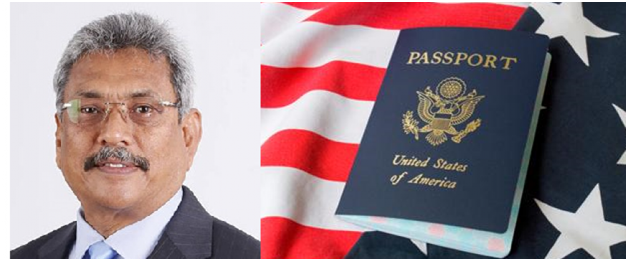
Personally, the ‘sounding’ coincided with the preparation of the position paper, now taking shape in its final form, as it is addressing Washington’s misjudgment and miscalculation of the broad Sri Lankan issues that would have undermined the Government of Sri Lanka’s serious undertaking to protect its territorial integrity and sovereignty – moving human rights to the forefront – in bringing pressure for a ceasefire, if realized, would have given a fresh lease of life to the Tigers when they were on the brink of defeat.
Both the authors of the London Paper were aware that Washington lumped both LTTE terrorism and Tamil aspirations together in a single fold to deny Sri Lanka of much needed military assistance. Washington accused Sri Lanka of violating IHL, human rights and committing war crimes which culminated in US-sponsored or patronized resolutions in Geneva.
Kieth Harper, ambassador to the UN Human Rights Council (UNHRC) in Geneva under the Obama administration, in an interview with an internationally-acclaimed journalist Babara Crossette to the widely-read internet media outlet PassBlue on 15 March (2017) in fact boasted America’s hand at UNHRC in taming Sri Lanka when he remarked “an example of American work may have been unblocking a stalemate in Sri Lanka over responsibilities for extreme violations of rights and horrific abuses (committed by both sides) in a long civil war, which ended in 2009”.
The Department of State officials in Washington and their diplomatic representatives in Colombo, Sri Lanka disapproved the manner in which the Eelam War was handled, executed and brought to an end. Seven months since ending the war in May 2009 the diplomatic cable dispatched to Washington on January 15, 2010 authored by Ambassador Patricia Butenis declared the three Rajapaksa brothers – the president, the defense secretary and the Economic Minister -, and the Army Commander Gen. Sarath Fonseka as war criminals. Nevertheless, Washington was behind Fonseka’s candidacy at January 2010 presidential election in an attempt to end the Rajapaksa rule which, for obvious reasons, was skeptical of overall U.S. intentions in respect to Sri Lanka’s national issues.
When Colonel Gotabhaya Rajapaksa’s name emerged as a possible presidential candidate at the 2020 Sri Lanka election, Washington revisited, according to the sound bite received by this writer, its ‘Naturalized Citizen’s’ role as to how he managed, directed and ended the war as the defense secretary to link him to the US War Crimes Act of 1996.
Washington already had in its possession the ‘war reports’ dispatched by its diplomatic mission in Colombo during the tenure (August 2006 through May 2009) of the battle when the Department of Homeland Security in October 2009 attempted to interview Gen. Sarath Fonseka, when he was in the US to renew his Permanent Residency Permit (Green Card), regarding Defense Secretary Rajapaksa’s role during the Eelam War. In the same month the State Department’s Office of Global Criminal Justice had submitted its ‘War Report’ to the US Congress, as mandated by the legislature, accusing Sri Lanka of war crimes.
The role of the US Department of Homeland Security investigating complaints and allegations of war crimes committed by a US citizen is addressed here, and it is the core element of this political-legal narrative.
As a citizen of the United States, Colonel Gotabhaya Rajapaksa is directly liable under the War Crimes Act – a legal windfall for any US effort to investigate and prosecute him across international borders. His citizenship also expands US policy space – by reducing US vulnerability to accusations of meddling if US goes after one of its own.
As noted above, US Ambassador Patricia Butenis cabled Washington that “responsibility for many of the alleged crimes rests with the country’s senior civilian and military leadership, including President Rajapaksa and his brothers.”
The War Crimes Act of 1996 makes it a federal crime for any US national, whether military or civilian, to violate the Geneva Convention by engaging in murder, torture, or inhuman treatment.
The statute applies not only to those who carry out the acts, but also to those who order it, known about it, or fail to take steps to stop it.
The War Crimes Act has no statute of limitations, which means that a war crime complaint can be filed at any time.
Section 2401of the Act states the offense as “whether inside or outside of the United States, commits a grave breach of the Geneva Conventions”, and “grave breach of the Geneva Conventions means conduct defined as a grave breach in any of the international conventions relating to the laws of warfare signed at Geneva 12 August 1949 or any protocol to any such convention, to which the United States is a party.”
Is Renunciation of US Citizenship for Colonel Rajapaksa that easy?
All the above can be avoided if Gotabhaya Rajapaksa uses Section 349(a) (5) of the Immigration and Nationality Act of 1952 that governs the law in respect of renunciation of his US citizenship. He simply has to appear before the American Embassy in Colombo, Sri Lanka to follow the procedure to apply for the Certificate of Loss of Nationality.
Is it simple as this? What was sounded to this writer fortnight ago was different. And the scenario surrounding Mr. Rajapaksa’s probable renunciation is what matters.
Washington strongly believes, based on the reports the State Department received from its diplomatic mission in Colombo and the analytical and recommendation reports – based on those direct reporting – it turned over to the Department of Homeland Security on the execution of the Eelam War IV and thereafter, Gotabhaya Rajapaksa, a national of the United States, is a prime candidate to commence an investigation surrounding the violation of International Humanitarian Law (IHL). It was no secret that Washington disliked him during the period he managed the war. Washington strongly believes that Rajapaksa is inimical to American interests in Sri Lanka, and South Asia in general. Strongly believing that the Rajapaksa trio was detrimental to American interests, in 2014, it created a conducive political atmosphere using several Sri Lankan individuals for a regime change a year later.
Washington is getting signals that its nemesis could be a presidential candidate at the 2020 election. And that he has broad acceptance among the people of Sri Lanka to even win the title.
Washington is equally aware that the Nineteenth Amendment to Sri Lanka’s Constitution, brought by the current administration targeting its nemesis Colonel Rajapaksa is constitutionally prevents a dual citizen from either entering Sri Lanka legislature or assuming the nation’s Executive Presidency.
Washington further knows if Rajapaksa intends entering the presidential fray, he needs to renounce U.S. citizenship. To the Asian Tribune, this renunciation seems to be a simple process.
The sound bite this writer received regarding Rajapaksa’s aspirations did not indicate the renunciation of the citizenship an easy process for him considering the manner in which Washington view Colonel Rajapaksa’s profile.
The profile developed by Washington itself, based on direct reporting and classified ‘comments’ by its diplomatic mission in Colombo, and the ‘inputs’ by professional activists within the Tamil Diaspora, could be used by the Department of Homeland Security to fit into the War Crimes Act of 1996 to prolong the process of issuing the Certificate of Loss of Nationality.
The question is whether Washington will issue the Certificate before nomination closes for 2020 presidential election.
How could Washington prolong this process to frustrate Rajapaksa’s attempt to enter the presidential fray in Sri Lanka as construed by them?
War crimes investigative responsibility rests with the US Department of Homeland Security (DHS). The Department of State provides DHS raw and analytical reports with recommendations on alleged war crimes and violation of international humanitarian law (IHL) it receives from worldwide US diplomatic missions.
The U.S. Immigration and Customs Enforcement’s (ICE) Homeland Security Investigations (HSI) of the DHS operates the Human Rights Violators and War Crimes Unit (HRVWCU) within the National Security Investigations Division (NSID).
The HRVWCU of the Department of Homeland Security conducts investigations focused on human rights violations and individuals who engage in the commission of war crimes, genocide, torture and other forms of serious human rights abuses from conflicts around the globe.
The Human Rights Violators and War Crimes Center also brings together various Department of Homeland Security components and other departmental agencies, to include the FBI and Department of Justice to work collaboratively on human rights violators at war crimes investigations.
The readers may recall that the American Embassy in Colombo, Sri Lanka, on several occasions, rejected visa applications of a host of active duty and retired military personnel. Former army commander Gen. Sarath Fonseka’s visa application was rejected thrice, the last when he was to join Sri Lanka president Sirisena entourage to New York to attend the UN Session. This was the result of notifications from the US Department of Homeland Security.
The consular officers spread in worldwide American diplomatic missions do directly come under the purview of the Department of Homeland Security, so much so that even the Chiefs of Mission in those US embassies cannot interfere in the work of those consular officers. The Chiefs of Mission as well as the heads of Consular Sections of US diplomatic missions world over receive classified cables from the Department of Homeland Security on individuals who have been accused of human rights violations and war crimes. The US does not grant entry to such persons. It is significant that those whose visa applications were rejected by the US Mission in Colombo were never found guilty of any crime nevertheless the state department and the DHS had information regarding these military personnel.
The whole process within the DHS, the units under it and in collaboration with the US Department of Justice undertake the investigation of alleged grave breaches of Geneva Conventions and those violations that give rise to individual criminal responsibility when committed against a protected person (i.e., a civilian or a prisoner of war) within the context of an armed conflict whether international or non-international.
Common Article 3 of the Geneva Convention provides a set of basic prohibitions to non-international armed conflicts.
Within the United States, the primary partners in the investigation of war crimes are Department of Homeland Security’s Immigration and Customs Enforcement Human Rights Violators and War Crimes Center, the State Department’s Office of Global Criminal Justice, and the Department of Justice’s Human Rights and Special Prosecutions Section.
The application of federal laws and investigations typically rests in the hand of the above mentioned U.S. departments and their agencies if they have jurisdiction (a) if the perpetrator is a U.S. person (b) the victim is a U.S. person, or (c) the perpetrator, regardless of nationality, is located in the U.S.
As much as Washington has has the authority to deny visa applications for alleged – I use the term alleged – violation of IHL or war crimes, it has the sole discretion of delaying the issuance of the Certificate of Loss of Nationality, if Colonel Gotabhaya Rajapaksa so wishes to end his citizenship in the U.S., until the cumbersome process of the investigation involving many U.S. federal agencies is concluded.
Even under a conservative and ultra right-wing Donald Trump the US Presidency rests, Liberals are still in pivotal positions in the state department, and especially in the Department of Homeland Security. Liberals can make things more cumbersome as they did in the past to make Sri Lanka’s domestic issues global.
602 Viewers