Yala-Kumana National Parks in Danger Due to the Pada Yatra
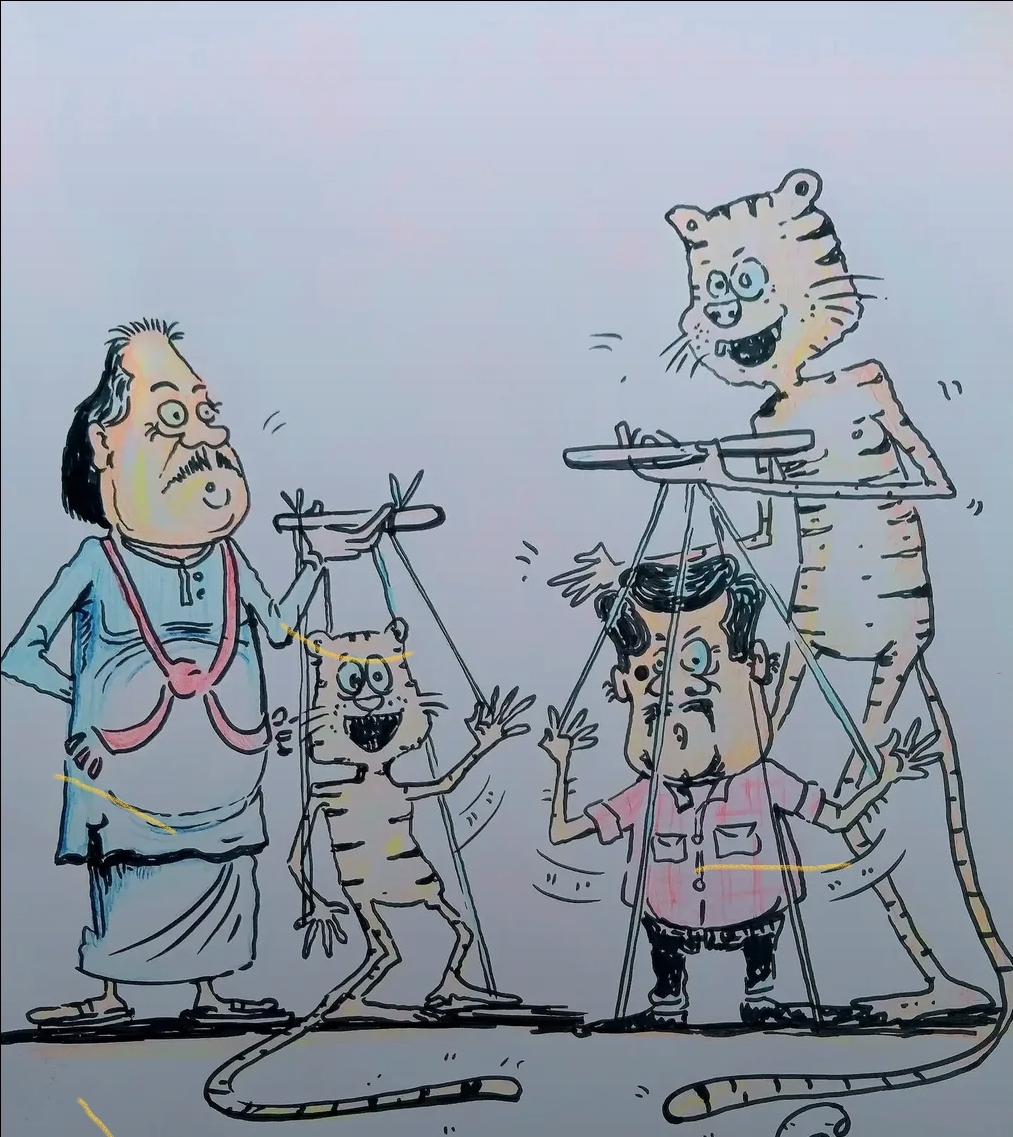
The ‘Kataragama Pada Yatra’ – a pilgrimage on foot from Jaffna to the Kataragama Devalaya – is a cultural practice maintained by Hindu devotees for a long time. However, it is regrettable that authorities have still not paid attention to the fact that this pilgrimage is now moving away from its religious and cultural identity and turning into a carnival, thereby posing a serious threat to the existence of Yala and Kumana National Parks.
The gates of Kumana National Park were opened for this year’s Pada Yatra pilgrims last Friday (10th). On that day alone, 15,982 people entered through the Kumana park entrance to walk through Yala-Kumana National Parks.
This Pada Yatra can be described as an extremely rare opportunity to walk through Sri Lanka’s national parks for free, without obtaining an entrance ticket. Also, to enter through Kumana National Park and exit through Yala National Park, special approval from the Director General of Wildlife is required. There are special conditions to visit Zones 2 of Yala National Park. Therefore, various groups are now taking advantage of the Pada Yatra, which requires no such permission, to fulfill their narrow interests. This includes so-called environmentalists, wildlife photographers, and adventure tourists. Because of this, the religious and cultural values of the Kataragama Pada Yatra have eroded, and the wildlife reserves have begun heading toward destruction over the past few years.
It is also a very serious situation that security forces, almsgivers, and various state institutions who enter Yala and Kumana to “fish in troubled waters” are acting in violation of the Fauna and Flora Protection Ordinance.
After the war ended, 25,000 – 30,000 people participated in this pilgrimage annually. In 2025 that number rose to nearly a record 32,000. This year too, people who come to participate in the Pada Yatra are permitted entry into Kumana National Park until July 24th. Within just the first three days, 22,559 visitors entered the park, so it is not difficult to predict the scale of this year’s Pada Yatra.
Hindu devotees come to Kataragama on this Pada Yatra enduring immense hardship, driven by immense devotion to God. The damage to the environment caused by the austere pilgrimage methods they followed in the past was minimal. But now, the environmental impact caused by such a large number of tourists entering the park through this Pada Yatra cannot be underestimated.
During the war, pointing out the risk that LTTE terrorists could travel south via this Pada Yatra route, the Army took steps to count pilgrims. But even after the war ended, the security forces continued to sell water and food to pilgrims, which impacted the historical practices of this pilgrimage. This situation also contributed to the quantitative increase in pilgrims.
The real devotee’s expectation is to complete this pilgrimage carrying all their own necessities and enduring hardships, thereby proving their devotion before God. They did not need bottled water, food and drinks, or even health facilities provided by other parties when traveling through the national reserve. But what was truly needed were those for the so-called environmentalists, wildlife photographers, and adventure tourists mentioned above. It is also said that many who encourage this are state institutions covering up their own irregularities. The end result is that this journey has turned from a true austere pilgrimage into a distortion that greatly impacts the environment.
From the point of entry into Kumana National Park, pilgrims have many natural water sources to obtain water. Despite that, the Army has for many years been engaged in providing free water by bowser and selling bottled water. Taking advantage of this, we learn that the Army roams freely in the national parks day and night, and is engaged in large-scale activities such as collecting truckloads of firewood.
Similarly, almsgivings of rice packets and other “imposed needs” are exploited by outsiders who, knowingly or unknowingly, are destroying the nation’s priceless natural heritage.
Claiming to install a reverse osmosis water purification system for pilgrims in the “Lassana 3” area of Yala National Park, the Navy also enters during the pilgrimage season. It was also alleged that in the past few years, a large troop entered Yala National Park under the pretext of providing security and services because a senior Navy officer came to walk the Pada Yatra, and acted in ways harmful to its existence. Among these are harmful activities such as operating vehicles in the park day and night, destroying forest to set up toilet facilities, and traveling outside the designated pilgrimage route through other areas of the park.
The Sri Dalada Maligawa along with various state and private sector entities and individuals also enter the reserve area claiming to hold almsgivings during this season. It is alleged that among them, the so-called environmentalists and wildlife photographers mentioned above, as well as people who come claiming to hold health camps, roam around at night in their Defender vehicles, shining high-powered lights that disturb wildlife. Such situations are in no way good for wildlife conservation.
This year too, a large number of permanent and temporary almsgivers have entered the parks, and it is astonishing that some of them even use generators and loudspeakers inside the parks.
Even tourists who enter a national park by paying the relevant entrance fees and obtaining proper permits are only allowed to travel in the park between 6:00 AM and 6:00 PM. But it is deplorable that the above parties who enter the park during this pilgrimage season using various tricks take advantage of the permission given by the Department of Wildlife Conservation during that period and violate conservation laws.
Even after the war ended, for many years pilgrims on the Pada Yatra traveled without depending on anyone’s almsgivings. And outsiders do not enter Yala under the guise of almsgivings out of compassion for pilgrims.
When such a large number of people move in a wildlife reserve for a long period, there are many environmental impacts such as impacts on the natural behavior patterns of wildlife, and pollution of natural ecosystems and water sources by garbage and sewage. As the number of tourists increases, the impact increases proportionally. As the Kataragama Pada Yatra transforms from a difficult pilgrimage into a carnival, the number of tourists increases and so does the environmental impact. Therefore, from the Director General of Wildlife down to the custodians of Yala and Kumana National Parks, all levels of the Department of Wildlife Conservation management hierarchy must act with much more attention when granting relevant approvals. It is also the government’s responsibility to adequately provide the Wildlife Conservation Officers and the necessary infrastructure needed to closely monitor human activities and conditions and to implement necessary immediate actions without fear.
But instead of supporting wildlife officers, senior administrative officers and security forces in the area are intensifying the environmental impact of the Pada Yatra year by year. At the very least, there is not even a program to promptly collect daily-generated garbage and take it out of the park for proper disposal. Instead, the Department of Wildlife Conservation buries biodegradable and non-biodegradable garbage generated in pits in places like Madametota and Bagura Pitiya in Kumana Villu, and there is no need to elaborate on the environmental impact caused by that.
Therefore, I wish to emphasize that it is the responsibility and duty of the current government and the Minister of Environment to immediately implement responsible regulation for the Kataragama Pada Yatra to prevent the exploitation of this ancient pilgrimage for short-term entertainment, the waste of public money on fraudulent activities linked to it, and the disregard of environmental laws instead of acting responsibly to ensure the safety of wildlife.
Supun Lahiru Prakaka
19 Viewers